


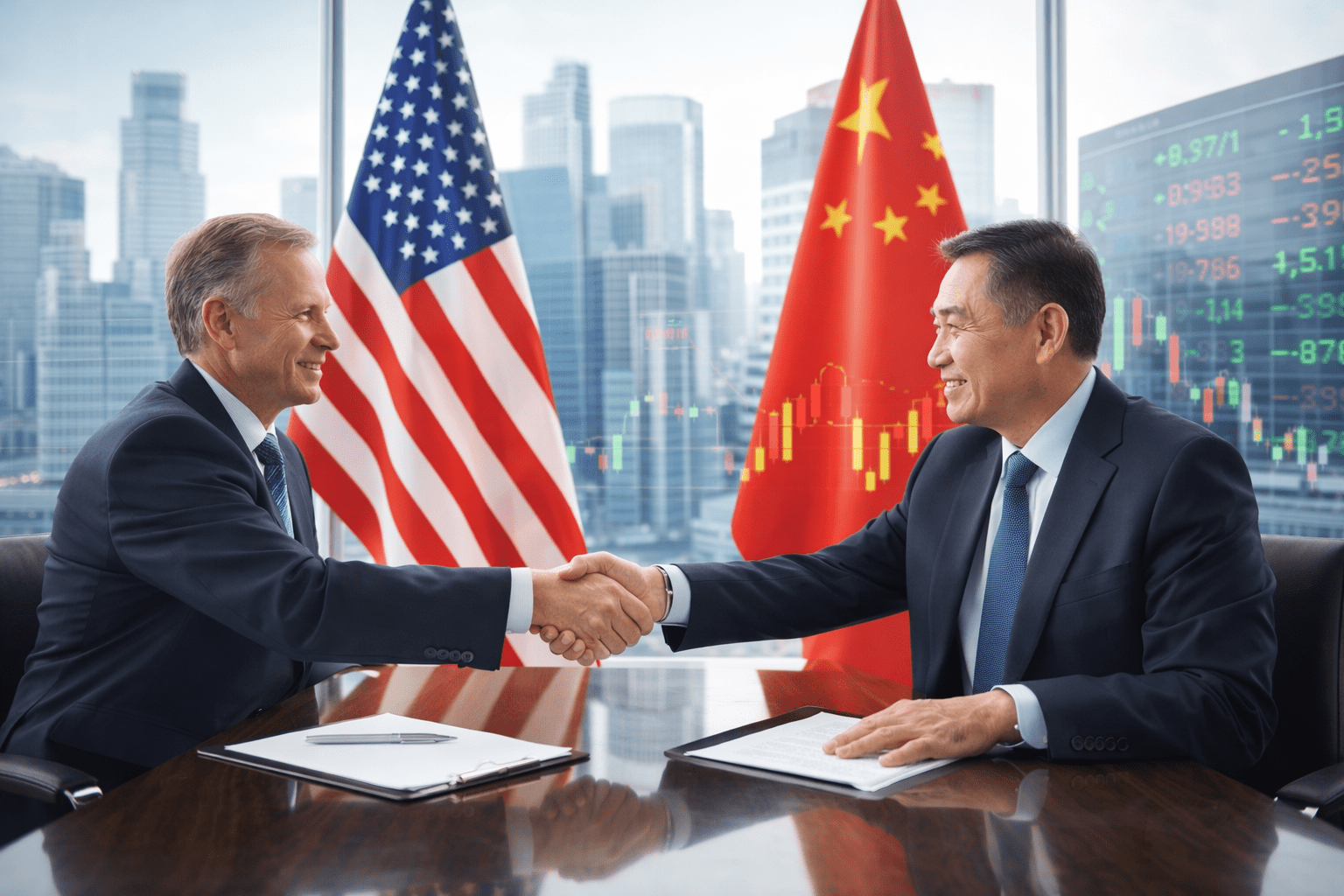
WASHINGTON / BEIJING — The world’s two largest economies are at a pivotal crossroads. A series of high-level diplomatic engagements between the United States and China are reshaping global trade dynamics — and the outcome will reverberate across supply chains, commodity markets, and financial systems worldwide.
The Paris Talks: A Diplomatic Reset
US Treasury Secretary Scott Bessent met Chinese Vice Premier He Lifeng at the Paris headquarters of the Organisation for Economic Cooperation and Development in mid-March to work through trade disputes between the two nations.
Sources familiar with the discussions described the Paris talks as “remarkably stable” and “candid and constructive,” with potential areas of agreement identified across agriculture, critical minerals, and managed trade — items intended as deliverables for the two presidents to consider at a summit.
The discussions carried additional weight given the geopolitical backdrop. The US-Israeli conflict with Iran has sent energy markets into turmoil, and the closure of the Strait of Hormuz — through which China receives 45 percent of its oil — has added urgency to stabilizing bilateral economic relations.
Tariffs, Soybeans, and Rare Earths
The road to the current talks was turbulent. Following the imposition of “reciprocal” tariffs that eventually climbed as high as 125 percent before being dialed back, China’s total exports to the US fell from approximately $536 billion in 2024 to around $431.6 billion in 2025 — a decline of nearly 20 percent.
A late-2025 meeting between Presidents Trump and Xi produced a one-year extension of the trade truce, a commitment from China to purchase 12 million metric tons of US soybeans, and a reduction of the overall tariff rate on Chinese imports from 57 percent to 47 percent.
Rare earth minerals have become a central flashpoint. China’s export controls on rare earth elements, introduced shortly after US reciprocal tariffs were imposed in April 2025, have remained in place and become a key lever in negotiations — reportedly drawing more attention from US negotiators than the original concerns about industrial overcapacity and market access.
Global Markets Feel the Pressure
The broader economic picture reflects the strain. According to the UN’s April 2026 Global Trade Update, trade between the US and China contracted by roughly one quarter in 2025, amounting to approximately $170 billion in lost bilateral flows.
During the escalation, investors moved away from US Treasury bonds toward gold, bond yields climbed, and the dollar weakened — early warning signs of deeper financial fragility.
Not all the news is grim. Several “connector economies” — including Vietnam, Indonesia, Cambodia, and Egypt — have stepped in as trade intermediaries, helping to stabilize global flows and cushion the impact of rising geopolitical fragmentation.
What Comes Next: The Trump-Xi Summit
President Trump’s planned visit to Beijing is being closely watched. Analysts say that given his preference for personal diplomacy, a face-to-face meeting with Xi Jinping offers the best chance for a more durable agreement than the short-term truces reached so far.
The Paris talks are seen as a waypoint — a tactical effort to stabilize relations ahead of the leaders’ summit rather than a comprehensive reset. The goal is to prevent tensions from escalating into a full-scale economic confrontation that could destabilize global markets.
The current arrangement sets a temporary floor for the relationship and restores some predictability for industries navigating two competing economic systems — but analysts note it leaves the underlying structural imbalances largely unresolved.
The Bigger Picture
Two-way merchandise trade between the US and China hit $688.3 billion in 2024, and both nations remain deeply intertwined across semiconductors, agriculture, energy, and consumer goods.
The UNCTAD report warns that global trade growth, while still positive in early 2026, is expected to slow later in the year — weighed down by persistent trade tensions, rising tariff costs, Middle East disruptions, and limited fiscal space for governments to respond
For now, the world is watching Washington and Beijing closely. As one analysis put it, when these two giants are at the table, the stakes extend far beyond their borders.
