


28
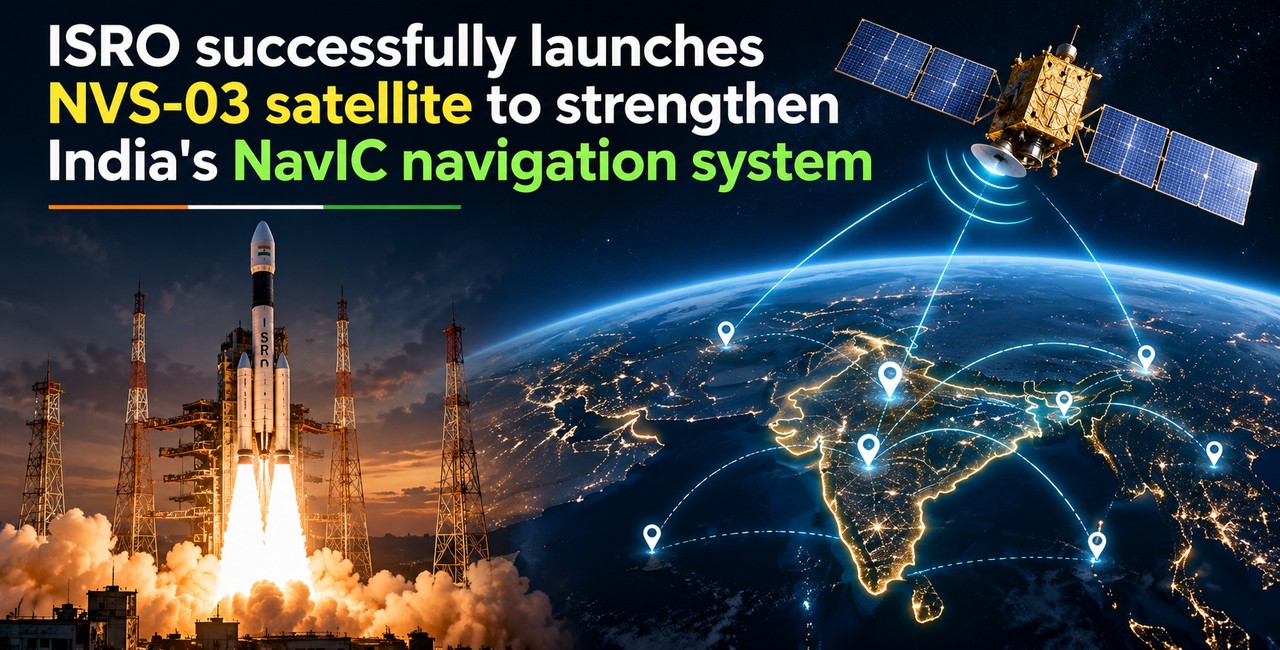
The GSLV-F18 mission places the next-generation navigation satellite into its designated transfer orbit, adding new capabilities to India's indigenous satellite navigation programme.
The Indian Space Research Organisation (ISRO) has successfully launched the GSLV-F18 rocket carrying the NVS-03 navigation satellite, marking an important step towards strengthening India's indigenous satellite navigation system, NavIC. The rocket lifted off from the Second Launch Pad at the Satish Dhawan Space Centre in Sriharikota, Andhra Pradesh, at 11:51 pm on October 30. Following a flight of approximately 18 minutes, the satellite was successfully placed into its intended Geosynchronous Transfer Orbit (GTO).
The mission marked the 20th flight of India's Geosynchronous Satellite Launch Vehicle (GSLV). ISRO confirmed that the launch vehicle successfully injected NVS-03 into its designated orbit. NVS-03 is the third satellite in ISRO's next-generation navigation satellite series, developed to ensure continuity and strengthen navigation services under the Indian Regional Navigation Satellite System (IRNSS), popularly known as NavIC.
What makes NVS-03 technologically important?
One of the key features of NVS-03 is its atomic clock technology. The satellite carries an indigenously developed atomic clock alongside procured atomic clocks. Atomic clocks are essential for satellite navigation because precise time measurement helps determine the location of users accurately.
NVS-03 also introduces the L1 frequency signal in addition to the existing L5 and S-band signals used by NavIC. The additional frequency is expected to expand the system's capabilities and improve its potential for civilian and commercial applications. According to ISRO, NavIC is designed to provide positioning, navigation and timing services across India's landmass and a region extending approximately 1,500 kilometres beyond the country's geopolitical boundary.
Why is NavIC important for India?
NavIC is India's independent regional satellite navigation system, developed to provide positioning, navigation and timing services without depending entirely on foreign navigation networks.
Satellite navigation has become important across several sectors, including road transportation, railways, maritime operations, surveying, disaster management and time synchronisation.
By strengthening NavIC, India aims to improve the availability and continuity of these services
while expanding its capabilities in critical space technologies. The system also has strategic importance, as independent navigation infrastructure can support essential national services and applications.
Strengthening India's navigation infrastructure
The successful launch of NVS-03 comes as ISRO continues efforts to strengthen the operational capabilities of the NavIC constellation.
ISRO Chairman V. Narayanan said the satellite had been successfully placed into its intended orbit. He also highlighted the importance of the mission in strengthening India's regional navigation infrastructure.
The satellite will undergo further orbital operations before reaching its designated operational position. Its contribution to NavIC services will follow the required commissioning process.
Prime Minister Narendra Modi congratulated ISRO scientists and engineers on the successful launch, describing the mission as an important step towards strengthening India's indigenous navigation system and self-reliance in critical technologies.
A step towards technological self-reliance
The NVS-03 mission highlights India's growing capabilities in developing advanced satellite technologies, precision timing systems and launch vehicle infrastructure.
As navigation services become increasingly important for transportation, communication, business operations and public infrastructure, strengthening an indigenous system such as NavIC remains a key priority.
With NVS-03, ISRO has taken another step towards improving India's independent satellite navigation capabilities and expanding the role of homegrown space technology.
