


90
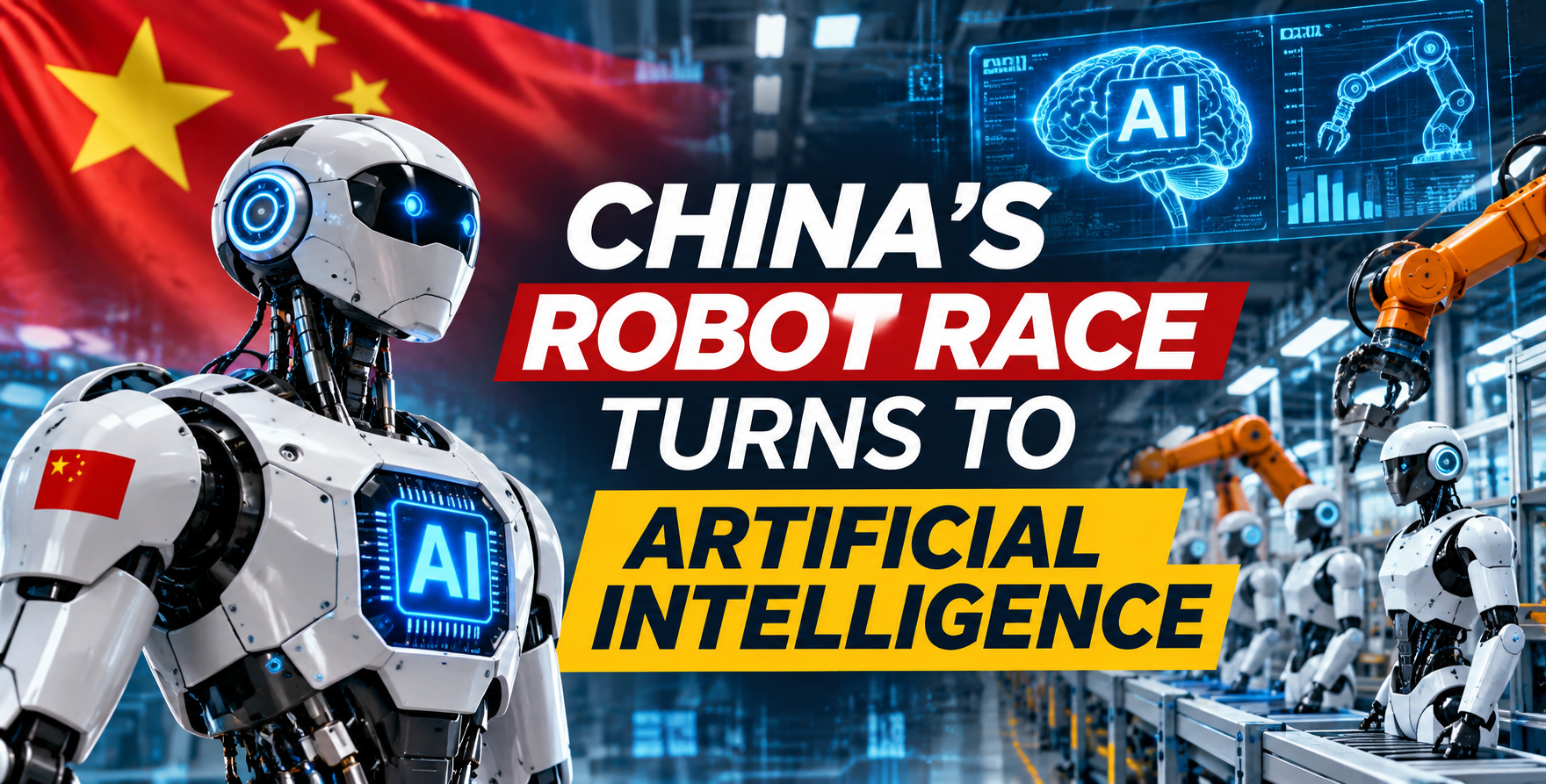
China's robotics industry is shifting its focus from building humanoid robots capable of running, dancing and performing acrobatics to developing
artificial intelligence (AI) that allows machines to understand their surroundings, learn unfamiliar tasks and operate more independently.
The shift towards embodied AI, which combines intelligent software with physical machines, is emerging as a major battleground in the global technology race. Chinese companies are increasingly investing in systems that enable robots to make decisions and adapt to real-world situations rather than simply follow pre-programmed instructions.
The investment momentum is significant. Chinese embodied AI companies raised 93.5 billion yuan (US$13 billion) across 322 deals in the first half of 2026, five times the amount recorded a year earlier, according to research firm ITjuzi, as cited by Reuters.
Companies such as X Square, Galaxea and Spirit AI are developing robotic intelligence systems, while manufacturers including Unitree and UBTech are expanding their AI research. Their American competitors, including Physical Intelligence, Skild AI and Generalist, are also working on software that enables robots to acquire new skills without extensive retraining.
Generalist said its GEN-1.5 model completed around 60 per cent of simple tasks after observing demonstrations lasting between three and 12 seconds.
Training remains a major challenge. Unlike chatbots, which learn from digital information, robots require physical interaction data to understand activities such as gripping objects and handling equipment. Chinese developers are collecting this information through human demonstrations, wearable sensors and simulated environments.
Ant Group's robotics unit, Robbyant, said it trained a model using 160,000 hours of material, including 50,000 hours of human-guided robot movements. In industrial testing, battery maker CATL reported insertion success rates of more than 99 per cent for Spirit AI-powered robots connecting flexible wires during battery-pack testing.
However, limited access to advanced Nvidia chips, inconsistent training data and the inability of simulations to fully replicate real-world physical conditions remain significant obstacles.
China's manufacturing ecosystem offers opportunities for industrial testing, while US developers retain advantages in advanced AI research and computing resources. Ultimately, the industry's success will depend on whether robots can reliably perform unfamiliar tasks across different workplaces. While impressive demonstrations may attract investment, dependable commercial performance will determine the technology's long-term value.
