


87
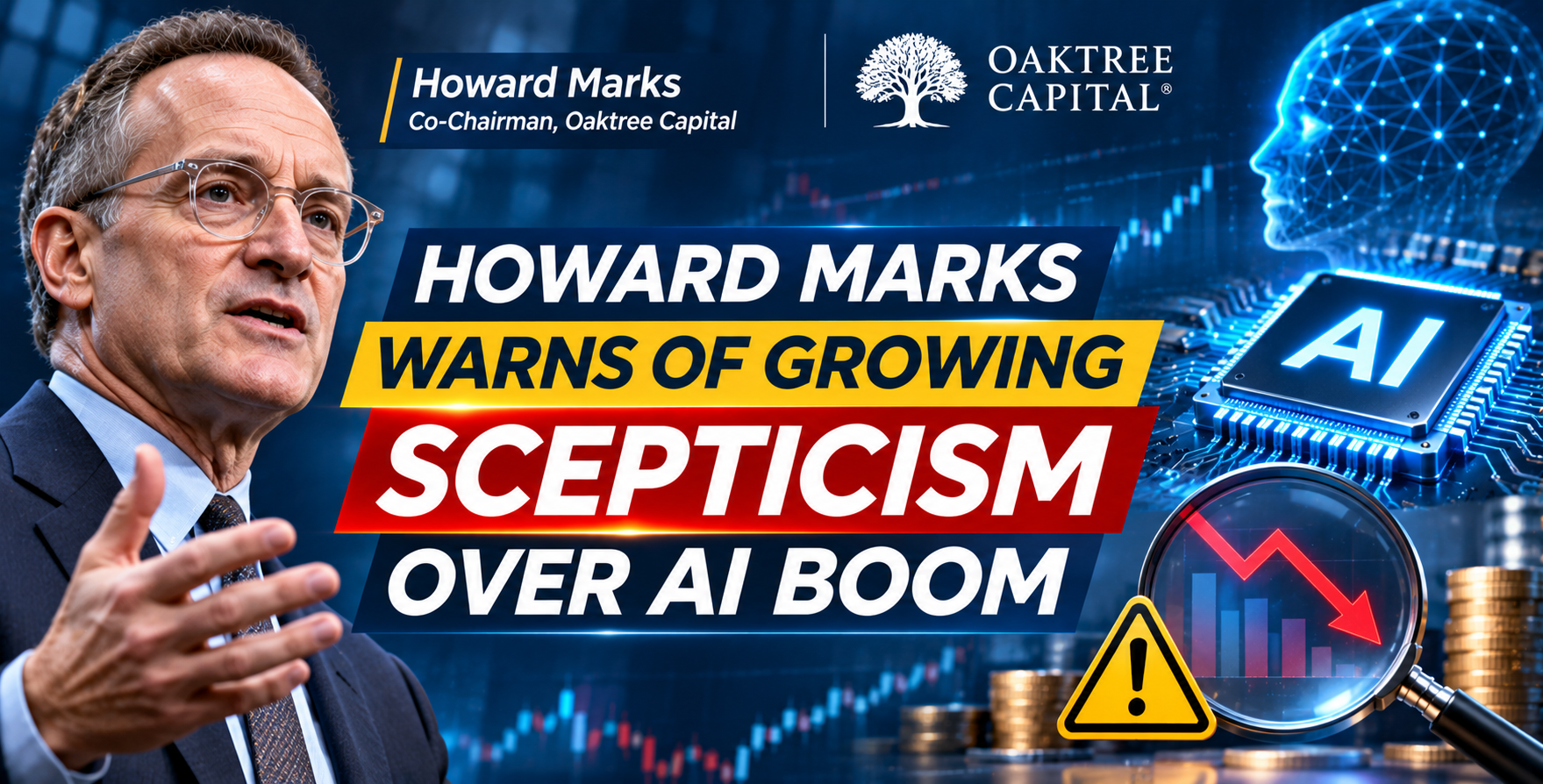
Recent setbacks in the artificial intelligence (AI) sector are prompting investors to question whether soaring valuations and heavy spending can
deliver the expected returns, according to Howard Marks, co-chairman of Oaktree Capital Management.
In an interview with Bloomberg TV, Marks said market disappointments had weakened the perception that AI investments were virtually certain to succeed. He described the growing scrutiny as healthy after a period of intense enthusiasm for companies building, financing and deploying AI technologies.
Marks said AI had become a crowded trade, with valuations rising as capital flowed into the sector. He warned that when expectations become excessive and investment standards weaken, investors must assess opportunities carefully rather than assume that strong demand will guarantee returns.
The debate comes as technology companies commit vast sums to AI infrastructure, including data centres and computing capacity. Marks said companies were seeking trillions of dollars to fund the AI race, raising questions about whether business activity and profits can generate attractive returns on that capital.
Recent results from Alphabet and Amazon have added to market concerns, as investors examine whether pressure on established businesses could complicate the funding of AI expansion. However, these results do not, by themselves, prove that AI investments have damaged those businesses.
In a separate Bloomberg TV interview, Capital Group Vice Chair Jody Jonsson highlighted a gap between AI companies' expectations and the pace of enterprise adoption. She said returns on investment were not yet clear enough to match market expectations. She also raised concerns about financing, including debt held through off-balance-sheet investment vehicles.
The comments point to a shift in the AI debate: technological promise is no longer the only measure investors are watching. The industry must demonstrate that adoption, revenue and profits can justify the massive capital being committed across the global technology sector.
