


72
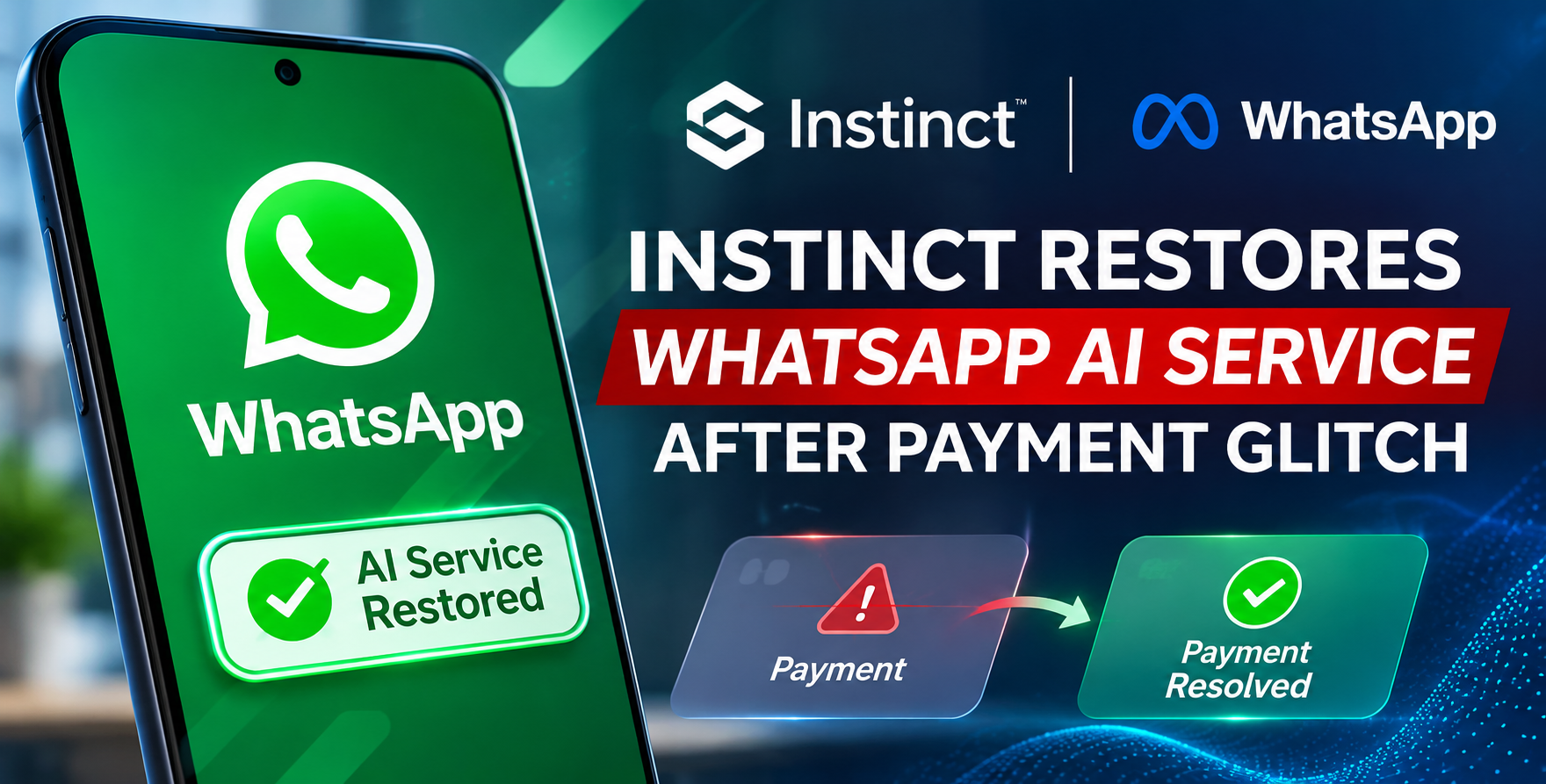
Personal AI agent startup Instinct has restored its WhatsApp services after an internal configuration issue disrupted payments to a service provider,
temporarily preventing the assistant from responding to users.
The disruption occurred on November 1, founder and Chief Executive Noah Shinn said in a public update on November 2. He confirmed that the issue had been resolved and that the service was back to normal.
Shinn said messages sent during the outage had reached Instinct and that the company was contacting users who did not receive replies. He apologised for the interruption and said changes were being made to prevent similar incidents.
The disruption triggered speculation that Meta-owned WhatsApp had blocked Instinct from its platform. However, Shinn attributed the problem to an internal configuration issue rather than a restriction imposed by WhatsApp. His explanation did not indicate that WhatsApp had banned the service.
The incident comes amid changing rules for artificial intelligence services on WhatsApp. Meta's restrictions on general-purpose AI chatbots using the WhatsApp Business platform took effect in January 2026, affecting services such as ChatGPT and Microsoft's AI assistant. Separately, WhatsApp published dedicated terms for third-party AI agents on August 25, setting out conditions for independently operated services connecting to its platform.
Founded in 2025 by Shinn, Instinct enables users to delegate everyday tasks through messaging platforms such as WhatsApp and Apple's iMessage. Its capabilities include booking flights, arranging meetings, making reservations and purchasing groceries.
The company raised $1 billion in September 2026, taking its valuation to $10 billion. Reuters reported that Sequoia Capital, Benchmark Capital and Coatue participated in the funding round.
The outage highlights the operational challenges facing AI agent companies as they move towards handling real-world tasks and transactions. Their reliability depends not only on AI capabilities but also on payment systems, messaging platforms and external service providers. As users increasingly rely on AI agents to manage everyday activities, consistent service availability and transparent communication during disruptions will be critical to building trust.
