


52
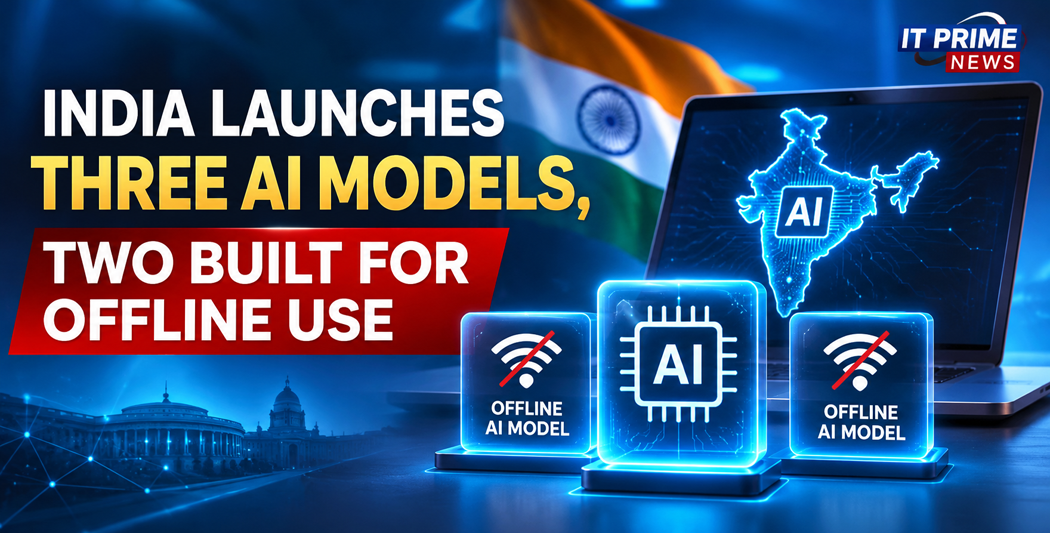
India has introduced three homegrown artificial intelligence models under the IndiaAI Mission, including two designed to run without an internet connection.
The models — EKA-1, Dhīr 2B and Dhīr 5B — were unveiled in New Delhi on November 3 by the Ministry of Electronics and Information Technology (MeitY).
Developed by Soket Labs Technology and Research and ZenteiQ AiTech Innovations, the three models are designed for different applications, ranging from multilingual assistance and reasoning to enterprise services and document automation.
EKA-1, developed by Soket Labs, has 26.3 billion parameters and was trained on around 7.5 trillion tokens. It supports all 22 scheduled Indian languages along with English and is designed for tasks involving mathematics, coding, reasoning and AI-agent applications.
Soket Labs is also positioning EKA-1 for sector-specific applications, including banking, financial services and cybersecurity.
ZenteiQ’s Dhīr 2B and Dhīr 5B support English and 10 Indian languages. The models are designed to run locally on devices such as laptops, embedded boards and edge devices, allowing them to operate without a network connection.
The company says the models can be used for applications such as document automation, information retrieval and enterprise services.
Mobile deployment has also been demonstrated. Gadgets 360 reported that Dhīr 5B was tested on a Motorola Edge 70 Fusion with 12GB of RAM in flight mode, using a quantised model file. However, this represents one tested configuration and does not mean the model will run on every smartphone.
Both Dhīr models are listed by ZenteiQ on AIKosh under the Apache 2.0 licence, along with technical specifications and hardware test results. Soket Labs is currently offering early access to EKA-1 through a waitlist and has said it plans to release the model weights within a month of the launch. That remains a stated target and has not yet been confirmed as a completed release.
The three models were developed under the IndiaAI Mission’s Foundation Models initiative, which provides selected teams with subsidised computing infrastructure and research support.
The larger significance of these models will depend on their wider availability, independent testing and how effectively they perform in real- world applications across India.
