


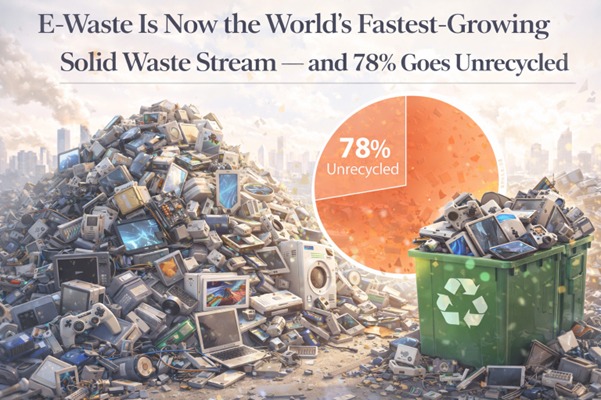
Electronic waste has become the fastest-growing solid waste stream on the planet, generating over 62 million metric tonnes per year. Of that total, only 22.3% was formally collected and recycled. The remainder was burned, buried in landfill, or exported to lower-income countries where informal recycling exposes workers and communities to toxic materials including lead, mercury, and cadmium. Academic researchers argue the scale of the crisis is inseparable from the technology industry’s business model: devices are designed for short life cycles, built with materials that are difficult to separate, and sold in volumes that make waste inevitable. Yet e-waste also represents a significant economic opportunity — the recoverable gold, silver, copper, cobalt, and rare earth elements are estimated to be worth over US$91 billion annually. Researchers argue the solution lies in right-to-repair legislation, extended producer responsibility laws, and investment in formal recycling infrastructure in the regions where informal processing currently dominates.
