


28
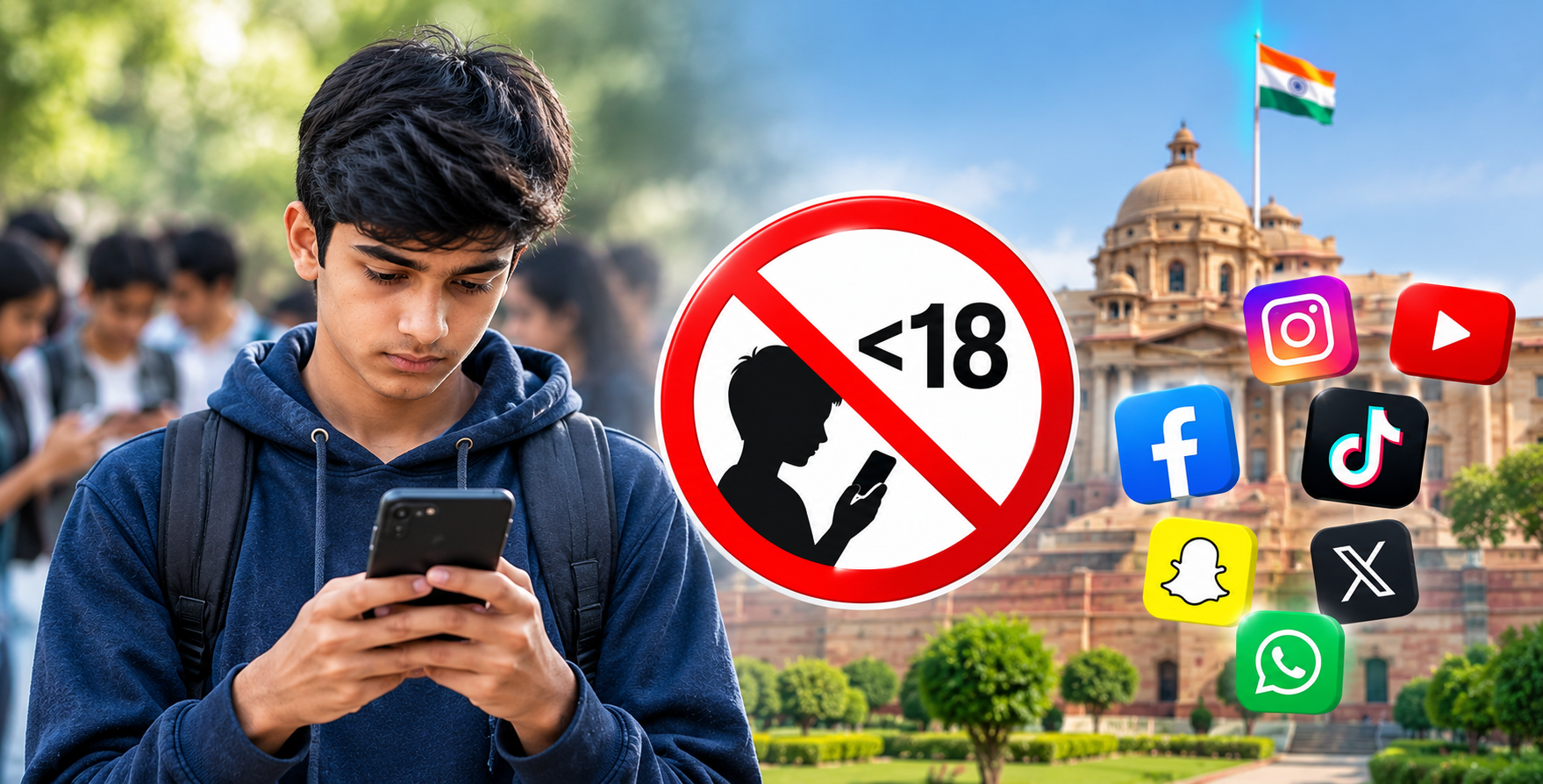
The Centre plans to amend the Information Technology (Intermediary Guidelines and Digital Media Ethics Code) Rules to prevent children below
the age of 18 from independently opening social media accounts, following concerns raised by the Supreme Court over minors' access to digital
platforms.
The government conveyed its position during a Supreme Court hearing on Monday, September 28. Solicitor General Tushar Mehta told a bench headed by Chief Justice of India Surya Kant that the Centre would take steps to make it a statutory obligation for social media intermediaries to prevent minors from opening accounts.
The Supreme Court was hearing a public interest litigation filed by the Just Rights for Children Alliance, which has sought stronger safeguards for children using social media and other digital platforms.
The petition has raised concerns over minors independently accepting the terms and conditions of social media platforms. It argues that under Indian contract law, people below 18 cannot independently enter into binding contracts, while several social media platforms currently allow users below 18 to create accounts.
The court asked the Centre to consider incorporating the proposed safeguards into the statutory framework rather than leaving them as voluntary guidelines. Justice Joymalya Bagchi said platforms operating in India must ensure that their systems comply with Indian law.
The Centre also indicated that parental consent could be considered for certain digital services involving minors. Solicitor General Mehta referred to educational websites as an example where parental consent could be used.
The proposed changes would require social media intermediaries to introduce mechanisms to prevent users below 18 from independently registering for accounts. However, the proposed amendment has not yet been notified, and the exact age-verification and parental-consent mechanism has not been finalised.
The petition has also highlighted risks associated with children’s access toonline platforms, including online grooming, sexual exploitation, cyberbullying, behavioural profiling, misuse of personal data and exposure to age-inappropriate content.
The matter comes amid wider scrutiny of how social media companies operating in India verify users' ages and comply with laws protecting minors. The Supreme Court had earlier taken up the petition on September 10 and sought responses from the Centre.
The case is expected to be considered further as the government examines amendments to the intermediary rules and the framework for protecting minors on social media.
The government conveyed its position during a Supreme Court hearing on Monday, September 28. Solicitor General Tushar Mehta told a bench headed by Chief Justice of India Surya Kant that the Centre would take steps to make it a statutory obligation for social media intermediaries to prevent minors from opening accounts.
The Supreme Court was hearing a public interest litigation filed by the Just Rights for Children Alliance, which has sought stronger safeguards for children using social media and other digital platforms.
The petition has raised concerns over minors independently accepting the terms and conditions of social media platforms. It argues that under Indian contract law, people below 18 cannot independently enter into binding contracts, while several social media platforms currently allow users below 18 to create accounts.
The court asked the Centre to consider incorporating the proposed safeguards into the statutory framework rather than leaving them as voluntary guidelines. Justice Joymalya Bagchi said platforms operating in India must ensure that their systems comply with Indian law.
The Centre also indicated that parental consent could be considered for certain digital services involving minors. Solicitor General Mehta referred to educational websites as an example where parental consent could be used.
The proposed changes would require social media intermediaries to introduce mechanisms to prevent users below 18 from independently registering for accounts. However, the proposed amendment has not yet been notified, and the exact age-verification and parental-consent mechanism has not been finalised.
The petition has also highlighted risks associated with children’s access toonline platforms, including online grooming, sexual exploitation, cyberbullying, behavioural profiling, misuse of personal data and exposure to age-inappropriate content.
The matter comes amid wider scrutiny of how social media companies operating in India verify users' ages and comply with laws protecting minors. The Supreme Court had earlier taken up the petition on September 10 and sought responses from the Centre.
The case is expected to be considered further as the government examines amendments to the intermediary rules and the framework for protecting minors on social media.
