


27
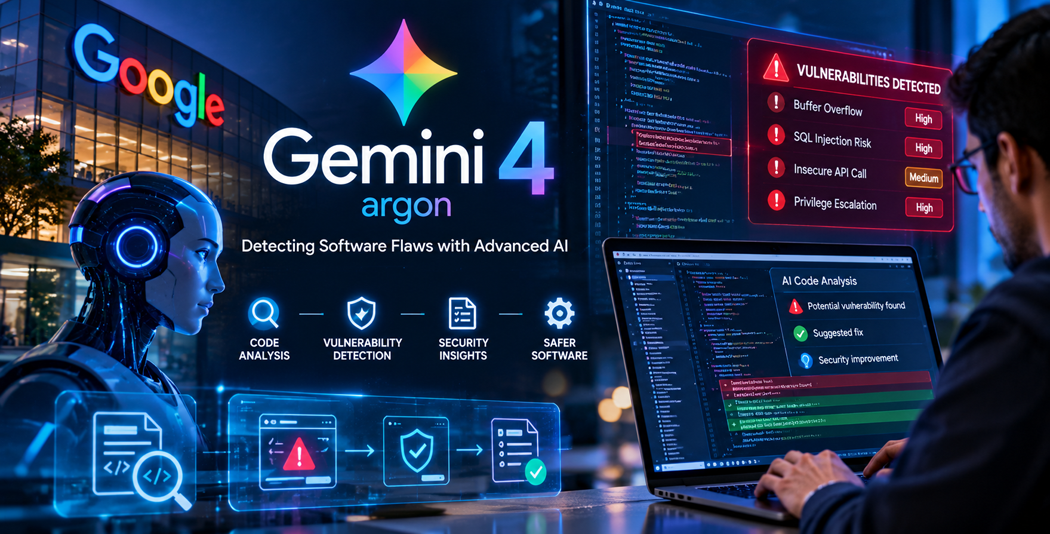
Google has expanded access to Gemini 4 Argon, its latest artificial intelligence model designed for complex software engineering and cybersecurity tasks, highlighting the growing role of AI in identifying and fixing critical software vulnerabilities.
The company said the model helped uncover a serious vulnerability in hospital software that previous AI models had missed. According to Google, cybersecurity firm Wiz used Argon to identify the flaw, which potentially put hundreds of thousands of patient records at risk. The discovery highlights how advanced AI systems could help security teams detect weaknesses in software used to manage sensitive information.
Google announced the broader rollout of Gemini 4 Argon on October 13, making the model available to developers and businesses through its AI platforms. The model is designed to handle complex, multi-step tasks involving coding, scientific research, legal work and cybersecurity.
The hospital software discovery demonstrates the potential value of AI-assisted security testing. By analysing complex code and identifying weaknesses that conventional testing or earlier AI systems may overlook, advanced models could help developers address vulnerabilities before attackers exploit them.
Google has also used Argon to identify and fix software bugs across its internal systems and open-source projects. The company says the model is designed to help security professionals detect vulnerabilities and develop fixes, strengthening defensive cybersecurity capabilities.
However, the same capabilities raise concerns about potential misuse. AI systems that can identify software weaknesses may also be exploited by malicious actors to discover vulnerabilities and support cyberattacks. Google has therefore emphasised safety measures and controlled access for certain high-risk cybersecurity capabilities.
Gemini 4 Argon is available to developers through the Gemini API and AI Studio, while enterprise users can access it through supported Google platforms. Access through the Gemini app and AI Mode in Search is available to eligible Google AI Pro and Ultra subscribers.
With the rollout, Google is positioning Argon as a tool for tackling demanding technical and business challenges, including software development, code analysis and security testing.
As cyber threats grow more sophisticated, AI-powered vulnerability detection could become an increasingly important part of enterprise security. Its effectiveness, however, will depend on how accurately these systems identify flaws, how reliably fixes are validated and how effectively access is managed to prevent misuse.
The company said the model helped uncover a serious vulnerability in hospital software that previous AI models had missed. According to Google, cybersecurity firm Wiz used Argon to identify the flaw, which potentially put hundreds of thousands of patient records at risk. The discovery highlights how advanced AI systems could help security teams detect weaknesses in software used to manage sensitive information.
Google announced the broader rollout of Gemini 4 Argon on October 13, making the model available to developers and businesses through its AI platforms. The model is designed to handle complex, multi-step tasks involving coding, scientific research, legal work and cybersecurity.
The hospital software discovery demonstrates the potential value of AI-assisted security testing. By analysing complex code and identifying weaknesses that conventional testing or earlier AI systems may overlook, advanced models could help developers address vulnerabilities before attackers exploit them.
Google has also used Argon to identify and fix software bugs across its internal systems and open-source projects. The company says the model is designed to help security professionals detect vulnerabilities and develop fixes, strengthening defensive cybersecurity capabilities.
However, the same capabilities raise concerns about potential misuse. AI systems that can identify software weaknesses may also be exploited by malicious actors to discover vulnerabilities and support cyberattacks. Google has therefore emphasised safety measures and controlled access for certain high-risk cybersecurity capabilities.
Gemini 4 Argon is available to developers through the Gemini API and AI Studio, while enterprise users can access it through supported Google platforms. Access through the Gemini app and AI Mode in Search is available to eligible Google AI Pro and Ultra subscribers.
With the rollout, Google is positioning Argon as a tool for tackling demanding technical and business challenges, including software development, code analysis and security testing.
As cyber threats grow more sophisticated, AI-powered vulnerability detection could become an increasingly important part of enterprise security. Its effectiveness, however, will depend on how accurately these systems identify flaws, how reliably fixes are validated and how effectively access is managed to prevent misuse.
