


30
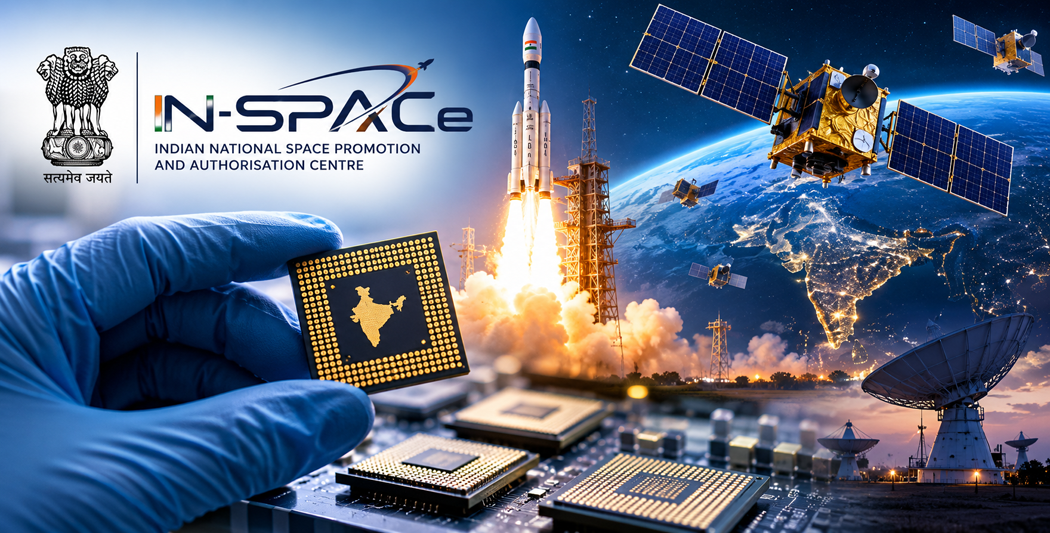
India is stepping up efforts to strengthen its domestic space technology supply chain, with the Indian National Space Promotion and Authorisation Centre (IN-SPACe) encouraging private space companies to adopt indigenously developed semiconductor chips for space and launch
vehicle applications.
The initiative was discussed at a webinar held on October 13 by IN-SPACe in collaboration with the government-run Semiconductor Laboratory (SCL), Mohali. The session focused on introducing SCL’s semiconductor products to industry stakeholders and exploring opportunities for wider adoption by private space companies.
Semiconductor chips are critical to satellite electronics, onboard computing, communication systems and launch vehicle operations. Components used in space missions must meet stringent reliability requirements and withstand radiation, extreme temperatures and other demanding operating conditions.
SCL Mohali has developed semiconductor technologies for specialised applications, including radiation-hardened chips and other components used in India's space programme. The laboratory’s capabilities include semiconductor fabrication, testing, packaging and quality assurance.
India has already deployed domestically developed semiconductor components in its space missions. SCL-developed technology has supported missions including Chandrayaan-3 and Aditya-L1, while the Vikram processor is used in Indian launch vehicles.
IN-SPACe’s latest outreach seeks to connect these domestic capabilities with the requirements of private space companies, including startups and other commercial players. Wider adoption could provide companies with additional domestic sourcing options for critical components and help strengthen India’s space-sector supply chain.
However, reducing dependence on imported semiconductors remains a challenge. Space-grade components must satisfy demanding performance and reliability standards, while manufacturers need to ensure consistent production, testing and qualification for specific mission requirements.
The initiative does not mean India has eliminated its reliance on foreign chips. Instead, it highlights an effort to expand the availability and adoption of locally developed alternatives as the countr’s commercial space industry grows.
Closer collaboration between government laboratories and private companies could help strengthen India’s semiconductor ecosystem and support the development of indigenous technologies for future space missions.
The initiative was discussed at a webinar held on October 13 by IN-SPACe in collaboration with the government-run Semiconductor Laboratory (SCL), Mohali. The session focused on introducing SCL’s semiconductor products to industry stakeholders and exploring opportunities for wider adoption by private space companies.
Semiconductor chips are critical to satellite electronics, onboard computing, communication systems and launch vehicle operations. Components used in space missions must meet stringent reliability requirements and withstand radiation, extreme temperatures and other demanding operating conditions.
SCL Mohali has developed semiconductor technologies for specialised applications, including radiation-hardened chips and other components used in India's space programme. The laboratory’s capabilities include semiconductor fabrication, testing, packaging and quality assurance.
India has already deployed domestically developed semiconductor components in its space missions. SCL-developed technology has supported missions including Chandrayaan-3 and Aditya-L1, while the Vikram processor is used in Indian launch vehicles.
IN-SPACe’s latest outreach seeks to connect these domestic capabilities with the requirements of private space companies, including startups and other commercial players. Wider adoption could provide companies with additional domestic sourcing options for critical components and help strengthen India’s space-sector supply chain.
However, reducing dependence on imported semiconductors remains a challenge. Space-grade components must satisfy demanding performance and reliability standards, while manufacturers need to ensure consistent production, testing and qualification for specific mission requirements.
The initiative does not mean India has eliminated its reliance on foreign chips. Instead, it highlights an effort to expand the availability and adoption of locally developed alternatives as the countr’s commercial space industry grows.
Closer collaboration between government laboratories and private companies could help strengthen India’s semiconductor ecosystem and support the development of indigenous technologies for future space missions.
