


42
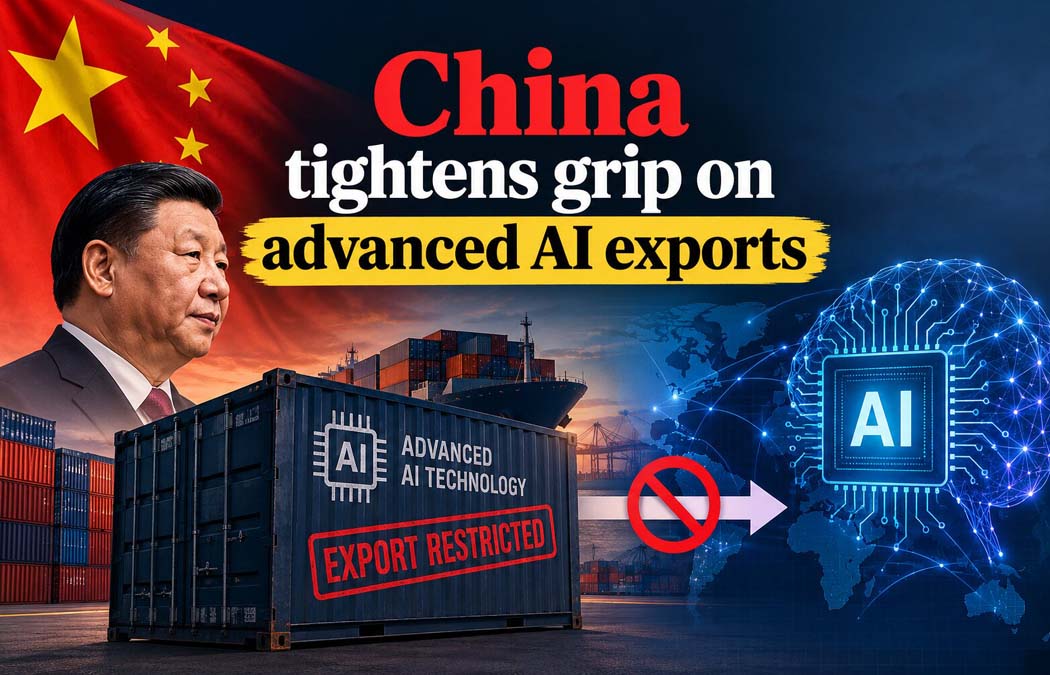
China has proposed tighter controls on the overseas transfer of advanced artificial intelligence technologies, a move that could reshape how its AI developers expand internationally while retaining control over their most valuable intellectual property. The draft framework seeks to distinguish between providing access to AI services and transferring the underlying technology that allows overseas organisations to operate or reproduce those systems independently.
China’s Ministry of Commerce and Ministry of Science and Technology released the proposed revisions on October 16, 2026. The consultation covers 40 technologies across artificial intelligence, biomedicine and photovoltaics, including 23 AI-related technologies involving advanced models, intelligent agents, computing clusters and information-processing capabilities.
Under the proposal, certain technology transfers would face export restrictions or require government approval. However, the measures do not amount to a blanket ban on the overseas use of Chinese AI products.Access through websites, applications, application programming interfaces (APIs) and software-as-a-service platforms is generally distinguished from exporting the underlying technology itself.
This distinction could allow Chinese developers to continue serving international customers without necessarily transferring model technology, intellectual property or specialised technical expertise abroad. The treatment of specific deployments and transactions will depend on the technologies involved and the final regulatory requirements.
The draft outlines three alternative tests for identifying certain advanced AI models that could fall within the proposed controls. These include training requirements exceeding (10^{26}) computational operations, a model size of at least two trillion parameters, or a ranking among the world’s top 10 systems under specified performance, usage or efficiency assessments.
Parameters are numerical values that AI models learn during training. The proposed criteria could bring some highly capable systems within the framework. However, questions remain about how the ranking test would be applied and how models that activate only part of their parameters for individual tasks would be assessed.
The proposed controls also extend beyond model development. They cover technologies associated with AI chip design, intelligent computing clusters and other capabilities used to develop and operate large-scale AI systems.The wider catalogue includes technologies in biomedicine and solar manufacturing, making the consultation broader than AI alone.
China has also introduced an interim registration requirement for specified technology exports covered by the announcement. Effective from October 16, the requirement applies to covered transfers of technology ownership, overseas-use licences and certain changes in ownership or effective control involving overseas entities. It also covers qualifying exports that had begun but were not yet completed.
This interim registration process should not be confused with the proposed export-control framework. The catalogue revisions remain under consultation, with comments accepted until November 15, 2026. The authorities have yet to complete the process that will determine the final scope and implementation of the proposed restrictions.
For Chinese AI companies such as DeepSeek, Moonshot and Z.AI, the proposals raise practical questions about overseas infrastructure, international partnerships and the distribution of advanced models. Developers that rely on computing facilities outside China may need greater clarity on whether particular arrangements involve a covered technology transfer or qualify for facilitation measures.
The rules could also complicate some cross-border licensing and investment arrangements if Chinese technology becomes subject to overseas ownership or control. However, the actual impact will depend on the final provisions and how regulators apply them to individual transactions.
China’s proposed approach reflects an effort to preserve domestic control over strategically important AI capabilities while continuing to commercialise access to its technology internationally. Whether this model remains commercially attractive will depend partly on the clarity of the final rules and the ability of developers and overseas customers to comply with them.
For the global AI industry, the consultation marks an important development in the regulation of cross-border technology transfers. Its eventual effects will become clearer once Chinese authorities finalise the catalogue, clarify the technical thresholds and explain how the controls apply to different forms of international AI deployment.
