


15
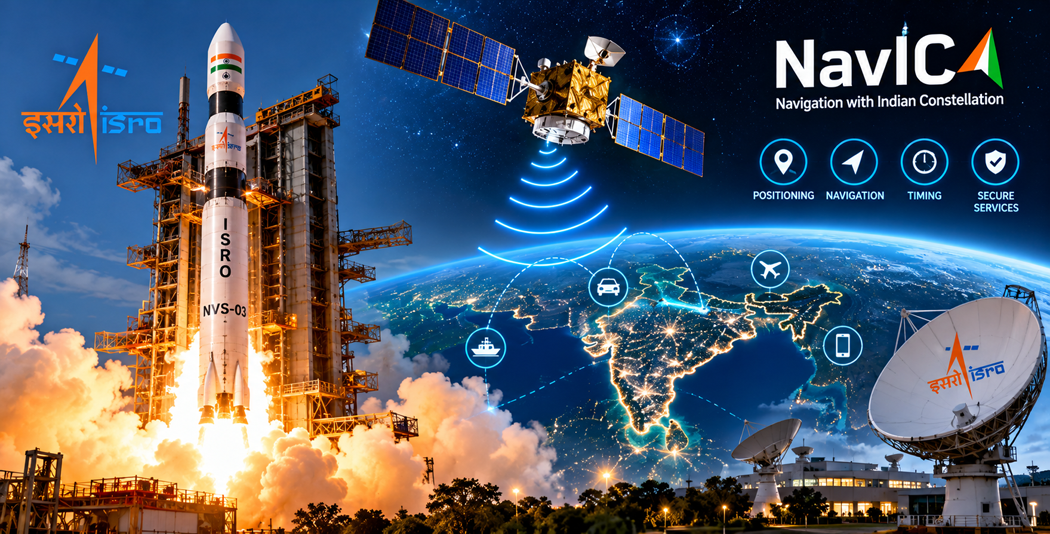
The Indian Space Research Organisation (ISRO) is scheduled to launch its NVS-03 navigation satellite on October 30, marking another step towards
strengthening India's independent satellite navigation system, NavIC.
The satellite will be launched aboard the GSLV-F18 rocket at 11:51 pm IST from the Satish Dhawan Space Centre in Sriharikota. As the third satellite in ISRO's second-generation navigation series, NVS-03 is designed to improve the availability and reliability of navigation and timing services across India and up to 1,500 kilometres beyond its borders.
The mission is significant because NavIC currently has only three operational navigation satellites. According to a government statement made in Parliament in July 2026, at least four satellites are required to provide basic standalone positioning services. Although NavIC's timing services remain functional, its standalone positioning capability is currently limited.
NVS-03 is expected to help address this gap. The satellite carries an indigenous atomic clock, along with other procured clocks, to support precise timekeeping, which is essential for accurate satellite navigation. It will also introduce the L1 frequency band to NavIC's existing L5 and S-band signals. This addition is expected to improve compatibility with civilian navigation devices that support the L1 frequency.
A stronger NavIC network could support several applications, including road and maritime navigation, transportation, emergency response and strategic operations. It would also help India reduce its dependence on foreign satellite navigation systems.
However, the satellite must first complete its launch, orbit-raising and commissioning before becoming operational. ISRO is also developing the next-generation NVS-04 and NVS-05 satellites to further strengthen the navigation constellation.
