


Artificial Intelligence (AI) has become woven into our daily lives as more people adopt it. According to OpenAI’s analysis of over 1.5 million conversations, many people are relying on ChatGPT to complete everyday tasks. To say that AI adoption has grown since the release of ChatGPT in 2022 may seem like an understatement, given that OpenAI’s chatbot alone receives over 2.5 billion requests per day. Thanks to the meteoric rise in AI usage, both for personal use and for continued adoption by businesses, companies are splurging cash on AI data centers to ensure their infrastructure keeps up with demand.
Morgan Stanley, a key financier of the AI race, estimates that a whopping $3 trillion will be spent on AI data centers between 2025 and 2029, with about half of that cash being used to procure the actual AI-capable hardware. But this rapid growth and need for AI-focused data centers have resulted in an unprecedented supply-and-demand imbalance in the global semiconductor ecosystem, leading to a shortage of memory chips as major companies that make RAM, such as Samsung Electronics, SK Hynix, and Micron Technology, prioritize the kinds that are used in AI data centers.
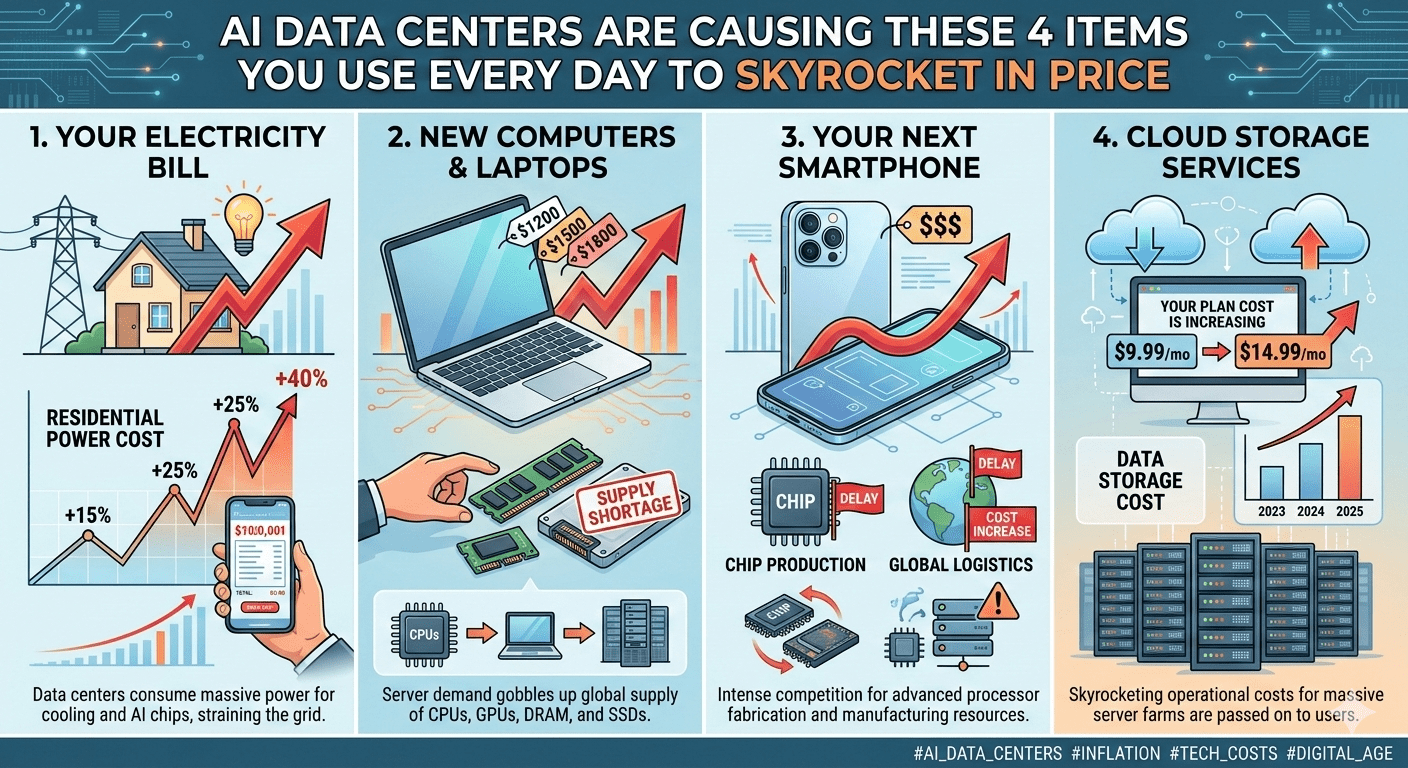
If you’ve been keeping up with the tech news, you’ve probably seen how crazy RAM prices have become. But if you think that a memory chip crunch only means computers will rise in price, think again. The current RAM shortage will affect not only your next-door PC gamer. It might also increase the prices of other items you rely on every day.
