


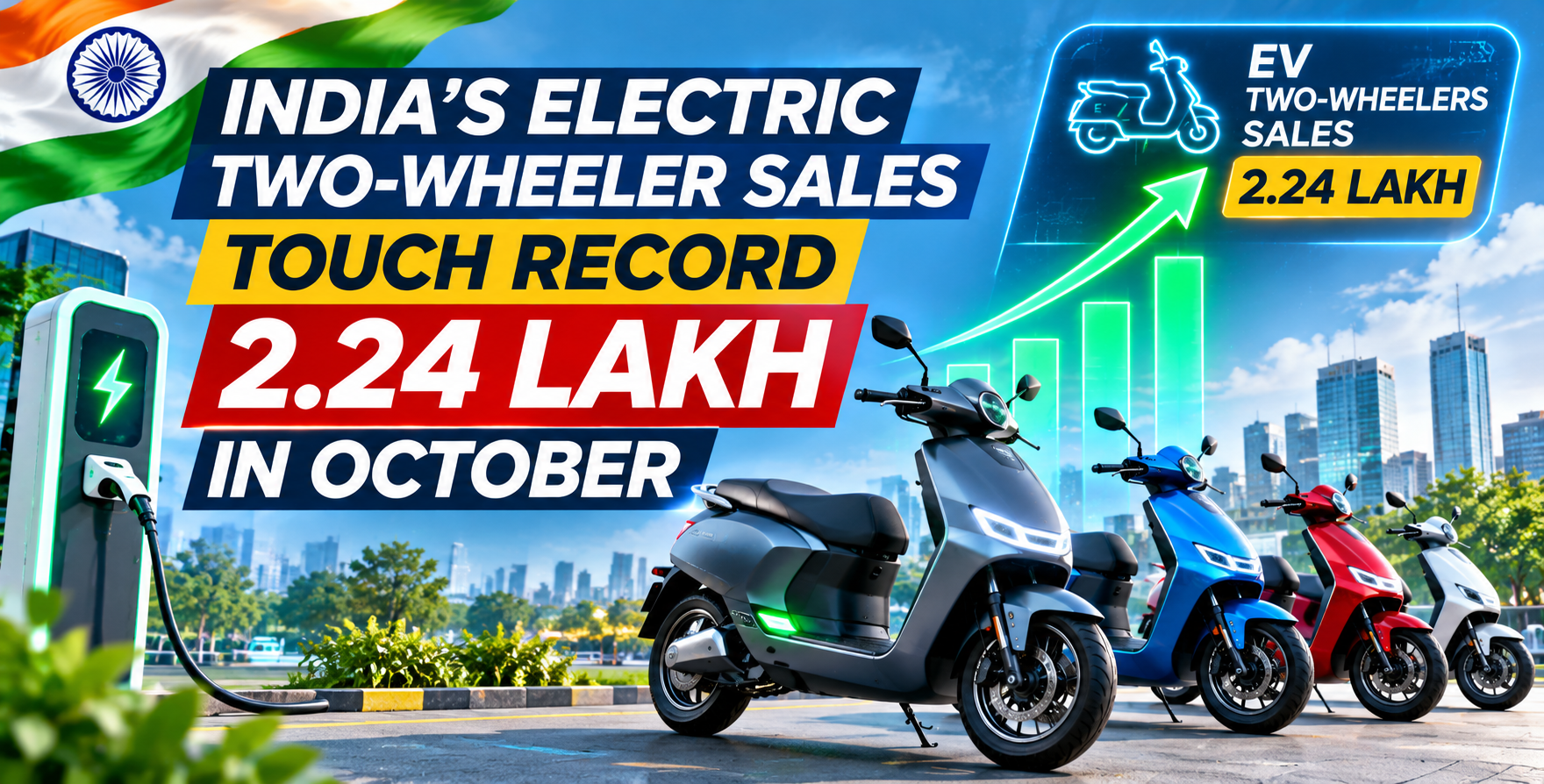
24
India's electric two-wheeler market recorded its highest-ever monthly registrations in October 2026, crossing 2.24 lakh units as festive-season demand and new model launches boosted
consumer interest in electric mobility.
According to vehicle registration data from the government's Vahan portal, electric two-wheeler registrations rose approximately 48 per cent year-on-year from around 1.51 lakh units in October 2025. The October figure was also about 7 per cent higher than the 2.09 lakh units registered in September 2026.
The record performance highlights the growing adoption of electric scooters and motorcycles in India, as established automobile manufacturers strengthen their presence alongside electric vehicle startups.
TVS Motor maintained its position as India's leading electric two-wheeler manufacturer in October, recording 60,433 registrations, nearly double its volume in the corresponding month last year. Its market share increased to approximately 27 per cent, compared with 20.6 per cent a year earlier.
Bajaj Auto secured the second position with 49,068 registrations, accounting for nearly 22 per cent of the market. The company's Chetak electric scooter continued to contribute to its strong performance.
Ather Energy followed with 31,796 registrations, representing approximately 14 per cent of the market. While the company recorded year-on-year growth, its expansion was comparatively slower than that of some of its major competitors.
Hero MotoCorp's Vida electric scooter brand recorded approximately 29,936 registrations in October, marking an 81 per cent increase compared with the same month last year. Its market share also improved, indicating growing competition in the electric scooter segment.
In contrast, Ola Electric registered 12,096 units, a 26 per cent decline year-on-year. The company's performance reflects the intensifying competition in India's electric two-wheeler market, where established manufacturers are gaining ground.
Other manufacturers, including Greaves Electric Mobility and River, also recorded growth during the month, highlighting the expanding participation of companies in the segment. The rise in registrations is also encouraging manufacturers to expand production capacity to meet growing demand.
TVS Motor has indicated plans to increase its monthly electric two-wheeler production capacity from around 60,000–65,000 units to approximately 80,000 units.
Bajaj Auto is also planning to expand production capacity for its Chetak electric scooter,targeting around 80,000 units per month.
Ather Energy is working to increase its manufacturing capacity through expansion at its existing Hosur facility and its upcoming manufacturing operations in Maharashtra.
The capacity expansion plans underline the industry's efforts to meet rising demand while strengthening India's electric vehicle manufacturing ecosystem.
October's record registrations indicate that electric two-wheelers are becoming an increasingly important part of India's mobility market. Festive purchases, wider product choices and growing competition among manufacturers have contributed to the segment's expansion.
However, the industry's next phase of growth will depend on manufacturers' ability to improve production, maintain product reliability, expand charging infrastructure and offer competitive pricing.
With major companies increasing their manufacturing capabilities and introducing new models, India's electric two-wheeler market is expected to remain a key area of competition in the country's broader electric mobility transition.
