


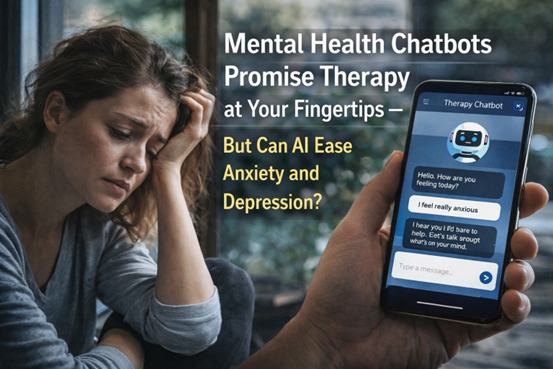
A wave of AI-powered mental health apps has arrived, offering chatbot ‘therapists’ that simulate real therapeutic conversations. Marketed to users who cannot afford or access traditional care, these tools are growing rapidly in a consumer mental health market worth billions. But researchers are raising urgent questions: Can software genuinely ease anxiety and depression, or are users confusing an engaging conversation with clinical care? The apps use large language models that respond empathetically and can hold extended dialogues. However, they are not regulated as medical devices in most countries, do not hold clinical qualifications, and cannot make diagnoses or prescribe treatment. For millions of users who open these apps at 3am in distress, the distinction may not be clear. Academic researchers warn that the therapeutic framing of these consumer apps risks substituting for — rather than supplementing — professional mental health services.
Mental Health Chatbots Promise Therapy at Your Fingertips — But Can AI Ease Anxiety and Depression?
105
