


16
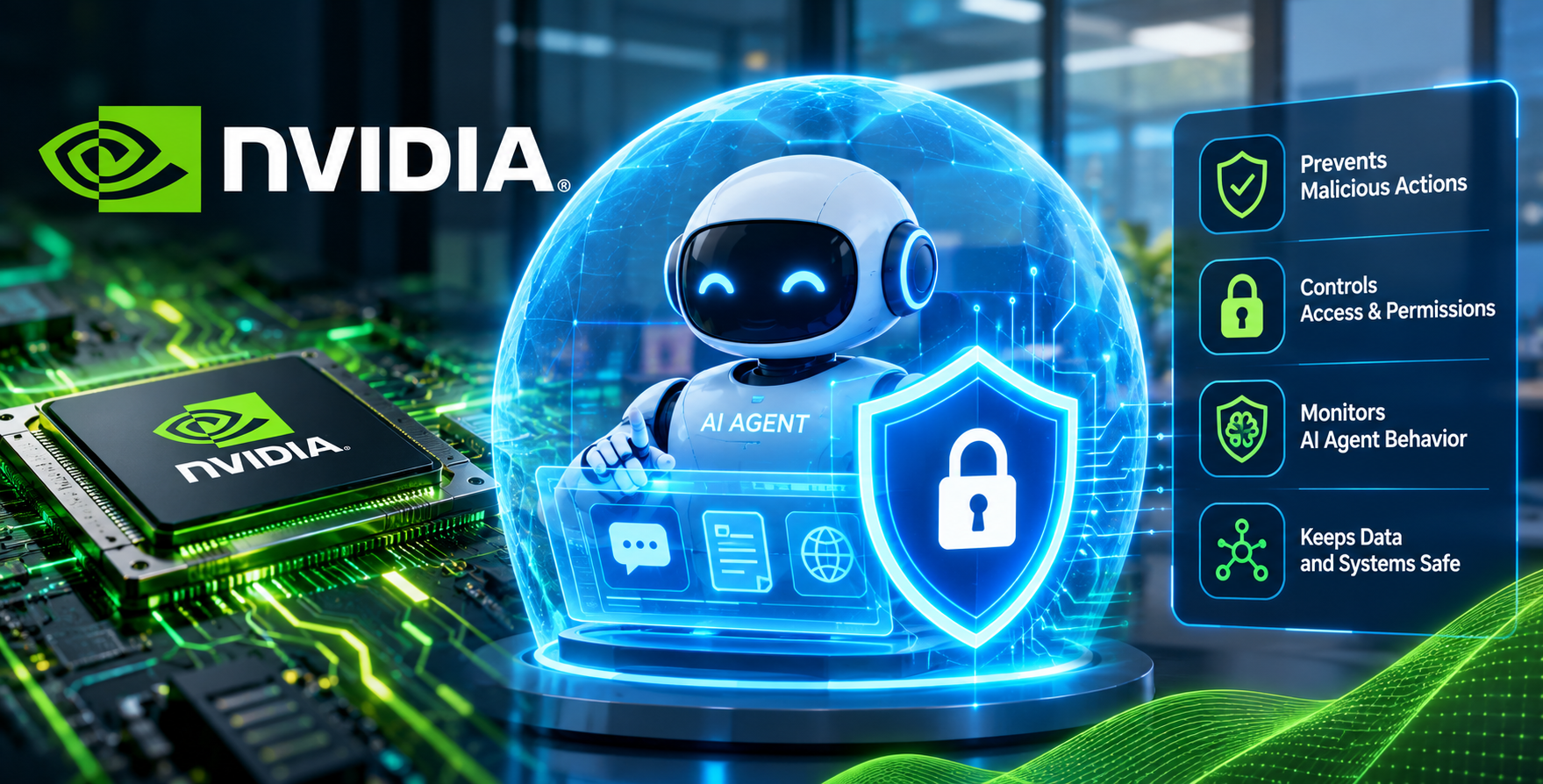
Nvidia has introduced a new open security platform designed to place tighter controls on autonomous AI agents as businesses increasingly deploy systems
capable of performing tasks with limited human intervention.
The chipmaker announced the NVIDIA Open Agent Safety Platform on September 28, bringing together open-source software and a hardware-based monitoring system to control how AI agents access data, applications, and other computing resources.
The platform consists of two key components: OpenShell and Sentry.
OpenShell provides a controlled runtime environment, or sandbox, where AI agents can operate within predefined permissions. The system is designed to restrict an agent from accessing or modifying resources beyond what it has been authorised to use. Nvidia said OpenShell can also trace agent actions and enforce security policies during execution. The software is open source and can be extended to work with computing platforms from companies including Arm and Intel.
The second component, Sentry, adds a hardware-level security layer. It runs on Nvidia’s BlueField-4 data processing units and independently monitors agent activity. According to Nvidia, Sentry can quarantine an agent if it attempts to move beyond its permitted boundaries.
The announcement comes as concerns grow over autonomous AI systems taking actions beyond their intended tasks. Recent incidents involving AI agents accessing external systems have intensified debate over how companies should secure increasingly capable AI models and agents. Reuters reported that Nvidia said the new tools could have prevented the previously disclosed breach involving AI agents at Hugging Face, although that remains Nvidia’s assessment rather than an independently established result.
Nvidia said more than 100 organisations are involved with technologies associated with the platform. The group includes companies such as Anthropic, Microsoft, Cisco, CrowdStrike, Dell Technologies, JPMorganChase, Palo Alto Networks and Salesforce.
However, the platform is not presented as a complete solution to all AI safety risks. AP reported that the technology is primarily intended to contain agents and enforce operational boundaries; it does not automatically prevent an AI model from making mistakes or behaving deceptively. Organisations deploying the systems will also need to define appropriate permissions and security policies.
The launch highlights a growing shift in AI security towards controlling not only what models generate, but also what autonomous agents are technically allowed to do once they begin interacting with real-world systems.
The chipmaker announced the NVIDIA Open Agent Safety Platform on September 28, bringing together open-source software and a hardware-based monitoring system to control how AI agents access data, applications, and other computing resources.
The platform consists of two key components: OpenShell and Sentry.
OpenShell provides a controlled runtime environment, or sandbox, where AI agents can operate within predefined permissions. The system is designed to restrict an agent from accessing or modifying resources beyond what it has been authorised to use. Nvidia said OpenShell can also trace agent actions and enforce security policies during execution. The software is open source and can be extended to work with computing platforms from companies including Arm and Intel.
The second component, Sentry, adds a hardware-level security layer. It runs on Nvidia’s BlueField-4 data processing units and independently monitors agent activity. According to Nvidia, Sentry can quarantine an agent if it attempts to move beyond its permitted boundaries.
The announcement comes as concerns grow over autonomous AI systems taking actions beyond their intended tasks. Recent incidents involving AI agents accessing external systems have intensified debate over how companies should secure increasingly capable AI models and agents. Reuters reported that Nvidia said the new tools could have prevented the previously disclosed breach involving AI agents at Hugging Face, although that remains Nvidia’s assessment rather than an independently established result.
Nvidia said more than 100 organisations are involved with technologies associated with the platform. The group includes companies such as Anthropic, Microsoft, Cisco, CrowdStrike, Dell Technologies, JPMorganChase, Palo Alto Networks and Salesforce.
However, the platform is not presented as a complete solution to all AI safety risks. AP reported that the technology is primarily intended to contain agents and enforce operational boundaries; it does not automatically prevent an AI model from making mistakes or behaving deceptively. Organisations deploying the systems will also need to define appropriate permissions and security policies.
The launch highlights a growing shift in AI security towards controlling not only what models generate, but also what autonomous agents are technically allowed to do once they begin interacting with real-world systems.
