


13
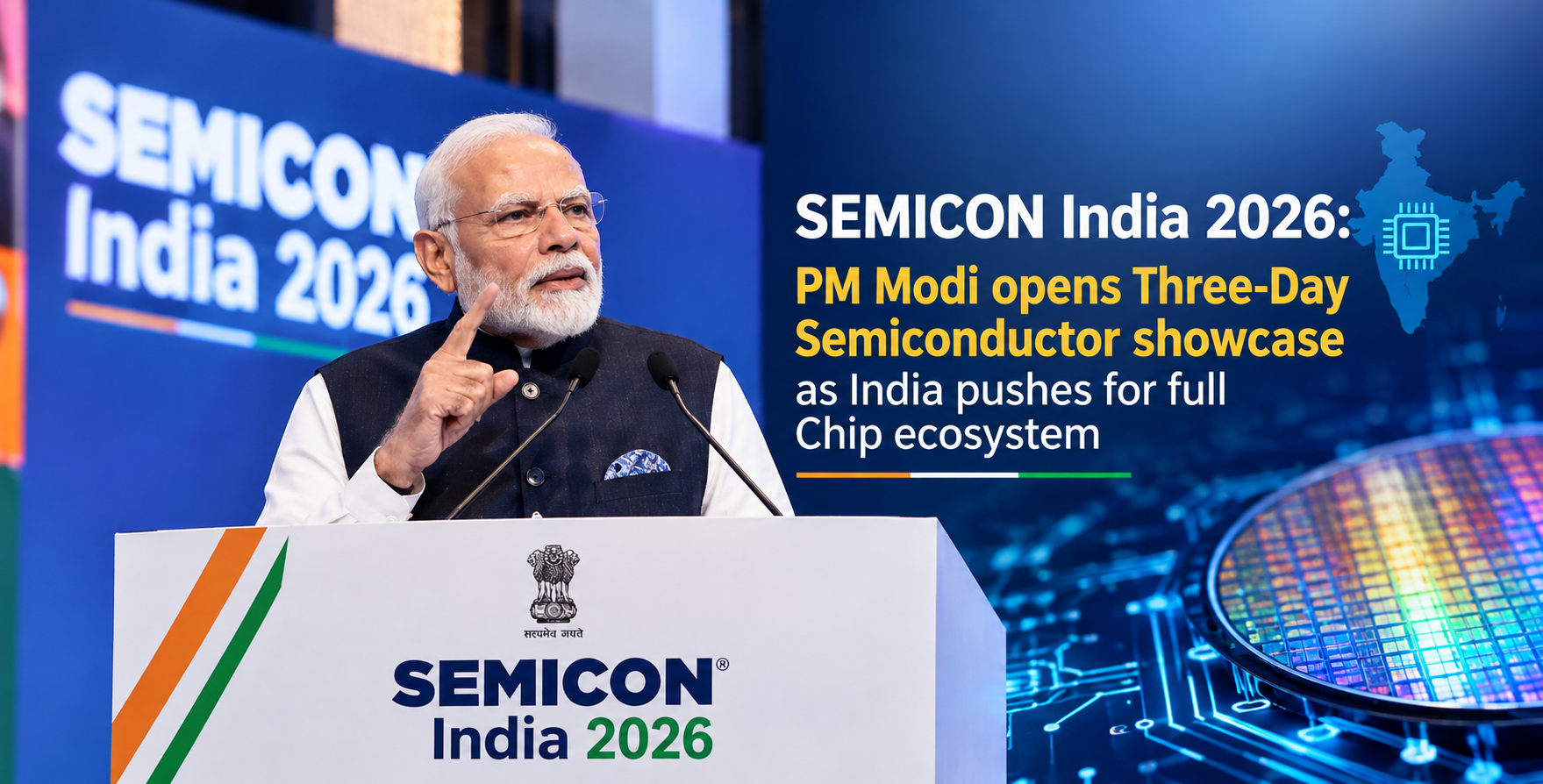
Prime Minister Narendra Modi on Thursday inaugurated the fifth edition of SEMICON India 2026
at Yashobhoomi in New Delhi, bringing together global and Indian semiconductor companies,
policymakers, investors, researchers, startups and academic institutions as India expands its
efforts to build a complete semiconductor and electronics ecosystem.
The three-day conference and exhibition, being held from September 17 to 19, is themed “Silicon to Systems: Building the Ecosystem.” The event covers the semiconductor value chain from materials, equipment and chip design to fabrication, advanced packaging, electronics and systems.
More than 600 companies and representatives from 52 countries are participating in the event, according to the Prime Minister’s Office. The exhibition includes country pavilions from Japan, South Korea, Malaysia, the Netherlands, Singapore and Sweden, along with state booths, a startup pavilion, an innovation showcase and a workforce development pavilion. Around 50,000 visitors are expected to attend, with more than 400 executives and over 150 speakers taking part.
While semiconductor fabrication remains a major part of India's plans, SEMICON India 2026 places greater emphasis on building capabilities across the wider value chain. The event comes as India seeks to strengthen areas including chip design, advanced packaging, semiconductor equipment and materials, electronics manufacturing, research and development and talent development. The broader objective is to establish capabilities across multiple stages of semiconductor production rather than focus only on chip fabrication.
The shift is also reflected in the government's Semicon 2.0 programme. The Union Cabinet has approved an outlay of ₹1,27,500 crore for the programme, which focuses on six areas: chip design, machines and materials, new fabrication facilities, ATMP/OSAT packaging, research and development, and talent development.
The conference comes as India looks to attract greater participation from companies across the global semiconductor supply chain. On September 16, a day before the inauguration, Prime Minister Modi chaired a roundtable with senior executives from companies including Micron Technology, ASML, Infineon Technologies, Applied Materials, Tokyo Electron, AMD, Intel and Tata Electronics. The discussions focused on India's semiconductor development and opportunities for greater industry participation.
The event is also designed to facilitate international collaboration through country roundtables and discussions involving companies, governments and industry stakeholders. According to the government, 12 semiconductor manufacturing projects have been approved under the first phase of the programme, representing cumulative investment of more than ₹1.64 lakh crore.
The approved projects include a silicon fabrication facility, a silicon-carbide fab, an integrated gallium-nitride micro-LED display fab and nine packaging units. The government says these projects are expected to serve sectors including consumer electronics, industrial electronics, automobiles, power electronics, telecommunications and aerospace.
The government has also said that three companies — Micron, Kaynes and CG Semi — have started commercial production, while another approved project is expected to begin production in 2026.
The government and industry bodies are now placing greater emphasis on developing the supporting infrastructure required for semiconductor manufacturing, including equipment and materials, advanced packaging, research capabilities and a trained workforce.
The conference will continue at Yashobhoomi through September 19, with sessions covering semiconductor and display technologies, international collaboration, innovation, investment and workforce development.
The three-day conference and exhibition, being held from September 17 to 19, is themed “Silicon to Systems: Building the Ecosystem.” The event covers the semiconductor value chain from materials, equipment and chip design to fabrication, advanced packaging, electronics and systems.
More than 600 companies and representatives from 52 countries are participating in the event, according to the Prime Minister’s Office. The exhibition includes country pavilions from Japan, South Korea, Malaysia, the Netherlands, Singapore and Sweden, along with state booths, a startup pavilion, an innovation showcase and a workforce development pavilion. Around 50,000 visitors are expected to attend, with more than 400 executives and over 150 speakers taking part.
While semiconductor fabrication remains a major part of India's plans, SEMICON India 2026 places greater emphasis on building capabilities across the wider value chain. The event comes as India seeks to strengthen areas including chip design, advanced packaging, semiconductor equipment and materials, electronics manufacturing, research and development and talent development. The broader objective is to establish capabilities across multiple stages of semiconductor production rather than focus only on chip fabrication.
The shift is also reflected in the government's Semicon 2.0 programme. The Union Cabinet has approved an outlay of ₹1,27,500 crore for the programme, which focuses on six areas: chip design, machines and materials, new fabrication facilities, ATMP/OSAT packaging, research and development, and talent development.
The conference comes as India looks to attract greater participation from companies across the global semiconductor supply chain. On September 16, a day before the inauguration, Prime Minister Modi chaired a roundtable with senior executives from companies including Micron Technology, ASML, Infineon Technologies, Applied Materials, Tokyo Electron, AMD, Intel and Tata Electronics. The discussions focused on India's semiconductor development and opportunities for greater industry participation.
The event is also designed to facilitate international collaboration through country roundtables and discussions involving companies, governments and industry stakeholders. According to the government, 12 semiconductor manufacturing projects have been approved under the first phase of the programme, representing cumulative investment of more than ₹1.64 lakh crore.
The approved projects include a silicon fabrication facility, a silicon-carbide fab, an integrated gallium-nitride micro-LED display fab and nine packaging units. The government says these projects are expected to serve sectors including consumer electronics, industrial electronics, automobiles, power electronics, telecommunications and aerospace.
The government has also said that three companies — Micron, Kaynes and CG Semi — have started commercial production, while another approved project is expected to begin production in 2026.
The government and industry bodies are now placing greater emphasis on developing the supporting infrastructure required for semiconductor manufacturing, including equipment and materials, advanced packaging, research capabilities and a trained workforce.
The conference will continue at Yashobhoomi through September 19, with sessions covering semiconductor and display technologies, international collaboration, innovation, investment and workforce development.
