


The arrival of humanoid robots and physically capable AI systems in real-world workplace environments is no longer a distant prospect — it is happening in 2026. Academic researchers writing for The Conversation document a pivotal transition: after years of robotic systems confined to highly structured single-task environments such as automotive assembly lines and warehouse sorting, a new generation of physically intelligent robots is being deployed in environments that have never previously been accessible to automation, including logistics centres, construction sites, hotel concierge desks, and retail floors. The transition is being driven by three converging developments: the maturation of foundation models for physical AI — large trained models that give robots generalised understanding of physical environments rather than requiring rigid programming for specific tasks; the availability of affordable, standardised humanoid robot platforms from manufacturers including Unitree, Agility Robotics, Figure, and Boston Dynamics; and the reduction in training costs enabled by simulation environments including NVIDIA Omniverse, which allow robots to practise millions of hours of real-world scenarios in virtual space before being deployed physically. Academic researchers argue that most organisations are approaching this transition with a fundamental category error: treating humanoid robots as a workforce reduction tool rather than as a new class of colleague that requires the same kind of onboarding, task definition, safety testing, and management oversight as a human employee. The researchers identify three categories of near-term jobs where physical AI deployment is already underway: repetitive logistics and warehousing tasks, where robot deployment is already at commercial scale at companies including Amazon and Ocado; inspection and quality control in high-hazard environments such as oil platforms, nuclear plants, and power distribution infrastructure; and last-mile delivery and hospitality services, where both wheeled and humanoid systems are in operational trials. The academic analysis concludes that the most significant workforce impacts of physical AI will be felt not in the jobs that robots do instead of humans, but in the reconfiguration of human roles around robot capabilities — a transition that requires proactive planning from employers, educators, and governments that most are not currently undertaking.
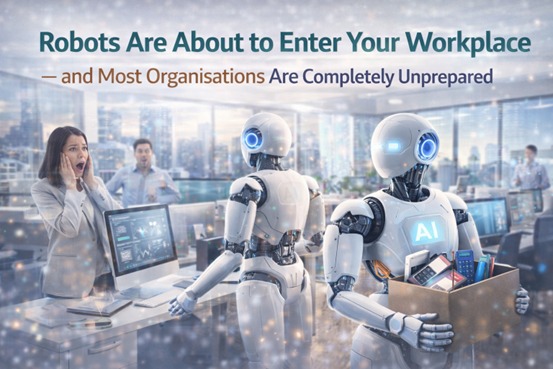
Robots Are About to Enter Your Workplace — and Most Organisations Are Completely Unprepared
102
