


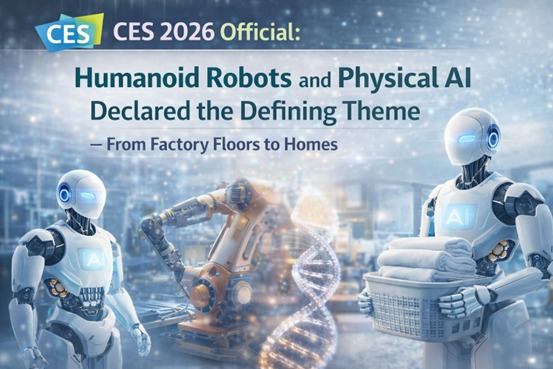
The Consumer Electronics Show 2026, held in Las Vegas in January, was officially declared by CES organisers in its post-event press release as the year ‘artificial intelligence stopped being software and became physical infrastructure.’ The CES.tech official press release documented a landmark shift in the robotics category: humanoid and general-purpose robots moved from single-task demonstration devices shown at previous CES events to multi-scenario collaborative systems capable of operating in real-world home, industrial, medical, and logistics environments. Exhibitors in the robotics category at CES 2026 included Hyundai Motor Group, Unitree Robotics, Richtech Robotics, and Primech AI. Hyundai Motor Group presented its ‘AI + Robotics’ strategic roadmap, articulating a long-term vision for human-centred robotics that integrates Hyundai’s automotive manufacturing expertise with AI-powered autonomous systems. NVIDIA’s concept of ‘Physical AI’ — artificial intelligence that perceives, reasons, and acts in the physical world, as distinct from AI that operates purely in digital environments — was the organising idea that connected humanoid robots, autonomous vehicles, AI-powered factory systems, and AI-powered logistics across the CES show floor. CES Foundry, a new dedicated zone for AI and quantum technology at the 2026 event, hosted live demonstrations from D-Wave Quantum, IBM, and SuperQ, marking a moment when quantum computing shifted from research demonstration to commercial problem-solving across manufacturing, supply chain, and materials science. The CES official press release also highlighted the accelerating adoption of sodium-ion batteries, solid-state battery prototypes, and small modular nuclear reactor technology as defining energy infrastructure trends of the 2026 technology landscape.
CES 2026 Official: Humanoid Robots and Physical AI Declared the Defining Theme — From Factory Floors to Homes
94
