


30
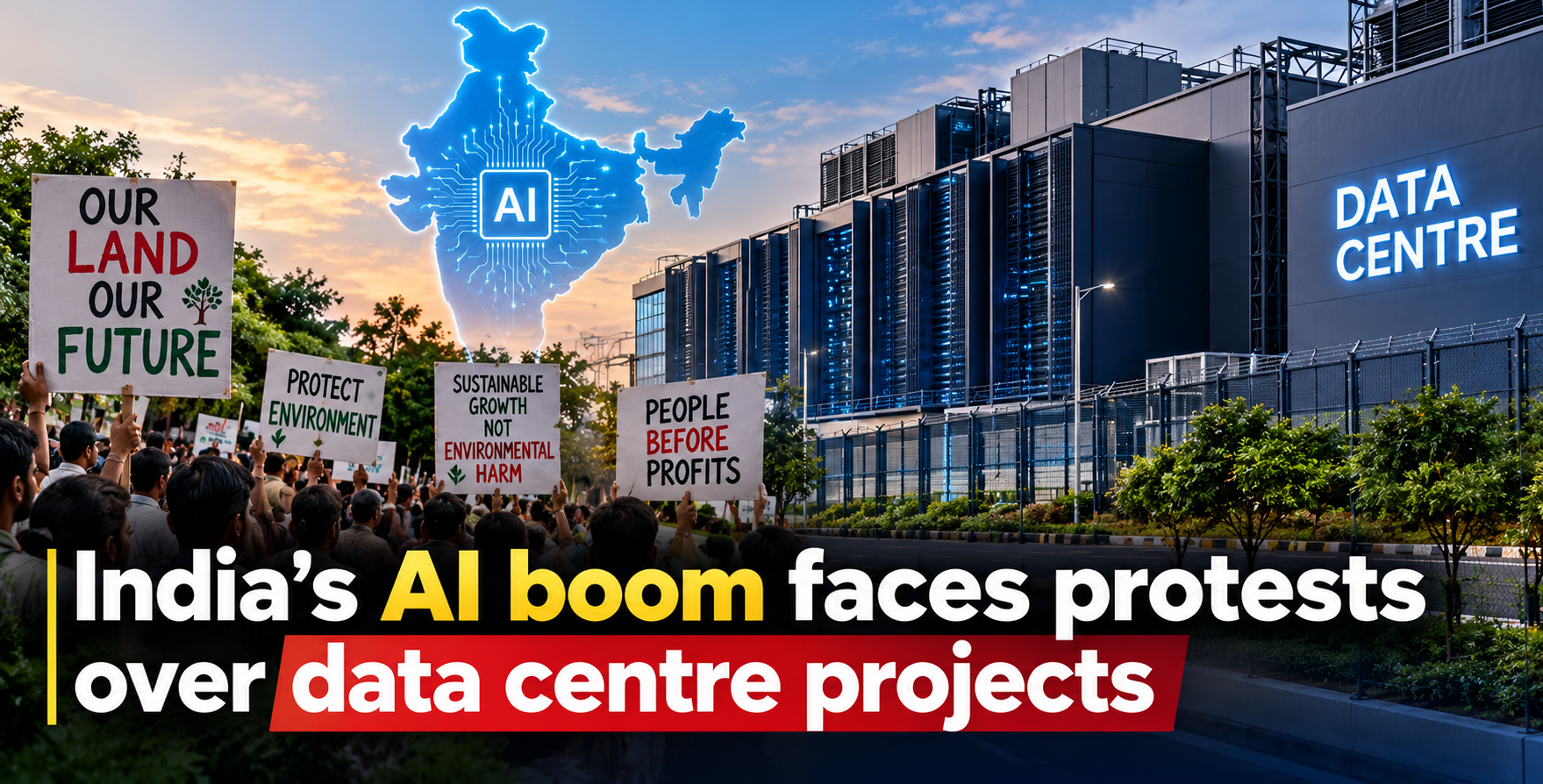
India’s ambition to become a major artificial intelligence (AI) infrastructure hub is facing growing opposition from residents concerned about the
environmental and social impact of large data centre projects.
Prime Minister Narendra Modi’s government is encouraging investment in the computing infrastructure needed to support AI services. However, projects in Maharashtra and Andhra Pradesh have drawn protests over electricity demand, water availability, noise, land use and their potential impact on nearby communities.
Amazon’s proposed data centre in Thane, near Mumbai, has emerged as a major point of contention. Residents have raised concerns about the facility’s proximity to homes, tree removal and pressure on local resources. More than 1,000 residents said they had not been adequately consulted, according to Reuters.
Amazon has defended the project, saying it will use water-free cooling, secure electricity through a dedicated supply separate from residential connections and implement measures to reduce noise. The company has also said it planted more saplings than the number of trees removed during development.
The dispute reflects a wider challenge for India as technology companies expand infrastructure to meet rising demand for AI computing. Amazon has outlined plans to invest $21 billion in Indian AI infrastructure by 2030, while Microsoft has announced a separate $20.5 billion investment plan over four years, largely focused on data centres, Reuters reported.
Opposition has also emerged in Andhra Pradesh, where environmental groups have challenged Google’s $15 billion data centre project. Critics have raised concerns about its water and electricity requirements, potential effects on nearby wildlife and the adequacy of environmental scrutiny. Google and state authorities have denied wrongdoing and defended the project’s development and safeguards.
Water availability is a particular concern because data centres require resources to operate and cool computing equipment. However, consumption varies depending on facility design and cooling technology. India has about 4% of the world’s freshwater resources while accounting for approximately 18% of its population, Reuters reported. S&P Global estimates that 60% to 80% of Indian data centres could face high water stress this decade.
Despite these concerns, data centres offer significant economic opportunities. They support cloud computing, AI development and digital services, potentially strengthening India’s position in the global technology sector and attracting further investment.
However, the protests demonstrate that large investment commitments do not automatically translate into public acceptance. Concerns over local resources, land use and public consultation could influence how future projects are planned and approved.
For India, the challenge is to expand its AI infrastructure while addressing environmental risks and community concerns. Transparent environmental assessments, meaningful public consultation and clear commitments on water, electricity and noise management will be important as the country seeks to strengthen its position in the global AI economy.
Prime Minister Narendra Modi’s government is encouraging investment in the computing infrastructure needed to support AI services. However, projects in Maharashtra and Andhra Pradesh have drawn protests over electricity demand, water availability, noise, land use and their potential impact on nearby communities.
Amazon’s proposed data centre in Thane, near Mumbai, has emerged as a major point of contention. Residents have raised concerns about the facility’s proximity to homes, tree removal and pressure on local resources. More than 1,000 residents said they had not been adequately consulted, according to Reuters.
Amazon has defended the project, saying it will use water-free cooling, secure electricity through a dedicated supply separate from residential connections and implement measures to reduce noise. The company has also said it planted more saplings than the number of trees removed during development.
The dispute reflects a wider challenge for India as technology companies expand infrastructure to meet rising demand for AI computing. Amazon has outlined plans to invest $21 billion in Indian AI infrastructure by 2030, while Microsoft has announced a separate $20.5 billion investment plan over four years, largely focused on data centres, Reuters reported.
Opposition has also emerged in Andhra Pradesh, where environmental groups have challenged Google’s $15 billion data centre project. Critics have raised concerns about its water and electricity requirements, potential effects on nearby wildlife and the adequacy of environmental scrutiny. Google and state authorities have denied wrongdoing and defended the project’s development and safeguards.
Water availability is a particular concern because data centres require resources to operate and cool computing equipment. However, consumption varies depending on facility design and cooling technology. India has about 4% of the world’s freshwater resources while accounting for approximately 18% of its population, Reuters reported. S&P Global estimates that 60% to 80% of Indian data centres could face high water stress this decade.
Despite these concerns, data centres offer significant economic opportunities. They support cloud computing, AI development and digital services, potentially strengthening India’s position in the global technology sector and attracting further investment.
However, the protests demonstrate that large investment commitments do not automatically translate into public acceptance. Concerns over local resources, land use and public consultation could influence how future projects are planned and approved.
For India, the challenge is to expand its AI infrastructure while addressing environmental risks and community concerns. Transparent environmental assessments, meaningful public consultation and clear commitments on water, electricity and noise management will be important as the country seeks to strengthen its position in the global AI economy.
