


32
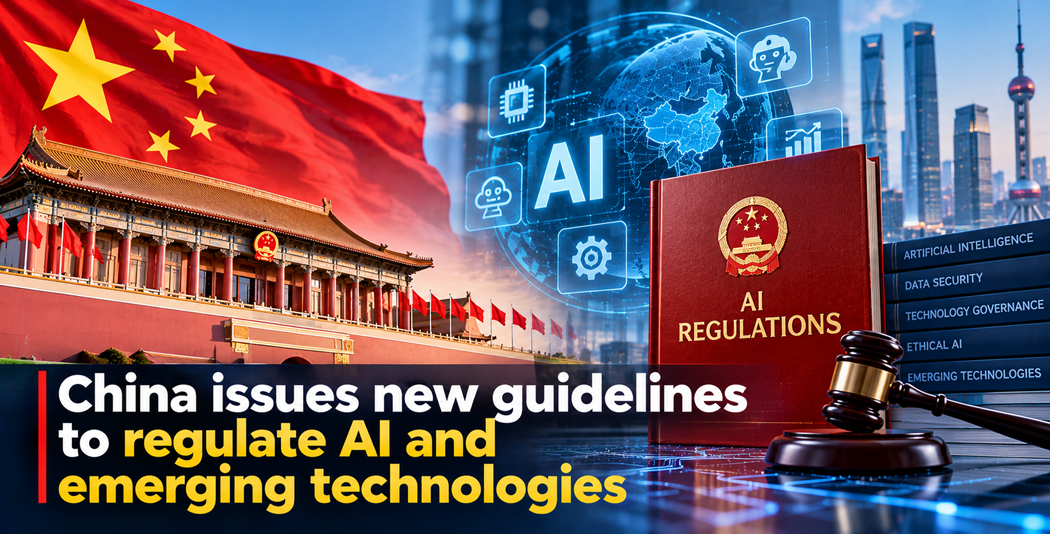
China has issued new government guidelines aimed at ensuring the safe and controlled development of artificial intelligence (AI) and other emerging technologies, as Beijing seeks to encourage innovation while managing financial and operational risks.
The guidelines, reported by state-run Xinhua news agency on October 9, call for technology monitoring systems, early-warning mechanisms and emergency-response arrangements to address potential risks associated with emerging technologies.
The measures also warn against reckless investment in what Chinese policymakers describe as “new productive forces”, a term covering advanced technologies and industries intended to support economic growth. Authorities will hold those responsible for major losses caused by such investments accountable, according to the guidelines.
Beyond AI, the policy covers China's low-altitude economy, which includes civilian drones, air taxis, small aircraft and related services. The government aims to promote growth in the sector while maintaining safety standards and ensuring orderly development.
The guidelines reflect China's effort to expand its technological capabilities while strengthening oversight of rapidly developing industries. AI is increasingly being applied across manufacturing, services and other sectors, raising questions about safety, investment risks and regulatory supervision.
The new measures are intended to establish a framework for monitoring technological developments and responding to potential risks. However, further details on implementation and enforcement will be important in determining how the guidelines affect technology companies and investors.
The guidelines, reported by state-run Xinhua news agency on October 9, call for technology monitoring systems, early-warning mechanisms and emergency-response arrangements to address potential risks associated with emerging technologies.
The measures also warn against reckless investment in what Chinese policymakers describe as “new productive forces”, a term covering advanced technologies and industries intended to support economic growth. Authorities will hold those responsible for major losses caused by such investments accountable, according to the guidelines.
Beyond AI, the policy covers China's low-altitude economy, which includes civilian drones, air taxis, small aircraft and related services. The government aims to promote growth in the sector while maintaining safety standards and ensuring orderly development.
The guidelines reflect China's effort to expand its technological capabilities while strengthening oversight of rapidly developing industries. AI is increasingly being applied across manufacturing, services and other sectors, raising questions about safety, investment risks and regulatory supervision.
The new measures are intended to establish a framework for monitoring technological developments and responding to potential risks. However, further details on implementation and enforcement will be important in determining how the guidelines affect technology companies and investors.
