


31
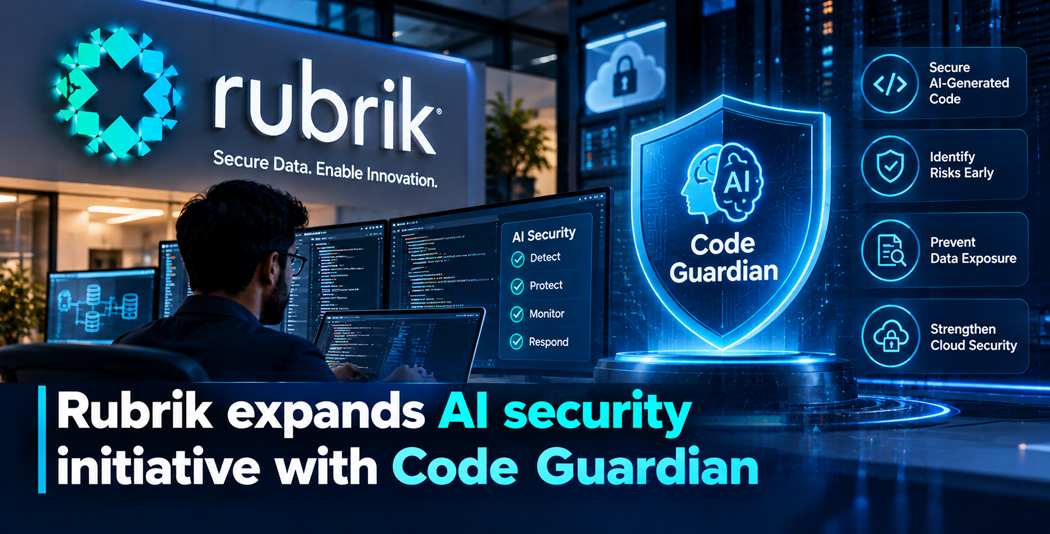
Cybersecurity company Rubrik is expanding its Project Hourglass initiative with Code Guardian, a tool designed to identify and validate security vulnerabilities in AI-generated software code. The company announced the expansion on October 9, 2026, as enterprises increasingly adopt
AI tools for software development.
Code Guardian is designed to help organisations detect weaknesses in code before they reach production systems. It analyses software repositories in isolated environments to identify potential vulnerabilities and assess their security implications.
The initiative uses Anthropic’s Claude Mythos 5 model through Rubrik's security framework to examine code for complex security flaws. The approach is intended to help security teams identify risks that may be difficult to detect through conventional testing methods.
Rubrik is also expanding the initiative's partner network, adding AHEAD, Trace3 and World Wide Technology (WWT). The partnerships are expected to help enterprises explore and deploy the technology as part of their software security workflows.
The development comes as companies increasingly use AI coding assistants to accelerate software development. While these tools can improve productivity, AI-generated code may also introduce vulnerabilities that require additional testing and review.
Code Guardian is intended to address this challenge by helping security teams identify and validate potential weaknesses before software is deployed. However, the effectiveness of AI-driven vulnerability detection will depend on the complexity of the code, the types of flaws being examined and the quality of human review.
The tool remains in private preview, meaning it is not yet generally available to all customers.Rubrik has not established a general release timeline in the announcement.
The expansion highlights the growing focus on securing AI-assisted software development as businesses look to balance faster coding with stronger cybersecurity controls.
Code Guardian is designed to help organisations detect weaknesses in code before they reach production systems. It analyses software repositories in isolated environments to identify potential vulnerabilities and assess their security implications.
The initiative uses Anthropic’s Claude Mythos 5 model through Rubrik's security framework to examine code for complex security flaws. The approach is intended to help security teams identify risks that may be difficult to detect through conventional testing methods.
Rubrik is also expanding the initiative's partner network, adding AHEAD, Trace3 and World Wide Technology (WWT). The partnerships are expected to help enterprises explore and deploy the technology as part of their software security workflows.
The development comes as companies increasingly use AI coding assistants to accelerate software development. While these tools can improve productivity, AI-generated code may also introduce vulnerabilities that require additional testing and review.
Code Guardian is intended to address this challenge by helping security teams identify and validate potential weaknesses before software is deployed. However, the effectiveness of AI-driven vulnerability detection will depend on the complexity of the code, the types of flaws being examined and the quality of human review.
The tool remains in private preview, meaning it is not yet generally available to all customers.Rubrik has not established a general release timeline in the announcement.
The expansion highlights the growing focus on securing AI-assisted software development as businesses look to balance faster coding with stronger cybersecurity controls.
