


22
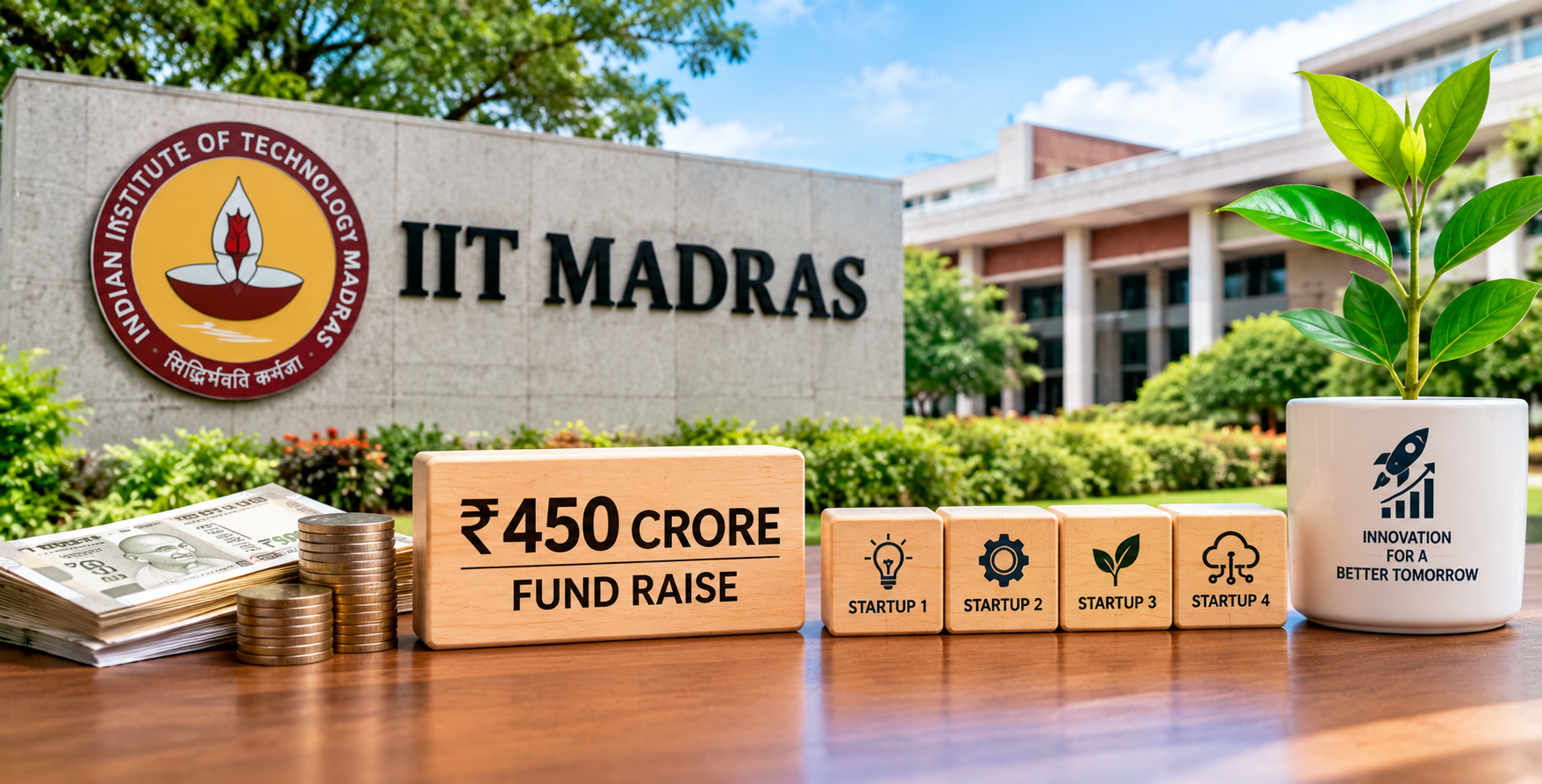
IIT Madras Research Park and Unicorn India Ventures have announced the first close of the IITM Unicorn Frontier Fund I at Rs 450 crore, three months after receiving approval from the
Securities and Exchange Board of India (SEBI).
The fund, which has a targeted corpus of Rs 1,000 crore, was launched in February 2026 to provide long-term capital to Indian deep tech startups working on intellectual property, advanced engineering and frontier technologies. The final close is expected by December 2026.
The announcement was made in the presence of Union Finance Minister Nirmala Sitharaman in Bengaluru.
As part of the first phase of investments, the fund has committed nearly Rs 55 crore across four deep-tech startups — Hathor, Quanstra, Triolt Energy and Carbelim.
The fund plans to build a portfolio of around 25 startups, with most investments expected to focus on early-stage companies that have reached Technology Readiness Levels (TRL) 3–4.
The average investment is expected to range between Rs 15 crore and Rs 25 crore per startup. Hathor, based in Chennai, is developing specialised semi-cryogenic and cryogenic rocket engines aimed at small and medium satellite launch vehicle companies.
Quanstra, a Delhi-based quantum technology company, is developing single-photon detection systems and quantum instrumentation for research and emerging industrial applications.
Triolt Energy is working on high-performance lithium-ion battery cells designed for applications such as drones and fast-charging electric mobility.
Carbelim is developing bio-integrated carbon capture and air purification technologies based on proprietary microalgae systems.
The IITM Unicorn Frontier Fund plans to invest across six technology areas where the fund sees opportunities for Indian companies to develop globally competitive capabilities.
These include defence technology, space technology, semiconductors, manufacturing technology and robotics, AI infrastructure and generative AI, and healthcare technology.
According to the fund, prospective investments will be evaluated on factors including global market potential, import substitution opportunities and the development of strategic technological capabilities.
Prof. Kamakoti Veezhinathan, Director of IIT Madras, said the partnership with Unicorn India Ventures would provide deep-tech founders with access to patient capital as well as strategic support as they move from technology development towards commercialisation.
Bhaskar Majumdar, Managing Partner at Unicorn India Ventures, said the fund would focus on providing early-stage founders with capital and support to build companies capable of competing in global markets.
The fund is being backed by IIT Madras alumni, family offices, institutions, corporates and banks. Unicorn India Ventures will serve as the fund manager and plans to build a co- investment network alongside the primary fund.
Natarajan Malupillai, Group CEO of IIT Madras Research Park, Incubation Cell and RTBI, said the initiative is intended to address the need for patient capital among deep-tech companies emerging from India's research and engineering ecosystem.
IIT Madras Research Park, established to strengthen collaboration between academia and industry, currently hosts research-driven companies, startups and centres focused on technology development and commercialisation.
The new fund is expected to continue investing in IP-led and engineering-intensive startups as it works towards its Rs 1,000-crore target corpus and a portfolio of approximately 25 companies.
The fund, which has a targeted corpus of Rs 1,000 crore, was launched in February 2026 to provide long-term capital to Indian deep tech startups working on intellectual property, advanced engineering and frontier technologies. The final close is expected by December 2026.
The announcement was made in the presence of Union Finance Minister Nirmala Sitharaman in Bengaluru.
As part of the first phase of investments, the fund has committed nearly Rs 55 crore across four deep-tech startups — Hathor, Quanstra, Triolt Energy and Carbelim.
The fund plans to build a portfolio of around 25 startups, with most investments expected to focus on early-stage companies that have reached Technology Readiness Levels (TRL) 3–4.
The average investment is expected to range between Rs 15 crore and Rs 25 crore per startup. Hathor, based in Chennai, is developing specialised semi-cryogenic and cryogenic rocket engines aimed at small and medium satellite launch vehicle companies.
Quanstra, a Delhi-based quantum technology company, is developing single-photon detection systems and quantum instrumentation for research and emerging industrial applications.
Triolt Energy is working on high-performance lithium-ion battery cells designed for applications such as drones and fast-charging electric mobility.
Carbelim is developing bio-integrated carbon capture and air purification technologies based on proprietary microalgae systems.
The IITM Unicorn Frontier Fund plans to invest across six technology areas where the fund sees opportunities for Indian companies to develop globally competitive capabilities.
These include defence technology, space technology, semiconductors, manufacturing technology and robotics, AI infrastructure and generative AI, and healthcare technology.
According to the fund, prospective investments will be evaluated on factors including global market potential, import substitution opportunities and the development of strategic technological capabilities.
Prof. Kamakoti Veezhinathan, Director of IIT Madras, said the partnership with Unicorn India Ventures would provide deep-tech founders with access to patient capital as well as strategic support as they move from technology development towards commercialisation.
Bhaskar Majumdar, Managing Partner at Unicorn India Ventures, said the fund would focus on providing early-stage founders with capital and support to build companies capable of competing in global markets.
The fund is being backed by IIT Madras alumni, family offices, institutions, corporates and banks. Unicorn India Ventures will serve as the fund manager and plans to build a co- investment network alongside the primary fund.
Natarajan Malupillai, Group CEO of IIT Madras Research Park, Incubation Cell and RTBI, said the initiative is intended to address the need for patient capital among deep-tech companies emerging from India's research and engineering ecosystem.
IIT Madras Research Park, established to strengthen collaboration between academia and industry, currently hosts research-driven companies, startups and centres focused on technology development and commercialisation.
The new fund is expected to continue investing in IP-led and engineering-intensive startups as it works towards its Rs 1,000-crore target corpus and a portfolio of approximately 25 companies.
