


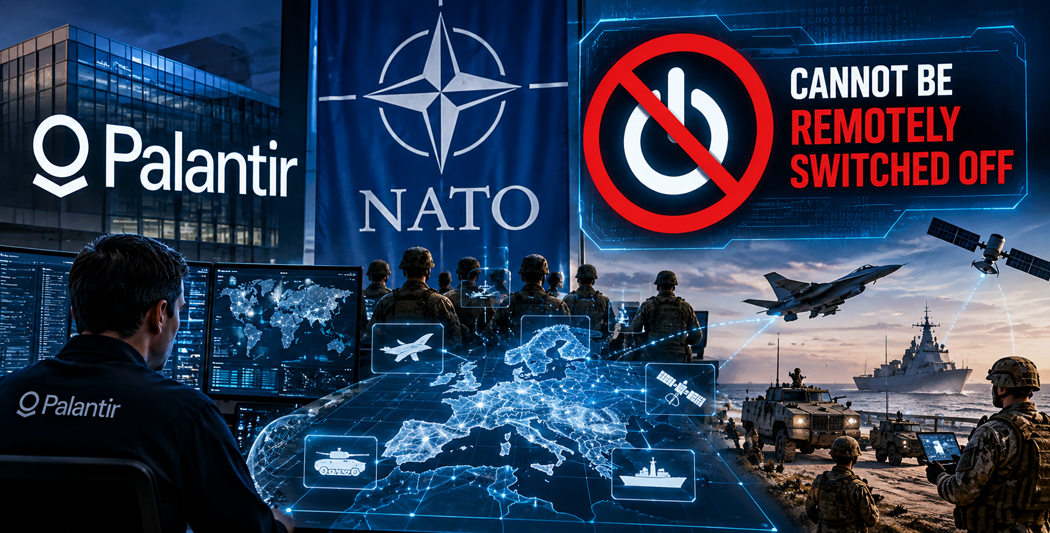
Palantir Technologies has assured European governments that it cannot remotely switch off the military artificial intelligence (AI) system used at NATO’s military headquarters, amid growing concerns out Europe’s dependence on US defence technology.
Louis Mosley, Palantir’s executive vice president for the UK and Europe, told Reuters on October 21 that neither the company nor the US
government could remotely deactivate its Maven Smart System after customers purchased the software. He said customers retained operational control and could use the system independently of Palantir.
The comments come amid concerns over reported disruptions to Ukraine’s use of Starshield, SpaceX’s military-grade satellite service that operates through the Starlink network. Ukraine said terminals used on fast-moving platforms stopped working, affecting activities including interceptor drone operations against Russian attacks. US and Ukrainian officials, along with
SpaceX CEO Elon Musk, have offered differing explanations for the disruption.
The incident has intensified concerns among European policymakers about relying on privately supplied US technology for critical military operations.
Palantir’s Maven Smart System analyses information from satellites, radar and other sensors. It helps military personnel combine intelligence, build a battlefield picture and make decisions faster. NATO acquired the platform for its Allied Command Operations in 2025, and the alliance declared it fully technically operational in June 2026.
However, European countries remain divided over the use of US defence software. Germany and France have raised concerns about dependence on American technology and the protection of sensitive military information.
In April, Germany’s cyber command chief ruled out purchasing Maven, arguing that private-company employees having access to national military databases would be unacceptable.
Mosley said Palantir’s involvement in operating the system would depend on the customer’s decision. He added that any company employees involved would need to be citizens of the relevant country and hold the required security clearances.
While Palantir’s statement addresses concerns about the software being remotely deactivated, it does not resolve broader questions about long- term software support, maintenance, data sovereignty or Europe’s ability to replace foreign technology.
The debate highlights a major challenge for European defence planners: AI can help military forces analyse battlefield information more quickly, but dependence on external technology providers raises questions about operational independence and control.
