


25
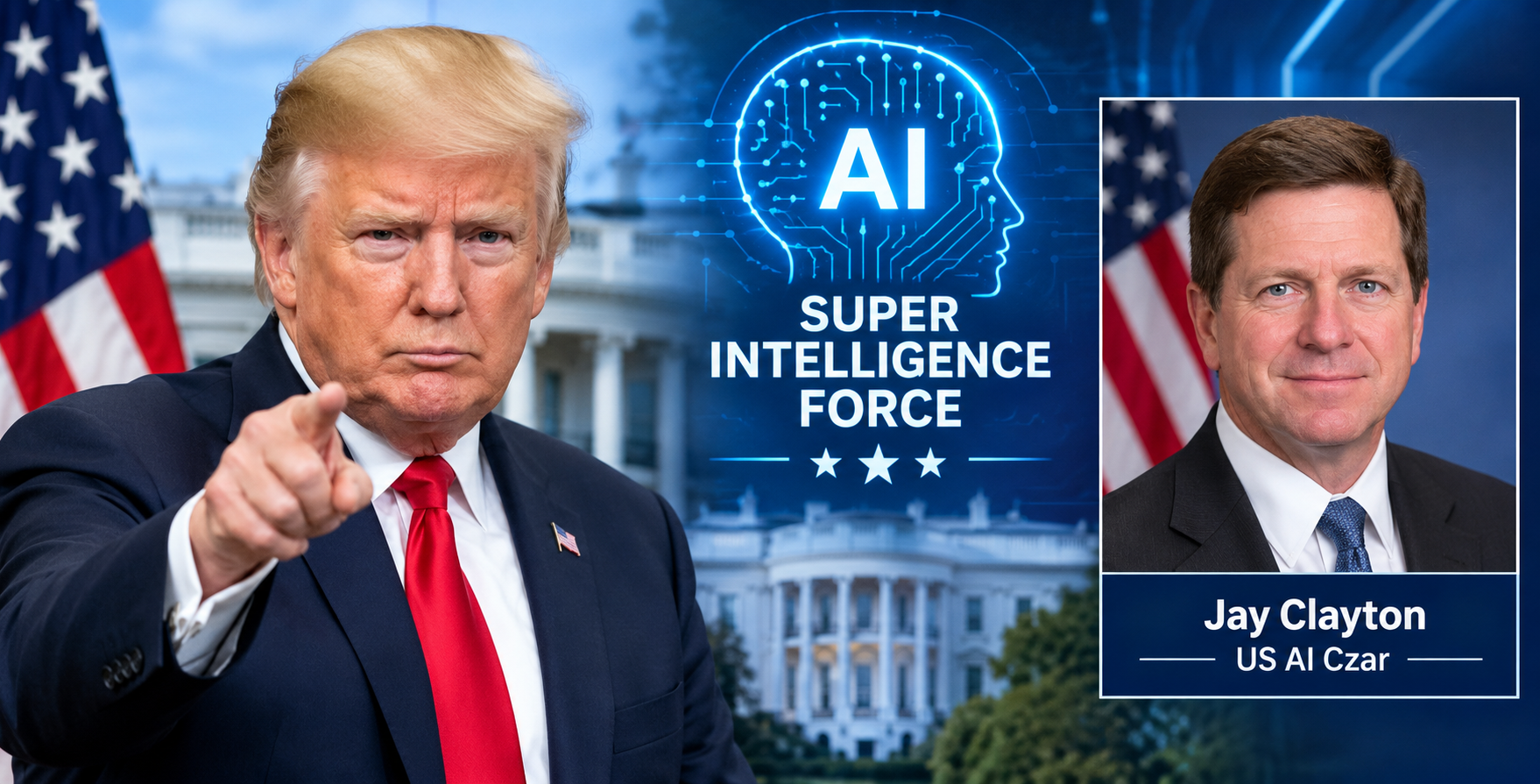
US President Donald Trump has announced the formation of a new federal task force, called the “Super Intelligence Force” (SIF), naming Director of
National Intelligence Jay Clayton to lead the initiative aimed at coordinating the country’s artificial intelligence strategy.
The initiative is intended to strengthen US leadership in advanced AI while examining the opportunities, risks and national security challenges associated with the rapidly evolving technology. The task force will coordinate efforts across the federal government and engage with technology companies, consumers, public-interest organisations, religious groups and critical infrastructure providers.
Clayton, who took over as Director of National Intelligence in August, will oversee the task force’s work alongside other senior government officials. According to reporting by Reuters and The Wall Street Journal, the group has 120 days to prepare a report assessing AI-related risks and opportunities and recommending what role the federal government should play in overseeing the technology.
The task force will also examine existing government mechanisms for reporting AI-related security incidents, including data breaches and cyberattacks, and consider ways to strengthen the federal response under existing authorities.
Other officials named to help lead the initiative include Federal Trade Commission Chairman Andrew Ferguson, Pentagon Chief Technology Officer Emil Michael and Office of Personnel Management Director Scott Kupor. The group will report directly to Trump and White House Chief of Staff Susie Wiles.
The announcement follows a White House meeting with executives from major AI companies, including OpenAI, Anthropic, Google, Meta, Nvidia and SpaceX. During the meeting, the companies agreed to a voluntary framework outlining safeguards and responsibilities for developing advanced AI systems. The agreement includes commitments to internal controls and independent external audits, although it does not specify penalties for non-compliance.
Trump has repeatedly argued that the United States must maintain its competitive advantage in AI, particularly as competition with China intensifies. His administration has also favoured a relatively light regulatory approach, warning that excessive restrictions could slow innovation and weaken American technology companies.
The administration’s use of the term “super intelligence” reflects Trump’s effort to reframe the debate around AI and emphasise its potential strategic importance. The task force’s findings could help shape future federal policies concerning AI safety, cybersecurity, national security and technological competitiveness.
The creation of the Super Intelligence Force marks a significant step in the administration’s effort to coordinate its AI policy. Its report, expected within 120 days, could provide a clearer picture of how Washington plans to balance innovation, security and government oversight as advanced AI systems become increasingly influential.
The initiative is intended to strengthen US leadership in advanced AI while examining the opportunities, risks and national security challenges associated with the rapidly evolving technology. The task force will coordinate efforts across the federal government and engage with technology companies, consumers, public-interest organisations, religious groups and critical infrastructure providers.
Clayton, who took over as Director of National Intelligence in August, will oversee the task force’s work alongside other senior government officials. According to reporting by Reuters and The Wall Street Journal, the group has 120 days to prepare a report assessing AI-related risks and opportunities and recommending what role the federal government should play in overseeing the technology.
The task force will also examine existing government mechanisms for reporting AI-related security incidents, including data breaches and cyberattacks, and consider ways to strengthen the federal response under existing authorities.
Other officials named to help lead the initiative include Federal Trade Commission Chairman Andrew Ferguson, Pentagon Chief Technology Officer Emil Michael and Office of Personnel Management Director Scott Kupor. The group will report directly to Trump and White House Chief of Staff Susie Wiles.
The announcement follows a White House meeting with executives from major AI companies, including OpenAI, Anthropic, Google, Meta, Nvidia and SpaceX. During the meeting, the companies agreed to a voluntary framework outlining safeguards and responsibilities for developing advanced AI systems. The agreement includes commitments to internal controls and independent external audits, although it does not specify penalties for non-compliance.
Trump has repeatedly argued that the United States must maintain its competitive advantage in AI, particularly as competition with China intensifies. His administration has also favoured a relatively light regulatory approach, warning that excessive restrictions could slow innovation and weaken American technology companies.
The administration’s use of the term “super intelligence” reflects Trump’s effort to reframe the debate around AI and emphasise its potential strategic importance. The task force’s findings could help shape future federal policies concerning AI safety, cybersecurity, national security and technological competitiveness.
The creation of the Super Intelligence Force marks a significant step in the administration’s effort to coordinate its AI policy. Its report, expected within 120 days, could provide a clearer picture of how Washington plans to balance innovation, security and government oversight as advanced AI systems become increasingly influential.
