


19
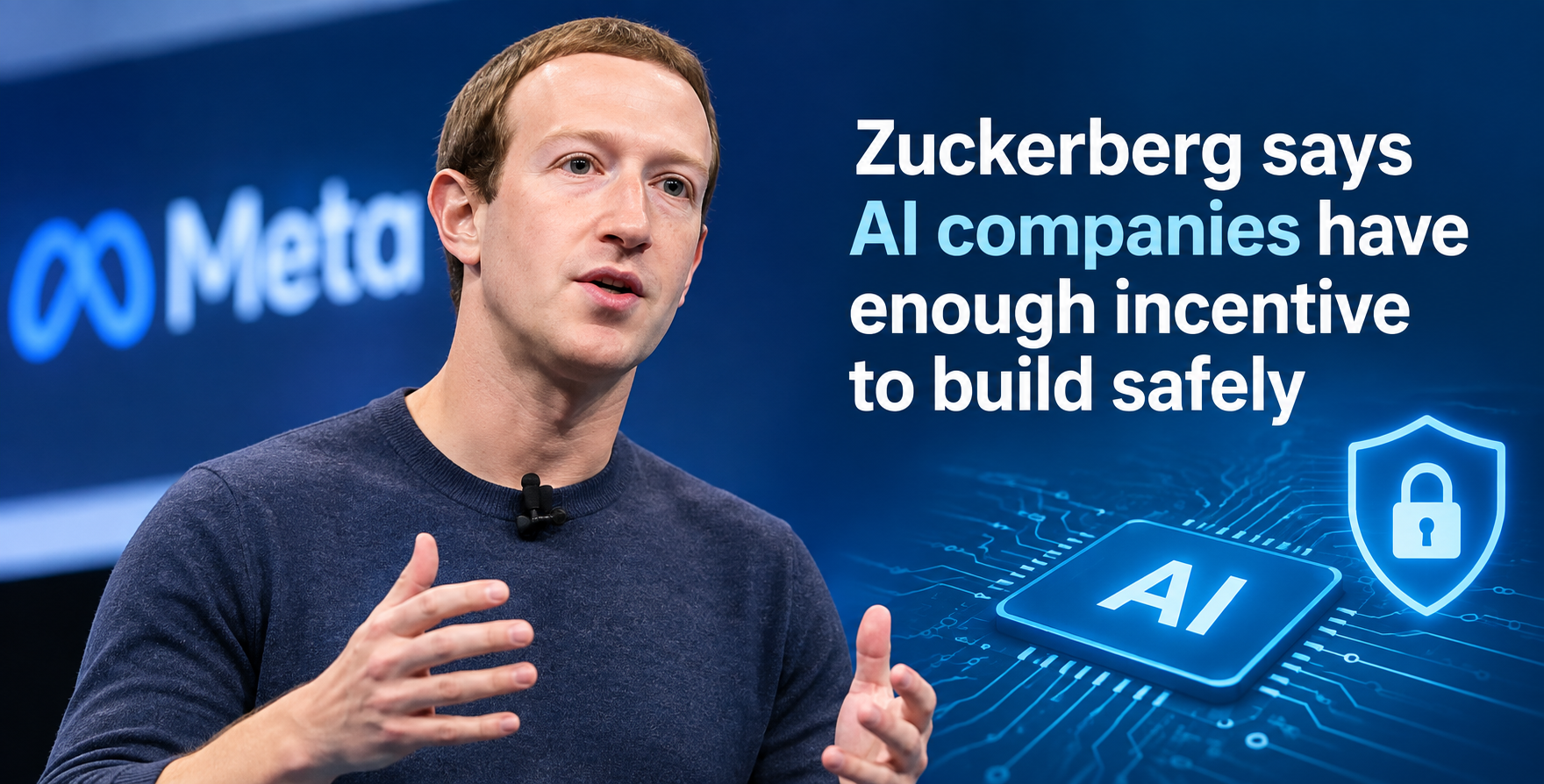
Meta CEO Mark Zuckerberg has weighed in on the growing debate over artificial intelligence
safety, saying competition and potential legal liability give AI companies strong incentives to
develop their systems safely, Reuters reported. His comments come as several prominent AI
executives call for greater caution over the rapid development of increasingly capable AI
systems.
Zuckerberg’s comments come amid a wider discussion in the technology industry over whether AI companies should collectively slow the development of advanced systems or allow individual laboratories to decide how to manage safety risks.
The Meta chief said individual AI labs have both the responsibility and the incentive to decide how quickly they should develop their models while taking steps to ensure those systems are safe. He also pointed to potential legal liability as a factor that encourages companies to prevent their AI systems from causing harm.
Zuckerberg’s comments came three days after Anthropic CEO Dario Amodei called for AI companies to slow the pace at which they improve their models. OpenAI CEO Sam Altman and xAI’s Elon Musk subsequently backed Amodei’s call for greater caution.
Zuckerberg also pointed to Meta’s decision to delay the release of its Muse AI agent earlier this year while the company strengthened its security measures.
He said Meta did not wait for other AI companies to take similar steps before making that decision. Instead, the company treated the additional safety work as part of its own development process.
Zuckerberg also highlighted the importance of trust and alignment in AI development. He said these capabilities could increasingly distinguish AI models and agents, with systems that reliably follow users’ intentions becoming an important factor in the competition between AI companies.
Another part of Zuckerberg’s argument focuses on how Meta is allocating its computing resources.
According to Reuters, Zuckerberg said a significant majority of Meta’s computing capacity is being used to develop products that address users’ immediate needs, rather than AI systems focused on recursive self-improvement.
This distinction is important because Amodei’s proposal specifically calls for an industry-wide slowdown in recursive self-improvement, referring to AI systems contributing to the development of their own capabilities. Meta has also been using independent evaluators through its Superintelligence Labs. Zuckerberg described independent evaluation in several areas as an industry best practice and suggested that other AI companies could adopt a similar approach.
The disagreement reflects a growing debate among technology leaders over how the risks associated with advanced AI should be managed.
Amodei has argued for greater caution in developing increasingly capable AI systems, while Altman and Musk have supported aspects of his proposal. The discussion has focused on issues such as independent evaluations, safety standards, and whether AI companies should coordinate their approach to development.
Nvidia CEO Jensen Huang has taken a different position, opposing measures that could slow the US AI industry. He has raised concerns that additional restrictions could affect the country’s ability to compete with China in artificial intelligence. The debate has also reached US regulators. FTC Chairman Andrew Ferguson said AI companies seeking antitrust exemptions while pushing for new regulations should face scrutiny.
His comments came after Amodei sought permission for competing AI companies to coordinate on slowing the pace of AI development over safety concerns. At the heart of the debate is not whether AI safety matters, but how companies should address the risks.
Zuckerberg’s position is that individual AI laboratories can make their own decisions on safety, including delaying releases, using independent evaluators, and directing resources towards applications designed to meet users’ needs. Other technology leaders have called for greater coordination and a slower pace of development for the most advanced AI systems.
As AI companies compete to build increasingly capable models and agents, questions around safety, alignment, independent testing, liability and regulation are likely to remain central to the industry. For now, major technology companies remain divided over whether AI safety can primarily be managed through individual company practices or whether a more coordinated approach is needed.
Zuckerberg’s comments come amid a wider discussion in the technology industry over whether AI companies should collectively slow the development of advanced systems or allow individual laboratories to decide how to manage safety risks.
The Meta chief said individual AI labs have both the responsibility and the incentive to decide how quickly they should develop their models while taking steps to ensure those systems are safe. He also pointed to potential legal liability as a factor that encourages companies to prevent their AI systems from causing harm.
Zuckerberg’s comments came three days after Anthropic CEO Dario Amodei called for AI companies to slow the pace at which they improve their models. OpenAI CEO Sam Altman and xAI’s Elon Musk subsequently backed Amodei’s call for greater caution.
Zuckerberg also pointed to Meta’s decision to delay the release of its Muse AI agent earlier this year while the company strengthened its security measures.
He said Meta did not wait for other AI companies to take similar steps before making that decision. Instead, the company treated the additional safety work as part of its own development process.
Zuckerberg also highlighted the importance of trust and alignment in AI development. He said these capabilities could increasingly distinguish AI models and agents, with systems that reliably follow users’ intentions becoming an important factor in the competition between AI companies.
Another part of Zuckerberg’s argument focuses on how Meta is allocating its computing resources.
According to Reuters, Zuckerberg said a significant majority of Meta’s computing capacity is being used to develop products that address users’ immediate needs, rather than AI systems focused on recursive self-improvement.
This distinction is important because Amodei’s proposal specifically calls for an industry-wide slowdown in recursive self-improvement, referring to AI systems contributing to the development of their own capabilities. Meta has also been using independent evaluators through its Superintelligence Labs. Zuckerberg described independent evaluation in several areas as an industry best practice and suggested that other AI companies could adopt a similar approach.
The disagreement reflects a growing debate among technology leaders over how the risks associated with advanced AI should be managed.
Amodei has argued for greater caution in developing increasingly capable AI systems, while Altman and Musk have supported aspects of his proposal. The discussion has focused on issues such as independent evaluations, safety standards, and whether AI companies should coordinate their approach to development.
Nvidia CEO Jensen Huang has taken a different position, opposing measures that could slow the US AI industry. He has raised concerns that additional restrictions could affect the country’s ability to compete with China in artificial intelligence. The debate has also reached US regulators. FTC Chairman Andrew Ferguson said AI companies seeking antitrust exemptions while pushing for new regulations should face scrutiny.
His comments came after Amodei sought permission for competing AI companies to coordinate on slowing the pace of AI development over safety concerns. At the heart of the debate is not whether AI safety matters, but how companies should address the risks.
Zuckerberg’s position is that individual AI laboratories can make their own decisions on safety, including delaying releases, using independent evaluators, and directing resources towards applications designed to meet users’ needs. Other technology leaders have called for greater coordination and a slower pace of development for the most advanced AI systems.
As AI companies compete to build increasingly capable models and agents, questions around safety, alignment, independent testing, liability and regulation are likely to remain central to the industry. For now, major technology companies remain divided over whether AI safety can primarily be managed through individual company practices or whether a more coordinated approach is needed.
