


20
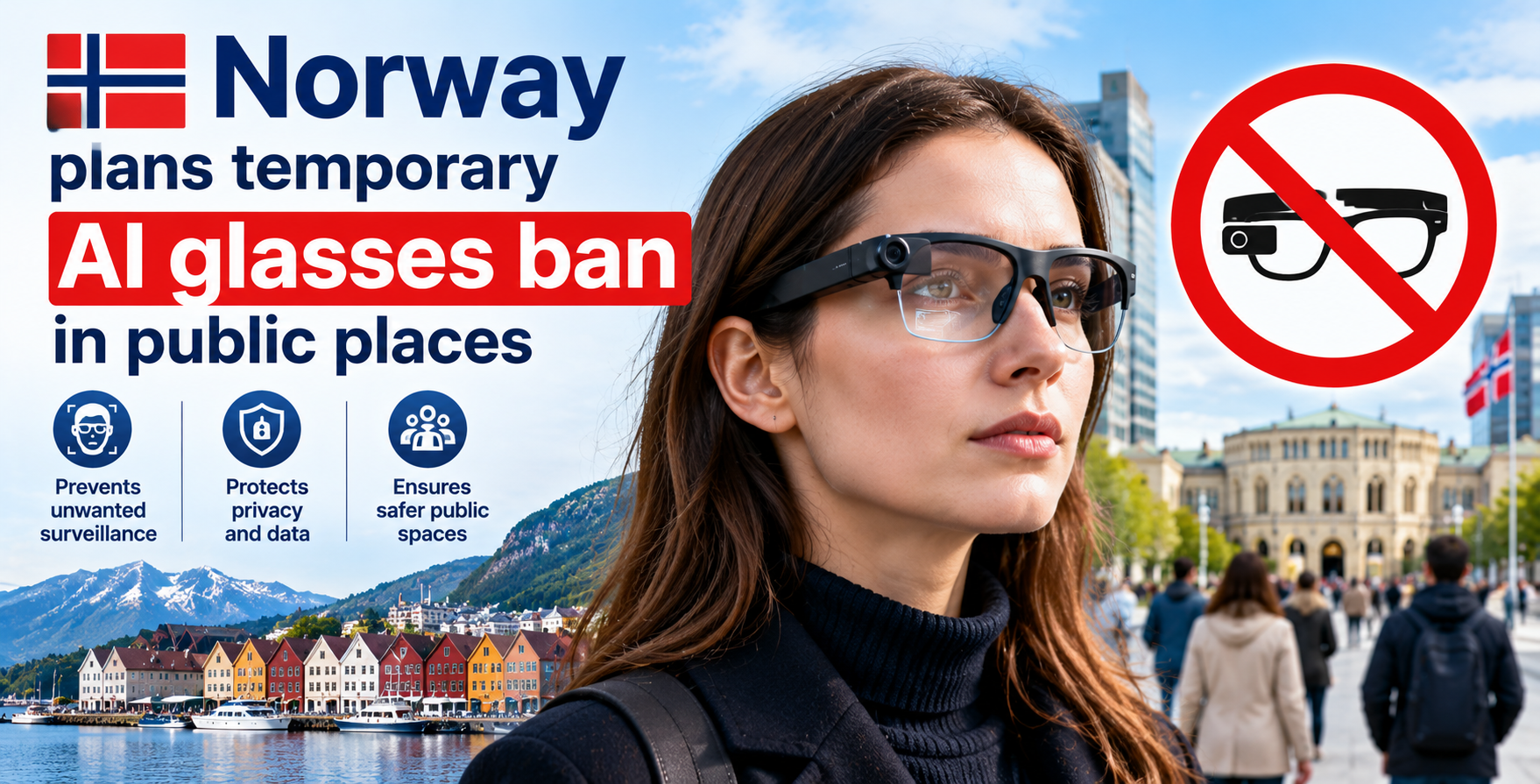
Norway’s government plans to propose a temporary ban on the use of AI- powered glasses in selected public places, citing concerns that people
could be photographed, filmed or recorded without their knowledge.
The proposed restrictions could apply to places where people regularly gather, including parks, beaches, museums, shopping centres and public events. They could also cover schools, kindergartens, playgrounds and youth clubs, as well as healthcare facilities, swimming pools and gyms with changing rooms and showers.
Norway’s Digitalisation and Public Governance Minister Torgeir Micaelsen said the government wants time to assess the technology and lay the groundwork for longer-term regulation.
The government said the measure would not amount to a blanket ban on AI glasses or other wearable technology. Private use, as well as situations where other people are not at risk of being recorded without their consent, would remain possible.
Norway will also consider whether universities, colleges and other educational institutions should be covered by the restrictions. The government said exceptions could be introduced for vulnerable groups and specific uses that offer social benefits.
The government plans to submit the proposal to Norway’s parliament, the Storting, as soon as possible. It will also establish an expert group to examine challenges linked to wearable technology and advise on permanent national regulations.
The proposed restrictions could apply to places where people regularly gather, including parks, beaches, museums, shopping centres and public events. They could also cover schools, kindergartens, playgrounds and youth clubs, as well as healthcare facilities, swimming pools and gyms with changing rooms and showers.
Norway’s Digitalisation and Public Governance Minister Torgeir Micaelsen said the government wants time to assess the technology and lay the groundwork for longer-term regulation.
The government said the measure would not amount to a blanket ban on AI glasses or other wearable technology. Private use, as well as situations where other people are not at risk of being recorded without their consent, would remain possible.
Norway will also consider whether universities, colleges and other educational institutions should be covered by the restrictions. The government said exceptions could be introduced for vulnerable groups and specific uses that offer social benefits.
The government plans to submit the proposal to Norway’s parliament, the Storting, as soon as possible. It will also establish an expert group to examine challenges linked to wearable technology and advise on permanent national regulations.
