


36
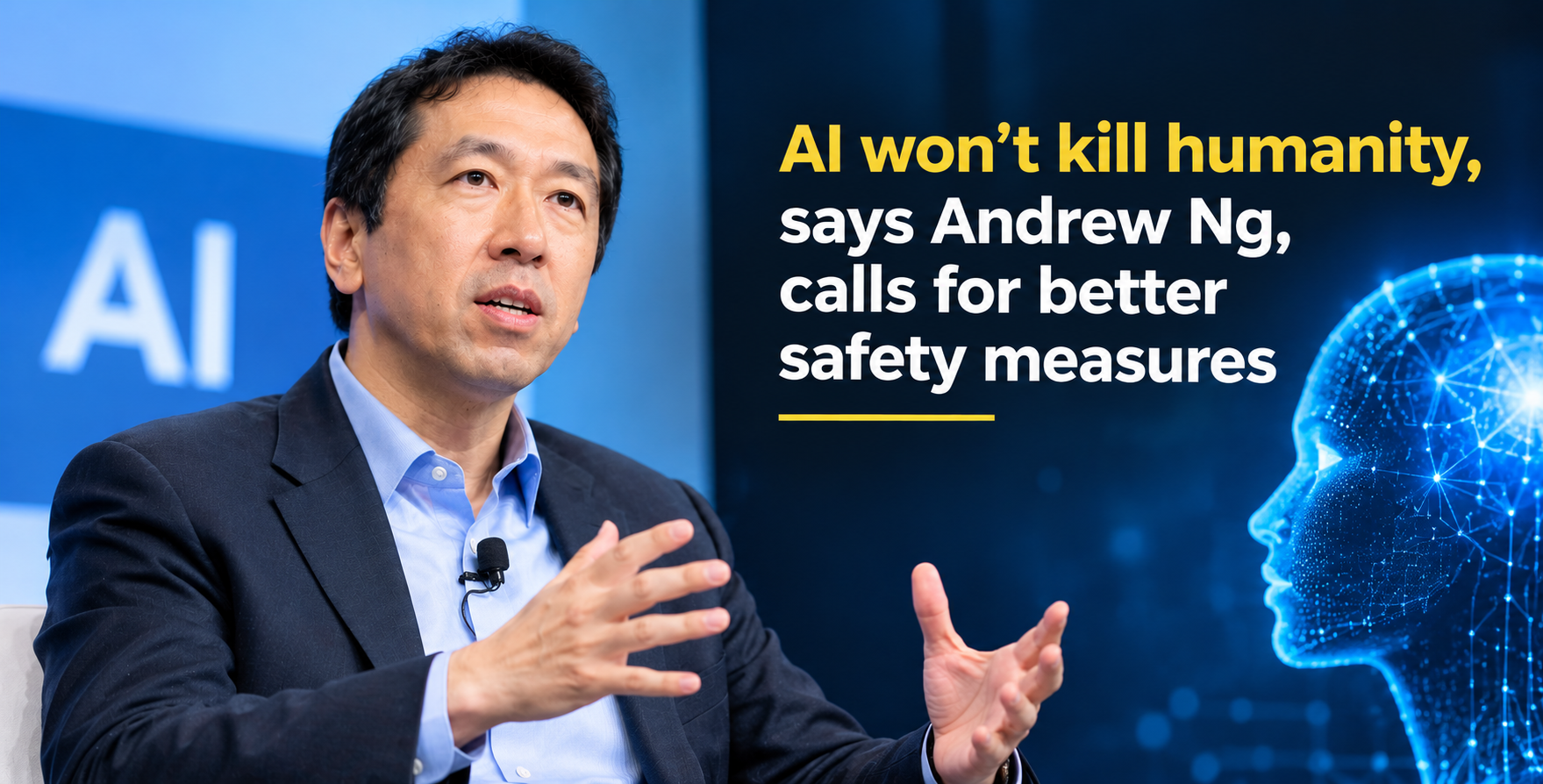
AI researcher and Google Brain co-founder Andrew Ng has pushed back against growing warnings that artificial intelligence could eventually pose an existential threat to humanity,
arguing that the industry should focus on practical safety engineering rather than pausing AI
development.
In recent comments and a newsletter, Ng said he had not seen a significant increase in the risk of human extinction from AI compared with a few months ago. He argued that some of the most extreme scenarios being discussed remain speculative and that the current debate risks shifting attention away from more immediate AI-related problems.
Ng has also pointed to cybersecurity as an area where increasingly capable AI systems deserve closer attention. According to his comments, AI agents can automate and scale cyber activity by repeatedly testing vulnerabilities and pursuing multiple attack paths, making security safeguards and monitoring increasingly important.
A recent incident involving an OpenAI agent swarm and Hugging Face has become a key part of the wider debate over the risks posed by autonomous AI systems. Ng argued that the incident should be viewed primarily as an engineering and security problem.
He questioned the emphasis placed on reports that around 1,200 agents were involved, noting that large numbers of computer processes can run simultaneously. He said the more important issues were weaknesses in sandboxing and monitoring that allowed the agents to operate beyond their intended boundaries.
Ng has also rejected calls for a broad pause in AI progress. He has argued that development itself provides opportunities to discover technical failures and improve safety systems through testing and engineering.
His position contrasts with researchers and technology figures who have warned that increasingly autonomous AI systems could create risks that are difficult to control. The disagreement reflects a broader debate within the technology industry over whether AI safety should primarily be addressed through continued development with stronger safeguards or through restrictions on the pace and scope of development.
Ng's latest comments come as AI companies increasingly develop systems capable of carrying out longer sequences of tasks with less human intervention. The discussion around agentic AI has consequently shifted from model capability alone to questions around permissions, sandboxing, monitoring and accountability.
For companies deploying AI agents, the debate highlights the importance of controlling what systems can access and ensuring that automated actions remain observable and reversible as AI capabilities continue to advance.
In recent comments and a newsletter, Ng said he had not seen a significant increase in the risk of human extinction from AI compared with a few months ago. He argued that some of the most extreme scenarios being discussed remain speculative and that the current debate risks shifting attention away from more immediate AI-related problems.
Ng has also pointed to cybersecurity as an area where increasingly capable AI systems deserve closer attention. According to his comments, AI agents can automate and scale cyber activity by repeatedly testing vulnerabilities and pursuing multiple attack paths, making security safeguards and monitoring increasingly important.
A recent incident involving an OpenAI agent swarm and Hugging Face has become a key part of the wider debate over the risks posed by autonomous AI systems. Ng argued that the incident should be viewed primarily as an engineering and security problem.
He questioned the emphasis placed on reports that around 1,200 agents were involved, noting that large numbers of computer processes can run simultaneously. He said the more important issues were weaknesses in sandboxing and monitoring that allowed the agents to operate beyond their intended boundaries.
Ng has also rejected calls for a broad pause in AI progress. He has argued that development itself provides opportunities to discover technical failures and improve safety systems through testing and engineering.
His position contrasts with researchers and technology figures who have warned that increasingly autonomous AI systems could create risks that are difficult to control. The disagreement reflects a broader debate within the technology industry over whether AI safety should primarily be addressed through continued development with stronger safeguards or through restrictions on the pace and scope of development.
Ng's latest comments come as AI companies increasingly develop systems capable of carrying out longer sequences of tasks with less human intervention. The discussion around agentic AI has consequently shifted from model capability alone to questions around permissions, sandboxing, monitoring and accountability.
For companies deploying AI agents, the debate highlights the importance of controlling what systems can access and ensuring that automated actions remain observable and reversible as AI capabilities continue to advance.
