


29
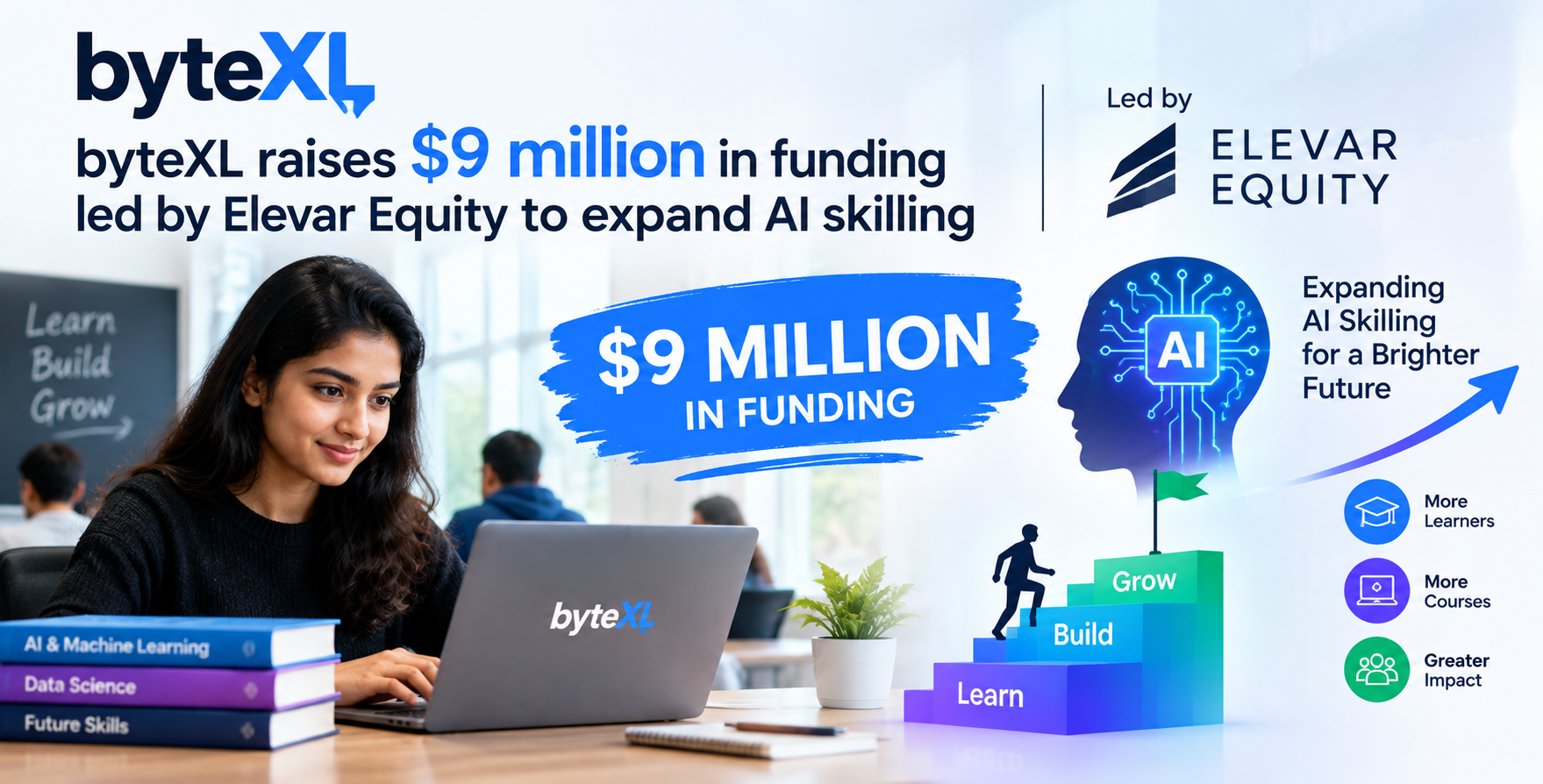
India-based technology skilling company byteXL has raised $9 million in a funding round led by Elevar Equity, with participation from existing investors Kalaari Capital and The Michael
Susan Dell Foundation. The fresh capital will support the company’s expansion across engineering colleges, strengthen its AI-powered learning platform and help more students develop industry-ready skills.
Founded by brothers Karun Tadepalli and Sricharan Tadepalli, byteXL partners with engineering institutions to integrate practical technology training into regular academic programmes.
Its model focuses on bridging the gap between classroom education and industry requirements, particularly for students in Tier 2 and Tier 3 cities.
The company works directly with colleges to incorporate industry-aligned curricula, hands-on training, digital learning tools and specialised educators into engineering courses. By integrating these elements into students’ existing degree programmes, byteXL aims to improve employability without treating professional skilling as a separate activity.
According to the company, 7,600 of its graduates secured jobs in IT and engineering roles last year. The latest investment is expected to help it expand this model to a larger network of institutions and students across the country.
byteXL plans to increase its institutional presence from 40 colleges to 120 over the next two years. It also aims to expand its reach from approximately 200,000 students to 500,000 students across 15 states in India.
A significant portion of the investment will go towards developing its technology platform, including AI-enabled learning and assessment tools, student analytics and personalised learning features. The company also intends to strengthen its academic and delivery teams and introduce additional programmes aligned with evolving technology-sector requirements.
Investors said the company’s integration with existing engineering colleges offers a scalable approach to improving access to employment-focused education. Elevar Equity highlighted the opportunity to support students and families in non-metro markets, where access to industry- relevant training can influence career prospects and economic mobility.
The Michael & Susan Dell Foundation said its continued investment would help extend byteXL’s reach among students from underserved communities, including first-generation college students. Kalaari Capital, which has backed the company previously, pointed to its institutional model, technology platform and business growth as factors behind its continued support.
The latest funding round follows byteXL’s $5.9 million Series A round in July 2024, led by Kalaari Capital with participation from the Dell Foundation. The earlier investment supported team expansion, product development and the rollout of digital learning tools. LoEstro Advisors acted as the financial adviser for the latest transaction.
With the new capital, byteXL aims to scale its institutional network and deepen its use of AI in education as demand grows for technology professionals with practical, job-ready skills. Its expansion plans will test whether its college-integrated approach can deliver employability- focused training to a substantially larger student population while maintaining the quality of learning and industry alignment.
Founded by brothers Karun Tadepalli and Sricharan Tadepalli, byteXL partners with engineering institutions to integrate practical technology training into regular academic programmes.
Its model focuses on bridging the gap between classroom education and industry requirements, particularly for students in Tier 2 and Tier 3 cities.
The company works directly with colleges to incorporate industry-aligned curricula, hands-on training, digital learning tools and specialised educators into engineering courses. By integrating these elements into students’ existing degree programmes, byteXL aims to improve employability without treating professional skilling as a separate activity.
According to the company, 7,600 of its graduates secured jobs in IT and engineering roles last year. The latest investment is expected to help it expand this model to a larger network of institutions and students across the country.
byteXL plans to increase its institutional presence from 40 colleges to 120 over the next two years. It also aims to expand its reach from approximately 200,000 students to 500,000 students across 15 states in India.
A significant portion of the investment will go towards developing its technology platform, including AI-enabled learning and assessment tools, student analytics and personalised learning features. The company also intends to strengthen its academic and delivery teams and introduce additional programmes aligned with evolving technology-sector requirements.
Investors said the company’s integration with existing engineering colleges offers a scalable approach to improving access to employment-focused education. Elevar Equity highlighted the opportunity to support students and families in non-metro markets, where access to industry- relevant training can influence career prospects and economic mobility.
The Michael & Susan Dell Foundation said its continued investment would help extend byteXL’s reach among students from underserved communities, including first-generation college students. Kalaari Capital, which has backed the company previously, pointed to its institutional model, technology platform and business growth as factors behind its continued support.
The latest funding round follows byteXL’s $5.9 million Series A round in July 2024, led by Kalaari Capital with participation from the Dell Foundation. The earlier investment supported team expansion, product development and the rollout of digital learning tools. LoEstro Advisors acted as the financial adviser for the latest transaction.
With the new capital, byteXL aims to scale its institutional network and deepen its use of AI in education as demand grows for technology professionals with practical, job-ready skills. Its expansion plans will test whether its college-integrated approach can deliver employability- focused training to a substantially larger student population while maintaining the quality of learning and industry alignment.
