


14
OpenAI has expanded ChatGPT’s voice capabilities to support more complex tasks on mobile devices, allowing users to interact with connected applications and use voice commands while
working in ChatGPT’s Work environment.
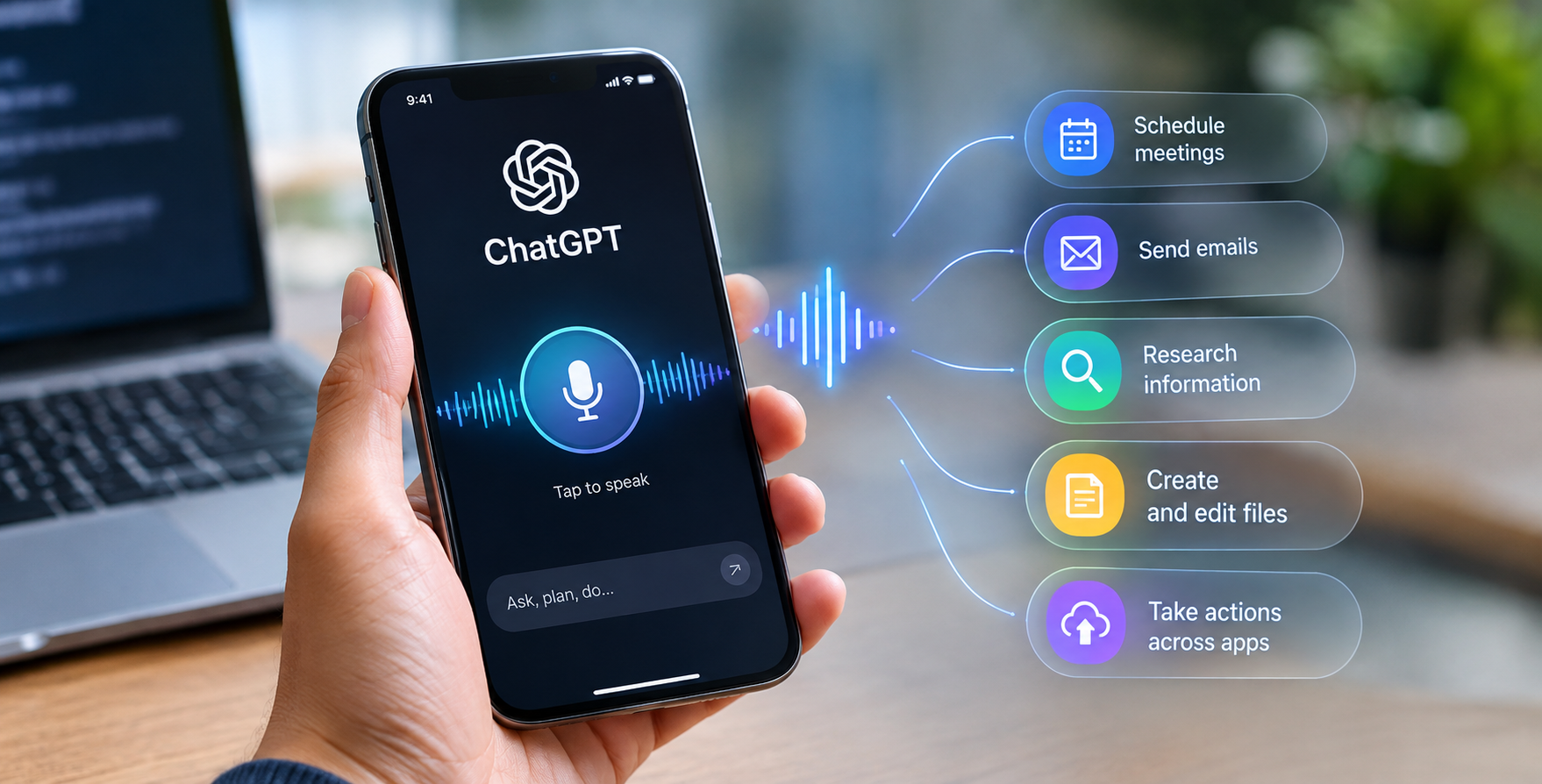
The update, announced on September 23, expands ChatGPT Voice beyond conventional question-and-answer interactions. Users can now use voice conversations with supported plugins and connected apps, while Voice in Work can be used for tasks such as creating documents, presentations, and spreadsheets.
According to OpenAI’s release notes, Voice is available in Work on both the web and mobile. Users can also ask ChatGPT to work with connected applications or operate a browser as part of a task. If a task is not completed before a voice session ends, users can continue the work through text.
TechCrunch reported that the mobile rollout allows users to access the Work tab for activities including drafting documents, preparing presentations and summarising messages. The report said Plus and Pro subscribers can access Work-based capabilities on mobile, while Free and Go users can use supported plugins and connected applications available under their respective plans.
The update also makes it easier to switch between voice and text-based interactions. OpenAI said users can follow written responses while participating in Voice conversations, while tasks initiated through voice can continue after the session ends.
The development comes as AI assistants increasingly move beyond generating responses towards performing multi-step tasks through connected tools and applications. Such systems can handle parts of a workflow based on a user's instructions, reducing the need for users to manually complete every step.
OpenAI has continued to expand ChatGPT's voice capabilities during 2026, including improvements aimed at handling tasks that require additional search and reasoning.
With the latest update, ChatGPT's voice functionality is being extended into more task-oriented workflows involving documents, connected applications, and browser-based activities.
The update, announced on September 23, expands ChatGPT Voice beyond conventional question-and-answer interactions. Users can now use voice conversations with supported plugins and connected apps, while Voice in Work can be used for tasks such as creating documents, presentations, and spreadsheets.
According to OpenAI’s release notes, Voice is available in Work on both the web and mobile. Users can also ask ChatGPT to work with connected applications or operate a browser as part of a task. If a task is not completed before a voice session ends, users can continue the work through text.
TechCrunch reported that the mobile rollout allows users to access the Work tab for activities including drafting documents, preparing presentations and summarising messages. The report said Plus and Pro subscribers can access Work-based capabilities on mobile, while Free and Go users can use supported plugins and connected applications available under their respective plans.
The update also makes it easier to switch between voice and text-based interactions. OpenAI said users can follow written responses while participating in Voice conversations, while tasks initiated through voice can continue after the session ends.
The development comes as AI assistants increasingly move beyond generating responses towards performing multi-step tasks through connected tools and applications. Such systems can handle parts of a workflow based on a user's instructions, reducing the need for users to manually complete every step.
OpenAI has continued to expand ChatGPT's voice capabilities during 2026, including improvements aimed at handling tasks that require additional search and reasoning.
With the latest update, ChatGPT's voice functionality is being extended into more task-oriented workflows involving documents, connected applications, and browser-based activities.
