


16
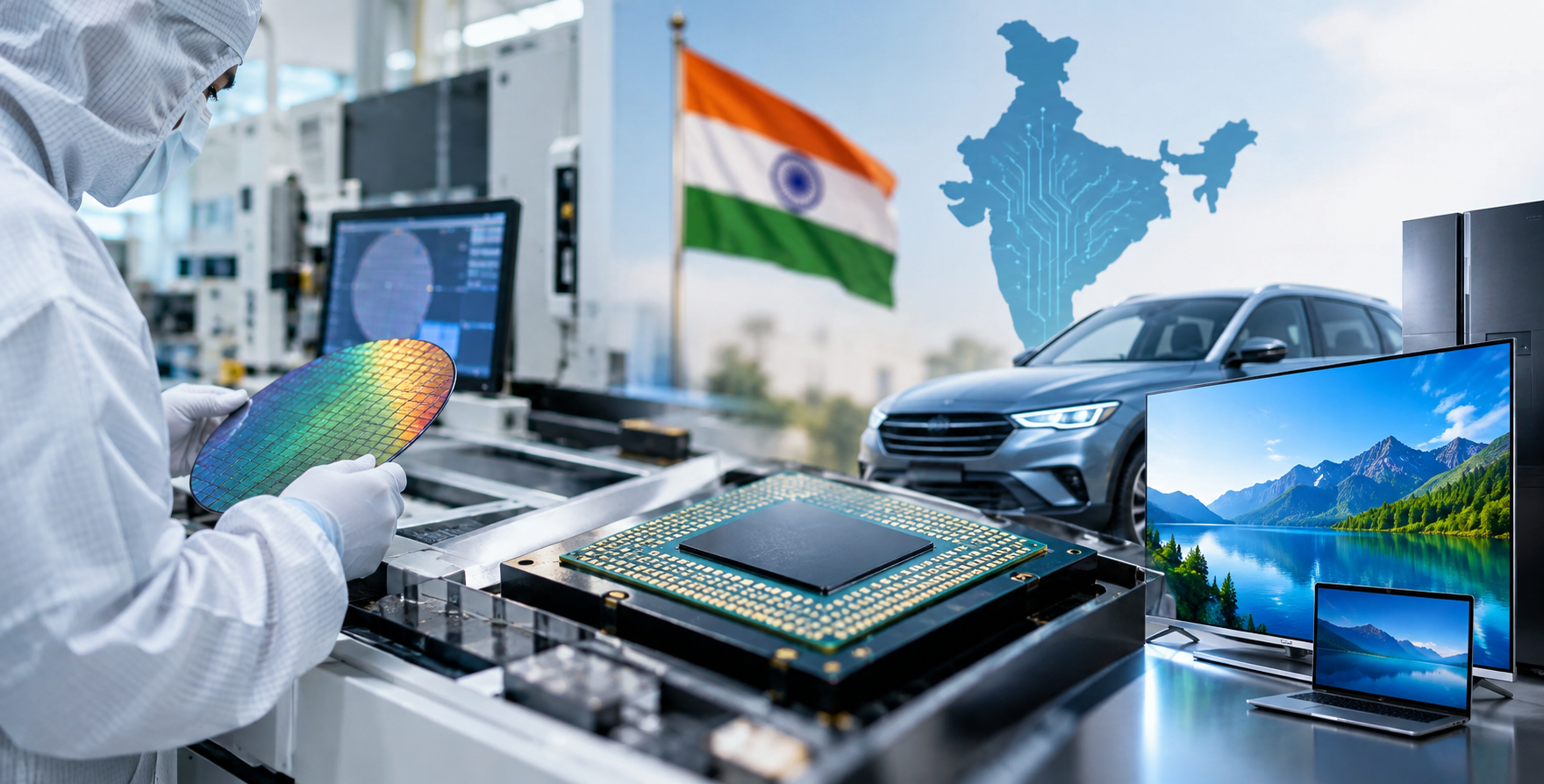
India is widening its semiconductor ambitions beyond traditional chip manufacturing, with the
government looking to develop and produce more chips for automobiles, televisions, household
appliances and critical power infrastructure.
Union Electronics and IT Minister Ashwini Vaishnaw said India should be able to design and manufacture a larger share of the chips used in these sectors over the next five years. The focus is part of a broader effort to build capabilities across the semiconductor value chain, from chip design and manufacturing to materials, equipment and research.
The comments came after SEMICON India 2026, held in New Delhi from September 17 to 19. The event brought together semiconductor companies, equipment makers, researchers and policymakers from India and overseas. More than 600 exhibitors participated, including around 300 international companies.
Vaishnaw highlighted automobiles as one of the key areas where India could increase domestic chip capabilities. Modern cars, scooters and motorcycles use semiconductors for a wide range of electronic functions, making reliable chip supplies increasingly important for the automotive industry.
The government is also looking at chips used in the power sector, including components associated with transmission systems, transformers and converters. In consumer electronics, the focus extends to chips used in televisions, refrigerators and other appliances.
A display-control module facility being developed in Uttar Pradesh was cited as an example of this shift. Such modules control how images are displayed on television screens and represent a move towards manufacturing more semiconductor-linked components domestically.
The next phase, Semicon 2.0, is designed to expand India's ecosystem across six areas: chip design, materials and machines, fabrication, advanced packaging, research and development, and talent. The government has also said it is targeting a larger domestic chip-design ecosystem and greater precision manufacturing capabilities.
For consumers, the semiconductor push may eventually be reflected in the products they use every day, as India seeks to build a larger domestic ecosystem behind cars, televisions, appliances and power systems.
Union Electronics and IT Minister Ashwini Vaishnaw said India should be able to design and manufacture a larger share of the chips used in these sectors over the next five years. The focus is part of a broader effort to build capabilities across the semiconductor value chain, from chip design and manufacturing to materials, equipment and research.
The comments came after SEMICON India 2026, held in New Delhi from September 17 to 19. The event brought together semiconductor companies, equipment makers, researchers and policymakers from India and overseas. More than 600 exhibitors participated, including around 300 international companies.
Vaishnaw highlighted automobiles as one of the key areas where India could increase domestic chip capabilities. Modern cars, scooters and motorcycles use semiconductors for a wide range of electronic functions, making reliable chip supplies increasingly important for the automotive industry.
The government is also looking at chips used in the power sector, including components associated with transmission systems, transformers and converters. In consumer electronics, the focus extends to chips used in televisions, refrigerators and other appliances.
A display-control module facility being developed in Uttar Pradesh was cited as an example of this shift. Such modules control how images are displayed on television screens and represent a move towards manufacturing more semiconductor-linked components domestically.
The next phase, Semicon 2.0, is designed to expand India's ecosystem across six areas: chip design, materials and machines, fabrication, advanced packaging, research and development, and talent. The government has also said it is targeting a larger domestic chip-design ecosystem and greater precision manufacturing capabilities.
For consumers, the semiconductor push may eventually be reflected in the products they use every day, as India seeks to build a larger domestic ecosystem behind cars, televisions, appliances and power systems.
