


42
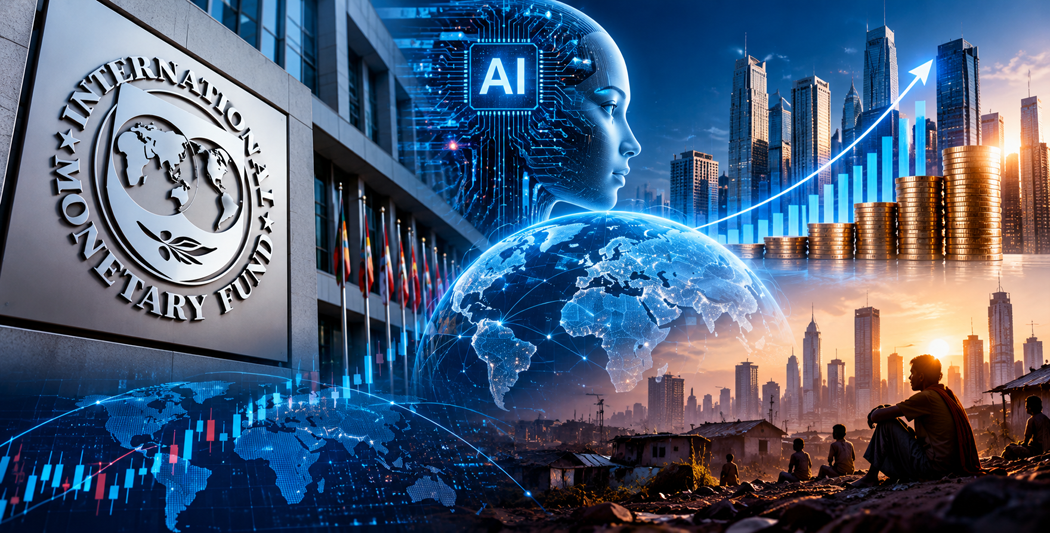
Artificial intelligence (AI) could accelerate global economic growth, but unequal access to digital infrastructure, computing resources and skilled workers risks widening the gap between advanced and developing economies, according to the International Monetary Fund (IMF) and the
Organisation for Economic Co-operation and Development (OECD).
Governments and businesses are increasing investments in AI chips, data centres and computing infrastructure to improve productivity. However, countries and companies lacking the resources to adopt the technology could miss out on its economic benefits.
Era Dabla-Norris, deputy director of the IMF’s Fiscal Affairs Department, told the Reuters Global Markets Forum that developing economies need to strengthen their capacity to adopt and integrate AI. The IMF estimates that effective AI adoption could add up to 0.5 percentage points to annual global economic growth over the medium term.
The OECD has also highlighted AI’s potential to boost productivity, noting that the scale of these gains will depend on how effectively businesses integrate the technology into their operations. Adoption requires investment, technical expertise and changes to existing workflows, creating challenges for smaller businesses with limited resources.
The impact of AI on employment remains a key concern. The IMF estimates that nearly 40% of jobs worldwide are exposed to AI, meaning the technology could transform tasks across a wide range of occupations. However, exposure does not necessarily mean job losses, as AI can automate certain tasks while helping employees work more efficiently.
Young and entry-level workers could face particular challenges if AI automates routine tasks that traditionally help employees gain experience. Fewer opportunities to perform these tasks could make it harder for graduates to enter the workforce and develop skills for more advanced roles.
Developing economies face additional barriers, including unreliable electricity, limited internet connectivity, inadequate computing capacity and shortages of skilled professionals. Smaller businesses may also struggle to compete with larger companies that have greater financial resources and established AI capabilities.
Closing the gap will require greater investment in digital infrastructure,education and workforce training, alongside efforts to make AI tools more accessible to smaller businesses.
Without broader access to AI and the resources needed to deploy it, productivity gains could remain concentrated among a relatively small group of countries and companies, potentially deepening existing economic inequalities.
