


13
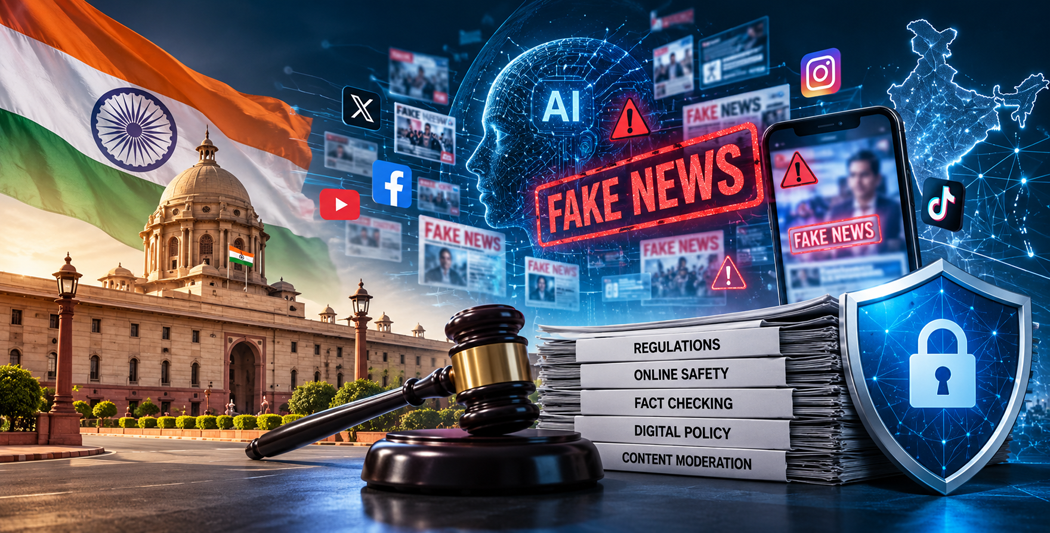
The government has accepted nine of 12 recommendations made by a parliamentary committee on tackling fake news and misinformation, while
key questions surrounding its definition, fact-checking mechanisms and penalties remain under consideration.
The Standing Committee on Communications and Information Technology outlined the government’s response in its action-taken report on mechanisms to curb fake news, published on August 6, 2026. According to the report, responses to three recommendations were interim in nature, leaving important aspects of the proposed framework open for further examination.
The committee has called for a coordinated approach to tackling misinformation across print, television and digital platforms. Its recommendations include exploring licensing requirements for AI content creators, introducing labels for AI-generated material and using artificial intelligence to detect manipulated content, with human oversight.
The panel has also highlighted the need for clearer accountability and stronger mechanisms to address misleading information.
The debate has gained urgency as generative AI tools make it easier to produce convincing fake videos, images and cloned voices that can misrepresent individuals or events. Such content can spread rapidly online, making verification increasingly challenging for audiences and news organisations.
India has also introduced regulatory measures targeting AI-generated content. Amendments to the Information Technology Rules, 2021, were notified on February 10 and took effect on February 20, 2026. The changes include requirements relating to the labelling and technical verification of synthetically generated content by significant social media intermediaries, alongside stronger obligations concerning unlawful material.
However, several policy questions remain unresolved. These include establishing a clearer definition of fake news, improving coordination among fact-checking organisations and determining appropriate penalties for those responsible for spreading misinformation.
The effectiveness of India’s approach will depend on how the government implements existing safeguards and addresses the committee’s outstanding recommendations. Any future framework will need to tackle deliberate deception while protecting legitimate journalism, freedom of expression and the responsible use of artificial intelligence.
