


25
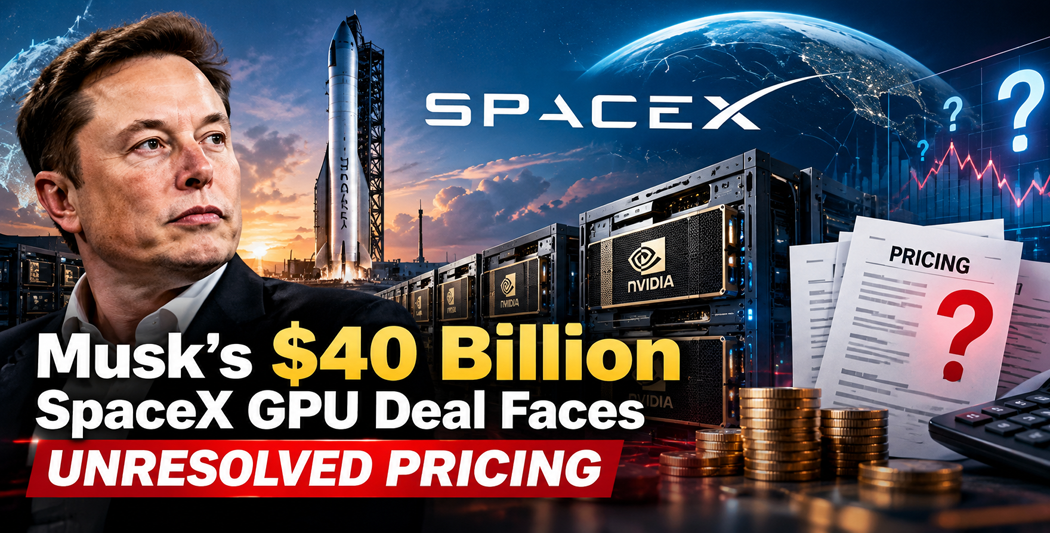
Elon Musk says SpaceX has closed a $40 billion debt deal to finance artificial intelligence chip purchases. However, reports of ongoing pricing
negotiations leave the transaction’s final status uncertain, as the billionaire warns of widespread consolidation among specialist AI cloud providers.
In a post on X on October 25, Musk said SpaceX’s investment-grade credit standing and revenue from its Starlink satellite internet and rocket-launch businesses supported its ability to raise the financing. He described the borrowing as primarily callable debt for graphics processing units (GPUs),with deliveries expected in the first and second quarters of 2027.
However, Bloomberg reported that people familiar with the transaction said pricing discussions were still underway and the deal had not yet closed as of October 25. The proposed structure is designed to finance purchases of Nvidia chips through a special-purpose vehicle, potentially keeping the liabilities off SpaceX’s balance sheet. The final terms and completion status have not been publicly established.
The financing comes as SpaceX expands its AI computing operations and prepares for substantial infrastructure spending. The company reported third-quarter revenue of $14.58 billion, up 161% year on year, while AI revenue climbed nearly tenfold to $7.56 billion, according to Reuters. SpaceX also expects capital expenditure of $35 billion to $40 billion in the fourth quarter of 2026.
Musk used the financing announcement to highlight what he sees as a growing divide between companies with diversified revenue and those that depend heavily on AI infrastructure. He warned that debt markets had largely restricted access to funding for businesses without substantial revenue independent of AI data centres.
He predicted severe failures and consolidation among more than 200 neocloud providers, which specialise in supplying GPU computing capacity to AI developers and other technology companies. Musk said some would survive but suggested that many would not. This remains his forecast rather than an established outcome for the sector.
Neocloud providers face significant upfront costs for processors, data centres, power and networking equipment. Their financial sustainability depends on securing customers, maintaining demand for computing services and generating enough cash flow to cover operating expenses and debt obligations. Tighter credit conditions could make expansion more difficult for companies that rely heavily on borrowing.
SpaceX’s Starlink and launch operations provide revenue beyond AI computing, a distinction Musk cited when explaining its financing position. However, the proposed debt structure has itself faced scrutiny amid volatility in credit markets and investor concerns about the growing cost of AI infrastructure.
Musk also ruled out SpaceX acquiring struggling neocloud providers, describing such purchases as pointless. That leaves the company focused on its own computing expansion rather than acquisitions as a way to benefit from potential industry consolidation.
The outcome will depend on the final financing terms, lenders’ appetite for AI-related debt and the ability of computing providers to turn large infrastructure investments into sustainable returns. For the AI industry, the dispute surrounding SpaceX’s proposed financing underscores how access to capital is becoming as important as access to advanced chips.
