


17
Truecaller is expanding its scam-detection capabilities beyond phone calls to cover suspicious
links and messages, as online fraud increasingly moves across multiple digital channels.
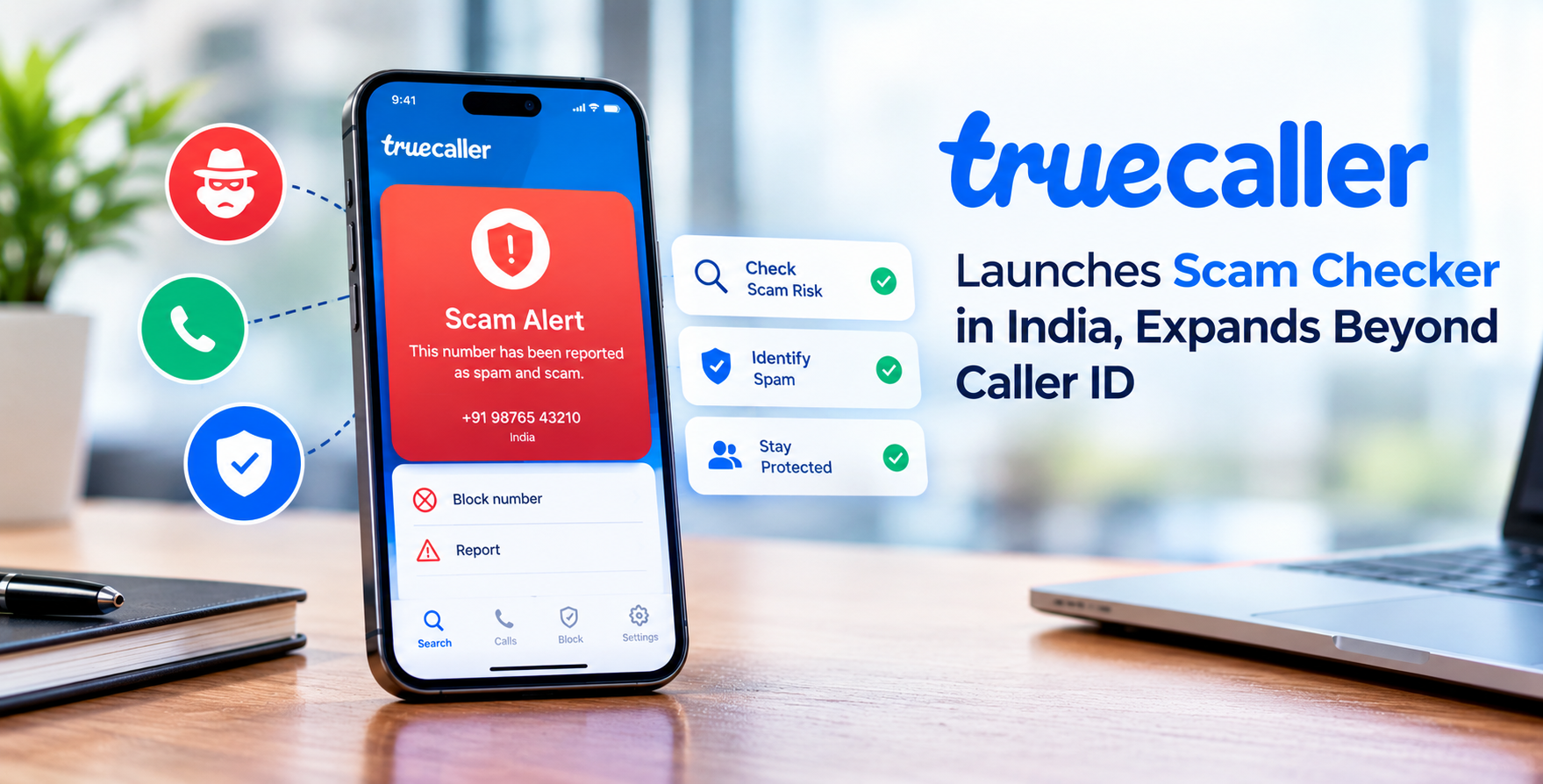
The company has introduced a web-based Scam Checker and an Android service in India that allow users to check phone numbers, links and messages for potential scam indicators. Basic checks can be carried out without installing the main Truecaller application or signing in, according to the company.
The service uses information from Truecaller's existing database and its community reporting system, known as ScamFeed, to assess suspicious phone numbers. Users can also submit links and messages for analysis.
For links, the system can examine shortened URLs and follow redirects before checking the destination, according to information provided by the company.
The expansion reflects a broader change in how online fraud is carried out. Scammers increasingly use text messages, malicious links and fake websites alongside traditional phone calls to target users.
Truecaller CEO and co-founder Alan Mamedi told TechCrunch that scam protection needs to cover multiple communication channels as fraudulent activity increasingly involves links and messages as well as voice and video.
India is the first market for the new service. Truecaller said it plans to extend the service to other regions, including Latin America, the Middle East and Africa, and Southeast Asia. The company says it has more than 350 million users in India, making the country its largest market.
The development also comes as India's telecom sector changes how spam reports generated by caller-identification applications are handled.
Earlier this month, the Telecom Regulatory Authority of India required caller-ID and call- management applications that allow users to report spam to share those reports with telecom operators. Truecaller has raised concerns about the requirement and said it could result in a one-way flow of information.
The company's move beyond caller identification comes as the distinction between phone- based scams and internet fraud becomes increasingly blurred. Fraudulent messages can direct users to malicious websites, while phone calls are often used to persuade victims to open links or disclose sensitive information.
Truecaller's expanded scam-detection approach is therefore aimed at identifying potential risks across several stages of such interactions, rather than limiting detection to the incoming phone call.
The company has introduced a web-based Scam Checker and an Android service in India that allow users to check phone numbers, links and messages for potential scam indicators. Basic checks can be carried out without installing the main Truecaller application or signing in, according to the company.
The service uses information from Truecaller's existing database and its community reporting system, known as ScamFeed, to assess suspicious phone numbers. Users can also submit links and messages for analysis.
For links, the system can examine shortened URLs and follow redirects before checking the destination, according to information provided by the company.
The expansion reflects a broader change in how online fraud is carried out. Scammers increasingly use text messages, malicious links and fake websites alongside traditional phone calls to target users.
Truecaller CEO and co-founder Alan Mamedi told TechCrunch that scam protection needs to cover multiple communication channels as fraudulent activity increasingly involves links and messages as well as voice and video.
India is the first market for the new service. Truecaller said it plans to extend the service to other regions, including Latin America, the Middle East and Africa, and Southeast Asia. The company says it has more than 350 million users in India, making the country its largest market.
The development also comes as India's telecom sector changes how spam reports generated by caller-identification applications are handled.
Earlier this month, the Telecom Regulatory Authority of India required caller-ID and call- management applications that allow users to report spam to share those reports with telecom operators. Truecaller has raised concerns about the requirement and said it could result in a one-way flow of information.
The company's move beyond caller identification comes as the distinction between phone- based scams and internet fraud becomes increasingly blurred. Fraudulent messages can direct users to malicious websites, while phone calls are often used to persuade victims to open links or disclose sensitive information.
Truecaller's expanded scam-detection approach is therefore aimed at identifying potential risks across several stages of such interactions, rather than limiting detection to the incoming phone call.
