


30
The Centre and Uttar Pradesh government are stepping up efforts to control air pollution across
the state's National Capital Region (NCR)-linked districts, with a focus on vehicle emissions,
industrial pollution, road dust and waste management ahead of the winter pollution season.
Union Environment Minister Bhupender Yadav and Uttar Pradesh Chief Minister Yogi Adityanath reviewed the implementation of air-quality measures during a high-level meeting in Lucknow on September 18. The review covered eight Uttar Pradesh districts connected to the NCR, including Noida, Ghaziabad, Hapur, Meerut and Bulandshahr.
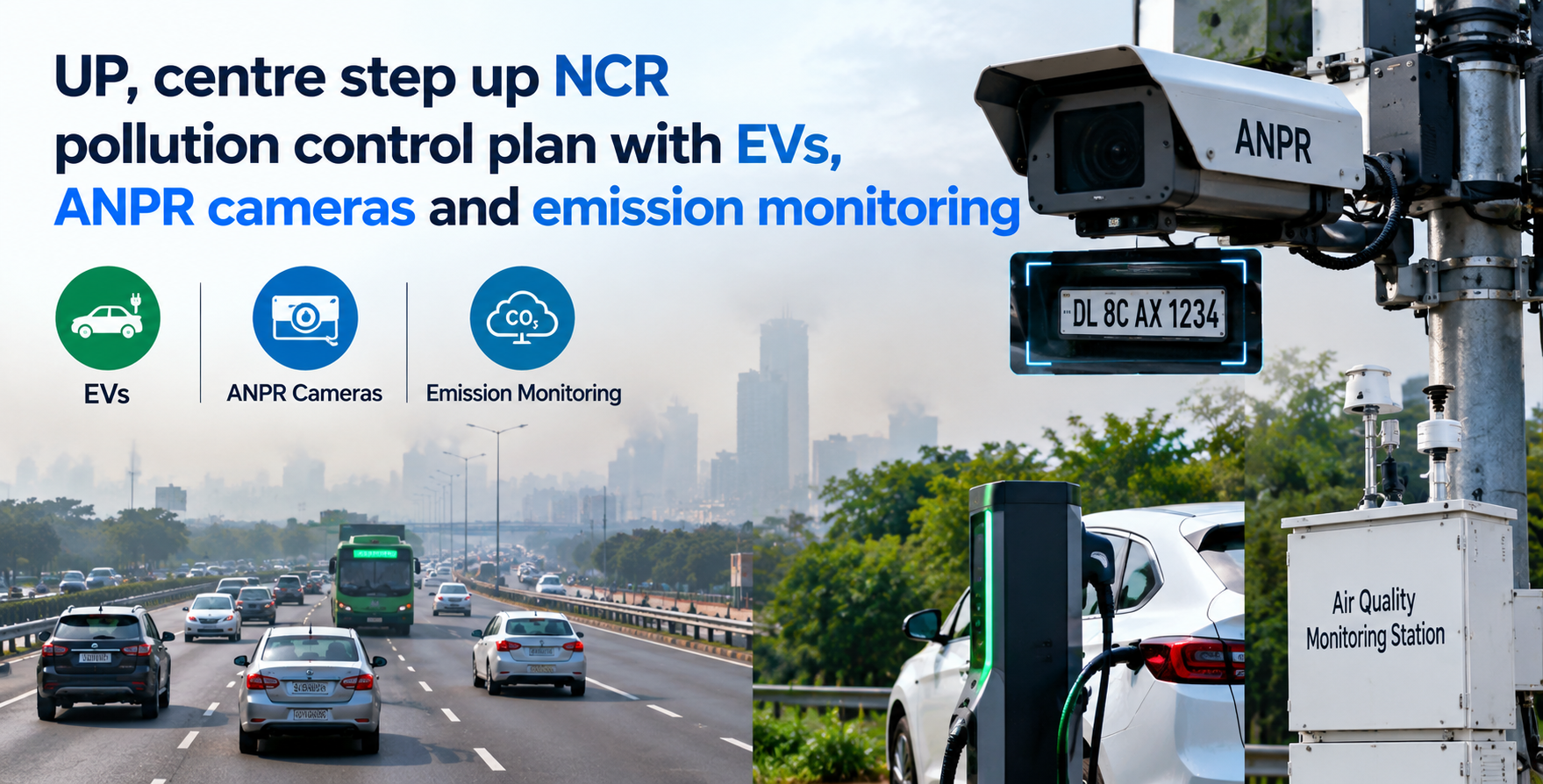
The Centre has called for the measures to be implemented in “mission mode” before winter, when pollution levels across the Delhi-NCR region typically become a major concern. One of the key technology-driven measures discussed was the use of Automatic Number Plate Recognition (ANPR) cameras at fuel stations.
The system is intended to support the “No PUCC, No Fuel” initiative by helping authorities identify vehicles that do not have a valid Pollution Under Control Certificate. The government has also asked officials to identify traffic-congestion hotspots and introduce measures to improve traffic movement.
The use of automated number-plate recognition could give authorities a technology-based mechanism to enforce pollution-related vehicle rules rather than relying entirely on manual checks.
The Centre has also asked Uttar Pradesh to accelerate the deployment of electric buses and EV charging stations in NCR municipal areas.
The Union environment ministry said there are significant gaps in the existing electric-bus fleet and called for faster deployment. The move is part of the broader effort to reduce emissions from road transport, particularly in densely populated NCR areas.
The state is also expected to accelerate the replacement of older, polluting vehicles with cleaner vehicles under the PARIVARTAN scheme. The Centre had approved the ₹9,585-crore scheme in June to support the transition of older trucks and buses in the NCR to BS-VI-compliant or electric vehicles.
The Centre has called for faster installation of Online Continuous Emission Monitoring Systems (OCEMS) and air-pollution-control equipment across industrial units. According to the latest reports, around 80% of industries have already installed OCEMS and air-pollution-control devices, with efforts underway to cover the remaining units.
OCEMS can continuously track emissions from industrial facilities and provide authorities with data that can be used to monitor compliance.
For a region that includes major industrial and manufacturing clusters, the system is intended to strengthen real-time monitoring rather than relying only on periodic inspections.
The Centre has called for wider deployment of mechanical road-sweeping machines and suggested that the machines be geo-tagged. Geo-tagging would allow authorities to track cleaning operations and improve monitoring of whether machines are being deployed as planned.
v Officials have also been asked to prioritise pothole repairs, road improvements, footpaths, roadside greenery and deep cleaning of roads.
The review also covered solid waste and construction and demolition waste management. Authorities have been asked to speed up the establishment of secondary collection centres for construction and demolition waste and deal with accumulated legacy waste.
Stubble burning remains another concern. The Centre has called for gaps in the availability of crop-residue-management machinery to be addressed and for greater farmer awareness and training on the use of such equipment.
The Union government is also coordinating with neighbouring states because pollution in the NCR does not remain confined to administrative boundaries. Yadav said discussions have already been held with Haryana and Delhi, while further talks with Rajasthan and Punjab are planned.
The latest review puts technology and enforcement at the centre of Uttar Pradesh's preparations for the winter pollution season.
From ANPR cameras and digital pollution certificates to industrial emission monitoring, geo- tagged road sweepers, electric buses and EV charging stations, the measures aim to combine cleaner transport with closer monitoring of pollution sources.
However, implementation will be critical. The Centre has asked Uttar Pradesh to accelerate work before winter and strengthen coordination between government departments, local authorities and other stakeholders.
For residents of the NCR-linked districts, the impact will ultimately be measured not by the number of technologies deployed, but by whether these systems lead to better enforcement and lower pollution levels during the months when air quality typically comes under the greatest pressure.
Union Environment Minister Bhupender Yadav and Uttar Pradesh Chief Minister Yogi Adityanath reviewed the implementation of air-quality measures during a high-level meeting in Lucknow on September 18. The review covered eight Uttar Pradesh districts connected to the NCR, including Noida, Ghaziabad, Hapur, Meerut and Bulandshahr.
The Centre has called for the measures to be implemented in “mission mode” before winter, when pollution levels across the Delhi-NCR region typically become a major concern. One of the key technology-driven measures discussed was the use of Automatic Number Plate Recognition (ANPR) cameras at fuel stations.
The system is intended to support the “No PUCC, No Fuel” initiative by helping authorities identify vehicles that do not have a valid Pollution Under Control Certificate. The government has also asked officials to identify traffic-congestion hotspots and introduce measures to improve traffic movement.
The use of automated number-plate recognition could give authorities a technology-based mechanism to enforce pollution-related vehicle rules rather than relying entirely on manual checks.
The Centre has also asked Uttar Pradesh to accelerate the deployment of electric buses and EV charging stations in NCR municipal areas.
The Union environment ministry said there are significant gaps in the existing electric-bus fleet and called for faster deployment. The move is part of the broader effort to reduce emissions from road transport, particularly in densely populated NCR areas.
The state is also expected to accelerate the replacement of older, polluting vehicles with cleaner vehicles under the PARIVARTAN scheme. The Centre had approved the ₹9,585-crore scheme in June to support the transition of older trucks and buses in the NCR to BS-VI-compliant or electric vehicles.
The Centre has called for faster installation of Online Continuous Emission Monitoring Systems (OCEMS) and air-pollution-control equipment across industrial units. According to the latest reports, around 80% of industries have already installed OCEMS and air-pollution-control devices, with efforts underway to cover the remaining units.
OCEMS can continuously track emissions from industrial facilities and provide authorities with data that can be used to monitor compliance.
For a region that includes major industrial and manufacturing clusters, the system is intended to strengthen real-time monitoring rather than relying only on periodic inspections.
The Centre has called for wider deployment of mechanical road-sweeping machines and suggested that the machines be geo-tagged. Geo-tagging would allow authorities to track cleaning operations and improve monitoring of whether machines are being deployed as planned.
v Officials have also been asked to prioritise pothole repairs, road improvements, footpaths, roadside greenery and deep cleaning of roads.
The review also covered solid waste and construction and demolition waste management. Authorities have been asked to speed up the establishment of secondary collection centres for construction and demolition waste and deal with accumulated legacy waste.
Stubble burning remains another concern. The Centre has called for gaps in the availability of crop-residue-management machinery to be addressed and for greater farmer awareness and training on the use of such equipment.
The Union government is also coordinating with neighbouring states because pollution in the NCR does not remain confined to administrative boundaries. Yadav said discussions have already been held with Haryana and Delhi, while further talks with Rajasthan and Punjab are planned.
The latest review puts technology and enforcement at the centre of Uttar Pradesh's preparations for the winter pollution season.
From ANPR cameras and digital pollution certificates to industrial emission monitoring, geo- tagged road sweepers, electric buses and EV charging stations, the measures aim to combine cleaner transport with closer monitoring of pollution sources.
However, implementation will be critical. The Centre has asked Uttar Pradesh to accelerate work before winter and strengthen coordination between government departments, local authorities and other stakeholders.
For residents of the NCR-linked districts, the impact will ultimately be measured not by the number of technologies deployed, but by whether these systems lead to better enforcement and lower pollution levels during the months when air quality typically comes under the greatest pressure.
