


26
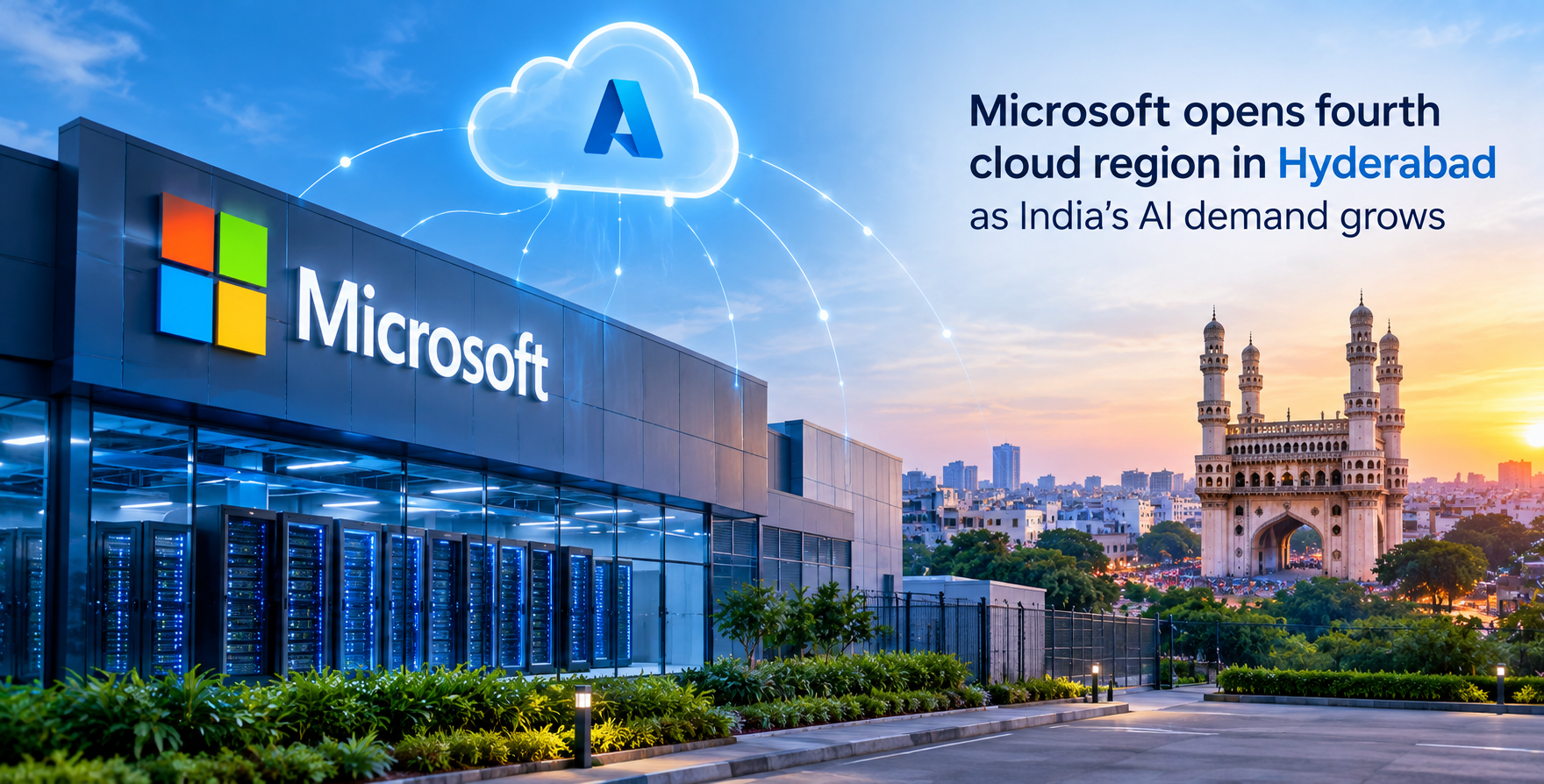
Microsoft has expanded its cloud infrastructure in India with the India South Central cloud region
in Hyderabad, taking the company's total number of cloud regions in the country to four.
The Hyderabad region joins Microsoft's existing cloud regions in Pune, Chennai and Mumbai.
The company said the new region has been designed to support the growing demand for cloud computing and artificial intelligence (AI) workloads from businesses, government organisations and other institutions in India.
The region became generally available in August and is now being positioned by Microsoft as a strategic hub for Asia and the Global South. It has a three-zone architecture designed to provide resilience and allow the company to expand cloud and AI services over time.
Microsoft India and South Asia President Puneet Chandok said the company is seeing growing demand from Indian organisations for infrastructure capable of supporting AI applications.
According to Microsoft, businesses are increasingly moving AI projects from experimentation into production, creating greater demand for local computing capacity.
The Hyderabad region is also aimed at organisations that need their data and workloads to remain within India. Microsoft said its cloud infrastructure is designed to support applicable security, compliance and data-sovereignty requirements.
The company said several Indian enterprises, including Adani Group, Bajaj Finserv, HDFC Bank and PB Pay, have already signed up to use the new region.
The expansion comes as India increases its investment in data-centre capacity to support AI and other digital services. Microsoft has previously announced a $20.5 billion investment commitment in India, covering cloud and AI infrastructure, skilling and operations.
Microsoft also said the Hyderabad facility uses high-efficiency cooling technology designed for effectively zero water use for cooling, as the company looks to address the resource requirements associated with expanding data-centre infrastructure.
With the Hyderabad region now operational, Microsoft has expanded its local cloud footprint as demand for AI computing, cloud services and data infrastructure continues to grow in India.
The Hyderabad region joins Microsoft's existing cloud regions in Pune, Chennai and Mumbai.
The company said the new region has been designed to support the growing demand for cloud computing and artificial intelligence (AI) workloads from businesses, government organisations and other institutions in India.
The region became generally available in August and is now being positioned by Microsoft as a strategic hub for Asia and the Global South. It has a three-zone architecture designed to provide resilience and allow the company to expand cloud and AI services over time.
Microsoft India and South Asia President Puneet Chandok said the company is seeing growing demand from Indian organisations for infrastructure capable of supporting AI applications.
According to Microsoft, businesses are increasingly moving AI projects from experimentation into production, creating greater demand for local computing capacity.
The Hyderabad region is also aimed at organisations that need their data and workloads to remain within India. Microsoft said its cloud infrastructure is designed to support applicable security, compliance and data-sovereignty requirements.
The company said several Indian enterprises, including Adani Group, Bajaj Finserv, HDFC Bank and PB Pay, have already signed up to use the new region.
The expansion comes as India increases its investment in data-centre capacity to support AI and other digital services. Microsoft has previously announced a $20.5 billion investment commitment in India, covering cloud and AI infrastructure, skilling and operations.
Microsoft also said the Hyderabad facility uses high-efficiency cooling technology designed for effectively zero water use for cooling, as the company looks to address the resource requirements associated with expanding data-centre infrastructure.
With the Hyderabad region now operational, Microsoft has expanded its local cloud footprint as demand for AI computing, cloud services and data infrastructure continues to grow in India.
