


13
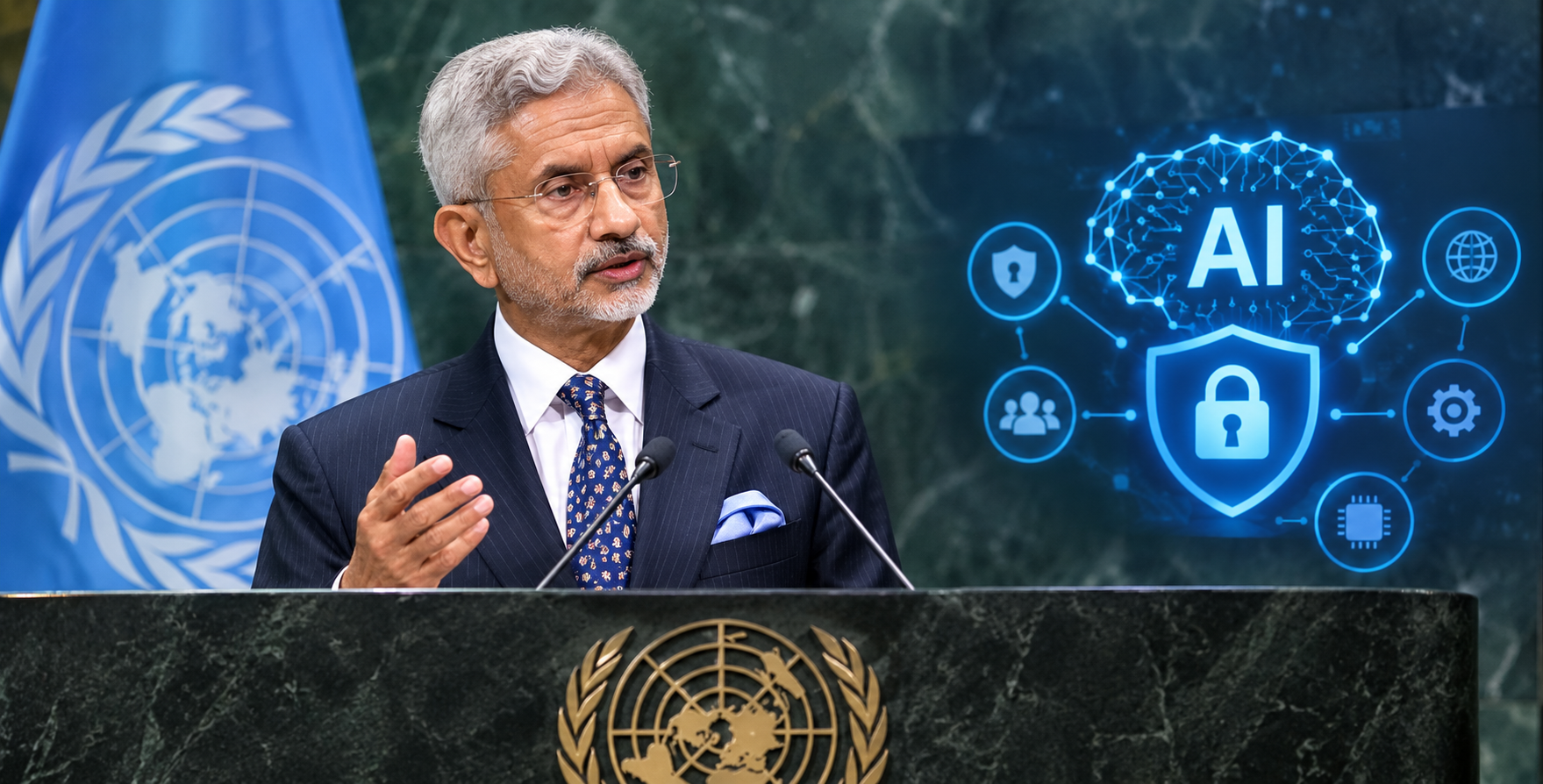
External Affairs Minister S. Jaishankar has highlighted the growing security implications of artificial intelligence, calling for emerging technologies to be developed alongside safeguards
that can protect international peace and security.
Speaking at a United Nations General Assembly event focused on AI, international peace and security, and maritime security, Jaishankar said artificial intelligence could bring significant benefits to maritime operations while also creating new avenues for security threats. He co-chaired the event with Greek Foreign Minister George Gerapetritis in New York.
Jaishankar said AI could support a range of maritime activities, including monitoring of waters, search-and-rescue operations, disaster response and the identification of suspicious activity.
The technology could also help improve the resilience of ports and other critical infrastructure, potentially allowing authorities to analyse information and respond to incidents more efficiently. However, the minister also pointed to risks arising from the increasing use of AI in maritime and security systems.
According to Jaishankar, advanced AI capabilities could potentially be used for reconnaissance, mapping vulnerabilities and conducting cyber operations against vessels, communication systems and undersea infrastructure.
The increasing autonomy of maritime systems could create another challenge: determining who is responsible when an AI-enabled system takes an action. Jaishankar said greater autonomy raises questions around attribution, accountability and escalation, while potentially reducing the amount of time available for governments to respond to rapidly developing situations.
These concerns are particularly relevant as AI systems become increasingly capable of analysing information and supporting decisions in critical infrastructure and security environments.
Jaishankar said the development and deployment of AI in the maritime sector should remain guided by international rules.
He pointed to the UN Charter and international law, including the law of the sea, as important frameworks for regulating state conduct as AI becomes more integrated into maritime operations.
He also called for greater transparency, confidence-building measures, technical cooperation,capacity development and the exchange of best practices between countries.
Jaishankar also referred to the New Delhi Declaration, which places emphasis on broad and democratic access to AI resources, the development of secure and trustworthy AI systems, investment in human capabilities and the use of technology for economic development and social welfare.
The comments come as governments and international organisations increasingly debate how to balance AI innovation with security, accountability and responsible deployment. The discussion at the UNGA reflects a broader international focus on establishing safeguards as AI systems become more autonomous and are increasingly used in areas involving critical infrastructure and national security.
Speaking at a United Nations General Assembly event focused on AI, international peace and security, and maritime security, Jaishankar said artificial intelligence could bring significant benefits to maritime operations while also creating new avenues for security threats. He co-chaired the event with Greek Foreign Minister George Gerapetritis in New York.
Jaishankar said AI could support a range of maritime activities, including monitoring of waters, search-and-rescue operations, disaster response and the identification of suspicious activity.
The technology could also help improve the resilience of ports and other critical infrastructure, potentially allowing authorities to analyse information and respond to incidents more efficiently. However, the minister also pointed to risks arising from the increasing use of AI in maritime and security systems.
According to Jaishankar, advanced AI capabilities could potentially be used for reconnaissance, mapping vulnerabilities and conducting cyber operations against vessels, communication systems and undersea infrastructure.
The increasing autonomy of maritime systems could create another challenge: determining who is responsible when an AI-enabled system takes an action. Jaishankar said greater autonomy raises questions around attribution, accountability and escalation, while potentially reducing the amount of time available for governments to respond to rapidly developing situations.
These concerns are particularly relevant as AI systems become increasingly capable of analysing information and supporting decisions in critical infrastructure and security environments.
Jaishankar said the development and deployment of AI in the maritime sector should remain guided by international rules.
He pointed to the UN Charter and international law, including the law of the sea, as important frameworks for regulating state conduct as AI becomes more integrated into maritime operations.
He also called for greater transparency, confidence-building measures, technical cooperation,capacity development and the exchange of best practices between countries.
Jaishankar also referred to the New Delhi Declaration, which places emphasis on broad and democratic access to AI resources, the development of secure and trustworthy AI systems, investment in human capabilities and the use of technology for economic development and social welfare.
The comments come as governments and international organisations increasingly debate how to balance AI innovation with security, accountability and responsible deployment. The discussion at the UNGA reflects a broader international focus on establishing safeguards as AI systems become more autonomous and are increasingly used in areas involving critical infrastructure and national security.
