


29
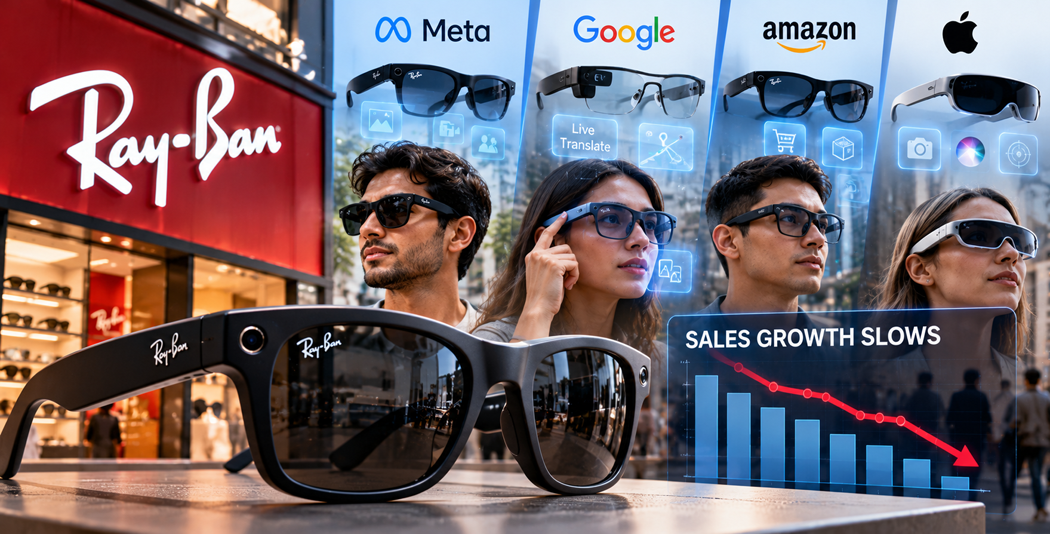
EssilorLuxottica, the eyewear group behind Ray-Ban, is facing intensifying competition in the artificial intelligence-powered glasses market as growth in its wearables business slows, even as the company reports stronger-than-expected quarterly revenue.
The company reported third-quarter revenue of €7.49 billion on October 20, representing growth of 7.2% at constant exchange rates. The figure exceeded analysts’ expectations of €7.36 billion, helping ease investor concerns and supporting a rise in the company’s shares the following day.
The results also offered a clearer picture of the company’s wearables business. Revenue from AI-powered glasses and Nuance Audio hearing solutions reached €486 million, accounting for approximately 6.5% of total quarterly revenue.
However, wearables revenue grew 20% year on year, down from nearly 100% growth in the previous quarter. The slowdown partly reflects a tougher comparison with the same period last year, when the category was expanding rapidly.
The figures come as competition in AI-powered eyewear intensifies. EssilorLuxottica developed its Ray-Ban Meta smart glasses in partnership with Meta, combining familiar eyewear designs with cameras and AI- enabled features.
Google’s planned entry into the smart-glasses market could add further competitive pressure as technology companies seek to bring AI assistants and digital services into everyday devices.
Privacy concerns and questions about long-term profitability also remain challenges for the sector. Smart glasses equipped with cameras and recording capabilities have attracted public and regulatory scrutiny, potentially complicating efforts to achieve wider consumer adoption.
Despite the slowdown in wearables growth, EssilorLuxottica continues to benefit from its established eyewear and eyecare businesses. Revenue from its traditional eyecare and medical technology operations grew by more than 6%, while the company reported revenue growth across all regions.
The company now faces the challenge of sustaining demand for connected eyewear while protecting its position in the broader optical market. As more technology companies enter the category, long-term growth will depend on delivering useful AI features, maintaining consumer trust and developing a sustainable business model.
