


22
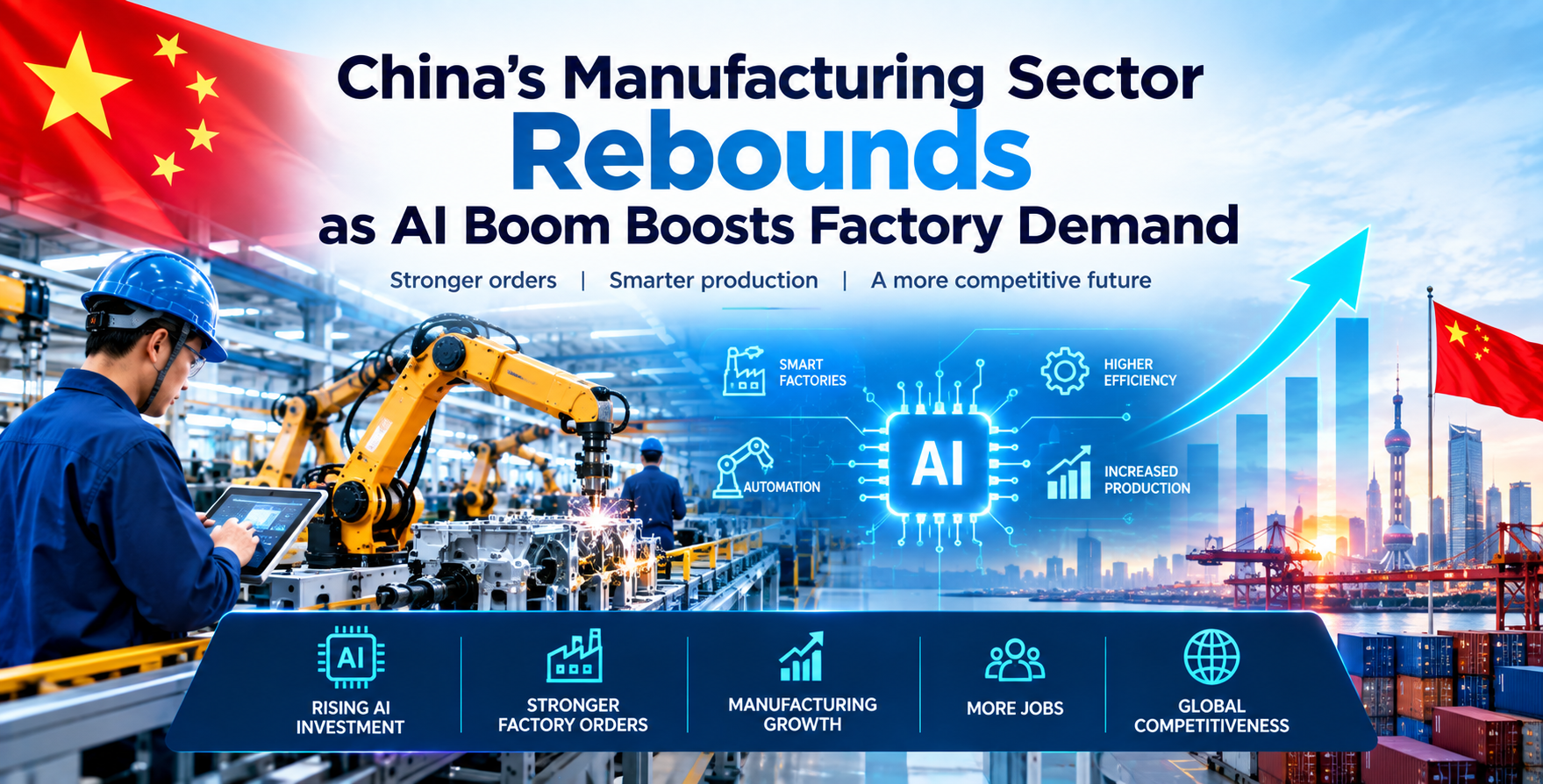
China’s manufacturing activity returned to growth in September, supported by improving operating conditions and continued global demand linked to the artificial intelligence boom,
official data showed on Wednesday.
The official manufacturing Purchasing Managers’ Index (PMI) rose to 50.1 in September from 49.8 in August, according to the National Bureau of Statistics (NBS). The reading moved above the 50-point threshold that separates expansion from contraction, ending two consecutive months of decline. The figure was also in line with the median forecast in a Reuters poll.
Manufacturing activity benefited from easing weather-related disruptions, allowing factories to resume operations. At the same time, strong global demand for products and equipment associated with the AI industry provided additional support to industrial activity.
The production sub-index increased to 51.7, while the new orders sub-index stood at 50.5, indicating continued expansion in both production and incoming orders.
A separate private survey by RatingDog also pointed to stronger manufacturing activity. Its PMI rose to 52.1 in September from 51.5 in August, reaching a five-month high.
However, the recovery remains uneven. Weak domestic consumption and investment, along with the prolonged downturn in China's property sector, continue to weigh on economic activity. China has increasingly relied on exports and industrial production to support growth as domestic demand remains subdued. The country's goods trade surplus is on track to exceed $1 trillion for a second consecutive year, according to Reuters.
The government has introduced additional measures to support economic activity, including efforts to direct cheaper credit towards sectors such as infrastructure and technology and expanded support for home buyers.
China's non-manufacturing PMI, covering services and construction, also improved in September, rising to 50.2 from 49.0 in August, NBS data showed.
The AI-driven industrial expansion is emerging as an important area of focus for China as policymakers seek to strengthen technology capabilities and upgrade manufacturing. However, continued weakness in property and domestic demand remains a challenge for the broader economy.
China's economy grew 4.3% in the second quarter, its slowest pace in more than three years, while Beijing has set a full-year growth target of 4.5% to 5%.
The official manufacturing Purchasing Managers’ Index (PMI) rose to 50.1 in September from 49.8 in August, according to the National Bureau of Statistics (NBS). The reading moved above the 50-point threshold that separates expansion from contraction, ending two consecutive months of decline. The figure was also in line with the median forecast in a Reuters poll.
Manufacturing activity benefited from easing weather-related disruptions, allowing factories to resume operations. At the same time, strong global demand for products and equipment associated with the AI industry provided additional support to industrial activity.
The production sub-index increased to 51.7, while the new orders sub-index stood at 50.5, indicating continued expansion in both production and incoming orders.
A separate private survey by RatingDog also pointed to stronger manufacturing activity. Its PMI rose to 52.1 in September from 51.5 in August, reaching a five-month high.
However, the recovery remains uneven. Weak domestic consumption and investment, along with the prolonged downturn in China's property sector, continue to weigh on economic activity. China has increasingly relied on exports and industrial production to support growth as domestic demand remains subdued. The country's goods trade surplus is on track to exceed $1 trillion for a second consecutive year, according to Reuters.
The government has introduced additional measures to support economic activity, including efforts to direct cheaper credit towards sectors such as infrastructure and technology and expanded support for home buyers.
China's non-manufacturing PMI, covering services and construction, also improved in September, rising to 50.2 from 49.0 in August, NBS data showed.
The AI-driven industrial expansion is emerging as an important area of focus for China as policymakers seek to strengthen technology capabilities and upgrade manufacturing. However, continued weakness in property and domestic demand remains a challenge for the broader economy.
China's economy grew 4.3% in the second quarter, its slowest pace in more than three years, while Beijing has set a full-year growth target of 4.5% to 5%.
