


24
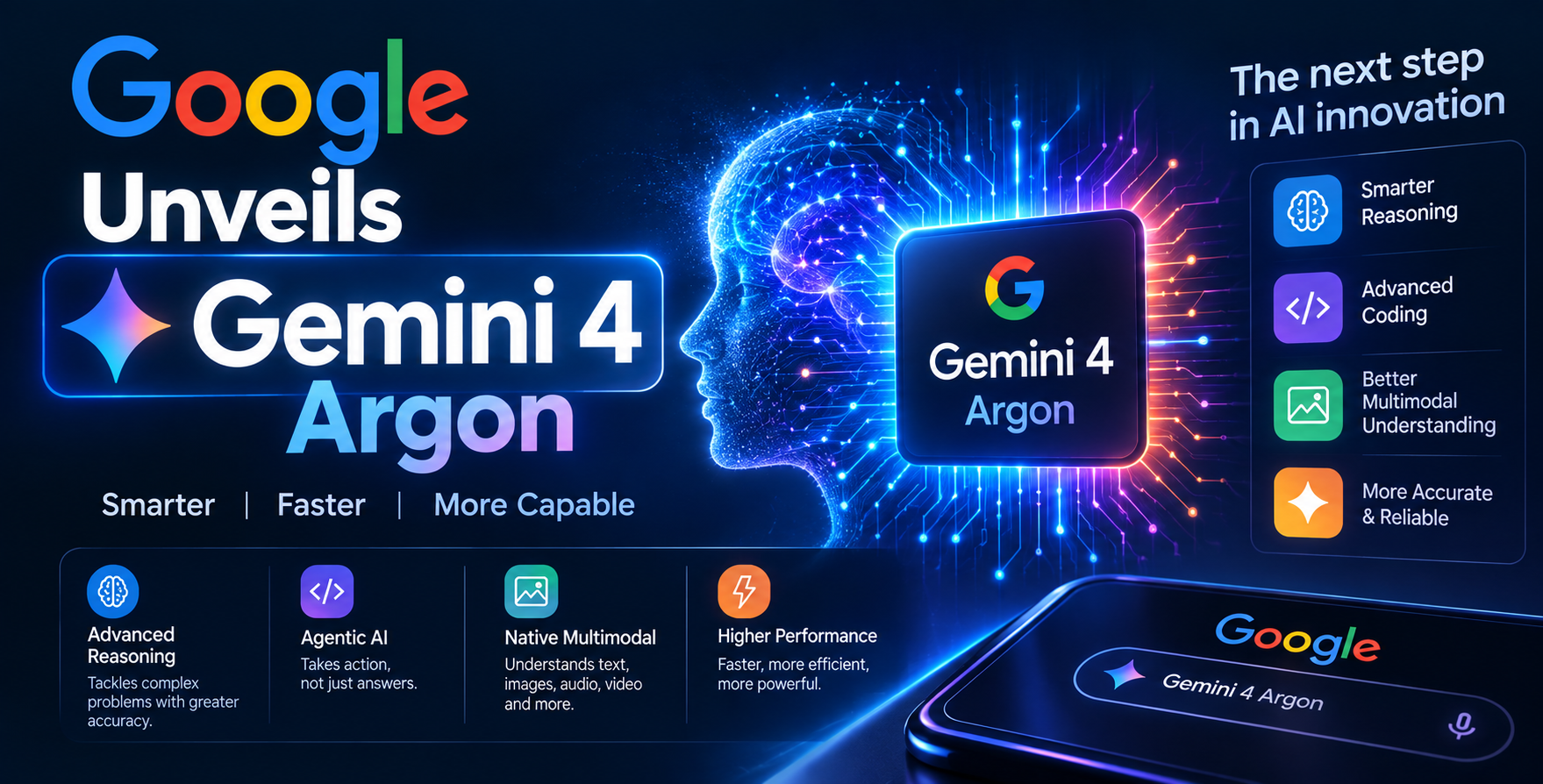
Google has unveiled Gemini 4 Argon, a new artificial intelligence model designed for complex tasks involving software development, enterprise
knowledge work, finance, legal analysis and cybersecurity.
Announced on September 30, Gemini 4 Argon is the first model in Google’s Gemini 4 series. The company is initially giving selected cybersecurity partners access to the model through its Fairwind programme as it evaluates its capabilities and safety systems. Google has not announced a date for general public availability.
Google says Argon is built to handle longer, multi-step tasks that require sustained reasoning. The company is using the model internally for software engineering, including debugging and large-scale code migration projects.
Cybersecurity is a key part of the initial rollout. Google is working with selected security researchers and organisations to test Argon in defensive security applications before expanding access. The company has also said it is participating in a US government programme that allows early evaluation of advanced AI models.
Google is also targeting enterprise applications in areas such as finance and legal work, where AI can be used to analyse documents, conduct research and support information-heavy workflows. The company has published benchmark results covering several of these areas, but those results are based on Google’s own evaluations and have not yet established how the model performs in independent real-world testing.
Google has also compared Gemini 4 Argon with competing AI models from companies including OpenAI and Anthropic. The company reports strong results on several benchmarks while acknowledging weaker performance on some coding evaluations. Independent testing will be needed to assess those comparisons more broadly.
The limited rollout is part of Google’s broader approach to testing advanced AI systems before wider release. The company says it is evaluating risks including misuse, prompt-injection attacks and potential model misalignment as it develops additional safeguards.
Announced on September 30, Gemini 4 Argon is the first model in Google’s Gemini 4 series. The company is initially giving selected cybersecurity partners access to the model through its Fairwind programme as it evaluates its capabilities and safety systems. Google has not announced a date for general public availability.
Google says Argon is built to handle longer, multi-step tasks that require sustained reasoning. The company is using the model internally for software engineering, including debugging and large-scale code migration projects.
Cybersecurity is a key part of the initial rollout. Google is working with selected security researchers and organisations to test Argon in defensive security applications before expanding access. The company has also said it is participating in a US government programme that allows early evaluation of advanced AI models.
Google is also targeting enterprise applications in areas such as finance and legal work, where AI can be used to analyse documents, conduct research and support information-heavy workflows. The company has published benchmark results covering several of these areas, but those results are based on Google’s own evaluations and have not yet established how the model performs in independent real-world testing.
Google has also compared Gemini 4 Argon with competing AI models from companies including OpenAI and Anthropic. The company reports strong results on several benchmarks while acknowledging weaker performance on some coding evaluations. Independent testing will be needed to assess those comparisons more broadly.
The limited rollout is part of Google’s broader approach to testing advanced AI systems before wider release. The company says it is evaluating risks including misuse, prompt-injection attacks and potential model misalignment as it develops additional safeguards.
