


18
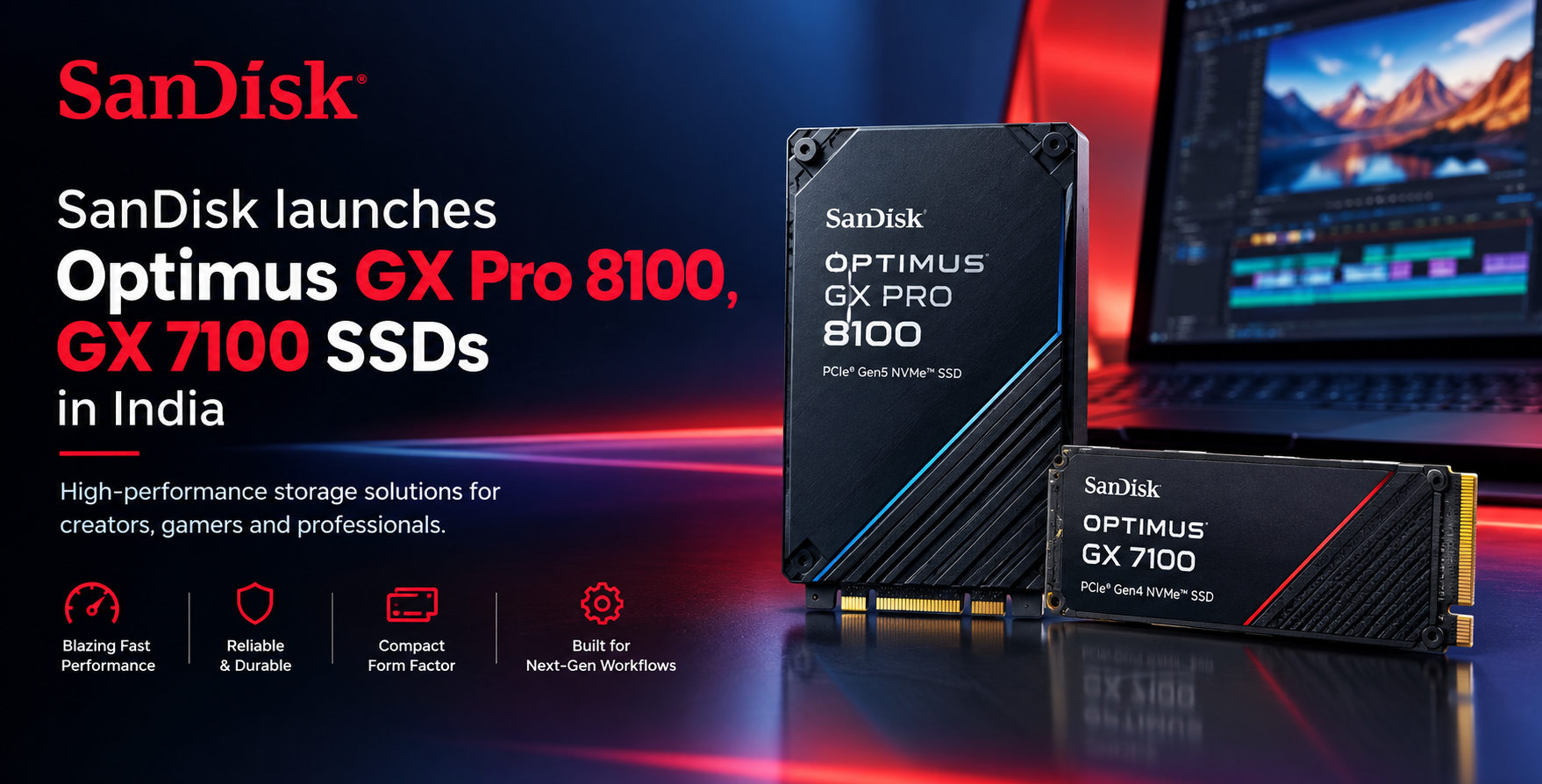
SanDisk has launched its Optimus GX Pro 8100 and Optimus GX 7100 NVMe SSDs in India,
adding new PCIe 5.0 and PCIe 4.0 storage options to its portfolio. The new drives are targeted
at PC users, gamers, and content creators looking for higher storage performance and faster
data transfers.
The Optimus GX Pro 8100 is the higher-performance model in the new lineup and uses the PCIe 5.0 interface. It is designed for compatible PCs that can take advantage of the higher bandwidth offered by the newer PCIe standard.
The Optimus GX 7100, on the other hand, is based on PCIe 4.0 and is aimed at users upgrading their systems with a high-speed NVMe drive without moving to a PCIe 5.0 platform. Both models are available in multiple storage capacities, giving buyers different options depending on their storage needs and system configuration.
The new SSDs are positioned for workloads that involve large files and frequent data transfers, including gaming, video editing, content creation, and other demanding PC applications.
However, the actual performance will depend on the specifications and PCIe support of the host system. For users considering the GX Pro 8100, PCIe 5.0 compatibility will be particularly important.
While PCIe generations are generally backward compatible, a PCIe 5.0 SSD operating in an older PCIe slot may not deliver its maximum rated performance. SanDisk’s latest launch comes as NVMe SSDs continue to replace older storage technologies in new PCs and upgrades, with faster interfaces becoming increasingly common in gaming and performance-focused systems.
The Optimus GX Pro 8100 and Optimus GX 7100 are now available in India, with pricing varying based on the model and storage capacity.
The launch expands SanDisk’s storage offerings across two PCIe generations, giving consumers more choices when upgrading or building compatible PCs.
The Optimus GX Pro 8100 is the higher-performance model in the new lineup and uses the PCIe 5.0 interface. It is designed for compatible PCs that can take advantage of the higher bandwidth offered by the newer PCIe standard.
The Optimus GX 7100, on the other hand, is based on PCIe 4.0 and is aimed at users upgrading their systems with a high-speed NVMe drive without moving to a PCIe 5.0 platform. Both models are available in multiple storage capacities, giving buyers different options depending on their storage needs and system configuration.
The new SSDs are positioned for workloads that involve large files and frequent data transfers, including gaming, video editing, content creation, and other demanding PC applications.
However, the actual performance will depend on the specifications and PCIe support of the host system. For users considering the GX Pro 8100, PCIe 5.0 compatibility will be particularly important.
While PCIe generations are generally backward compatible, a PCIe 5.0 SSD operating in an older PCIe slot may not deliver its maximum rated performance. SanDisk’s latest launch comes as NVMe SSDs continue to replace older storage technologies in new PCs and upgrades, with faster interfaces becoming increasingly common in gaming and performance-focused systems.
The Optimus GX Pro 8100 and Optimus GX 7100 are now available in India, with pricing varying based on the model and storage capacity.
The launch expands SanDisk’s storage offerings across two PCIe generations, giving consumers more choices when upgrading or building compatible PCs.
