


18
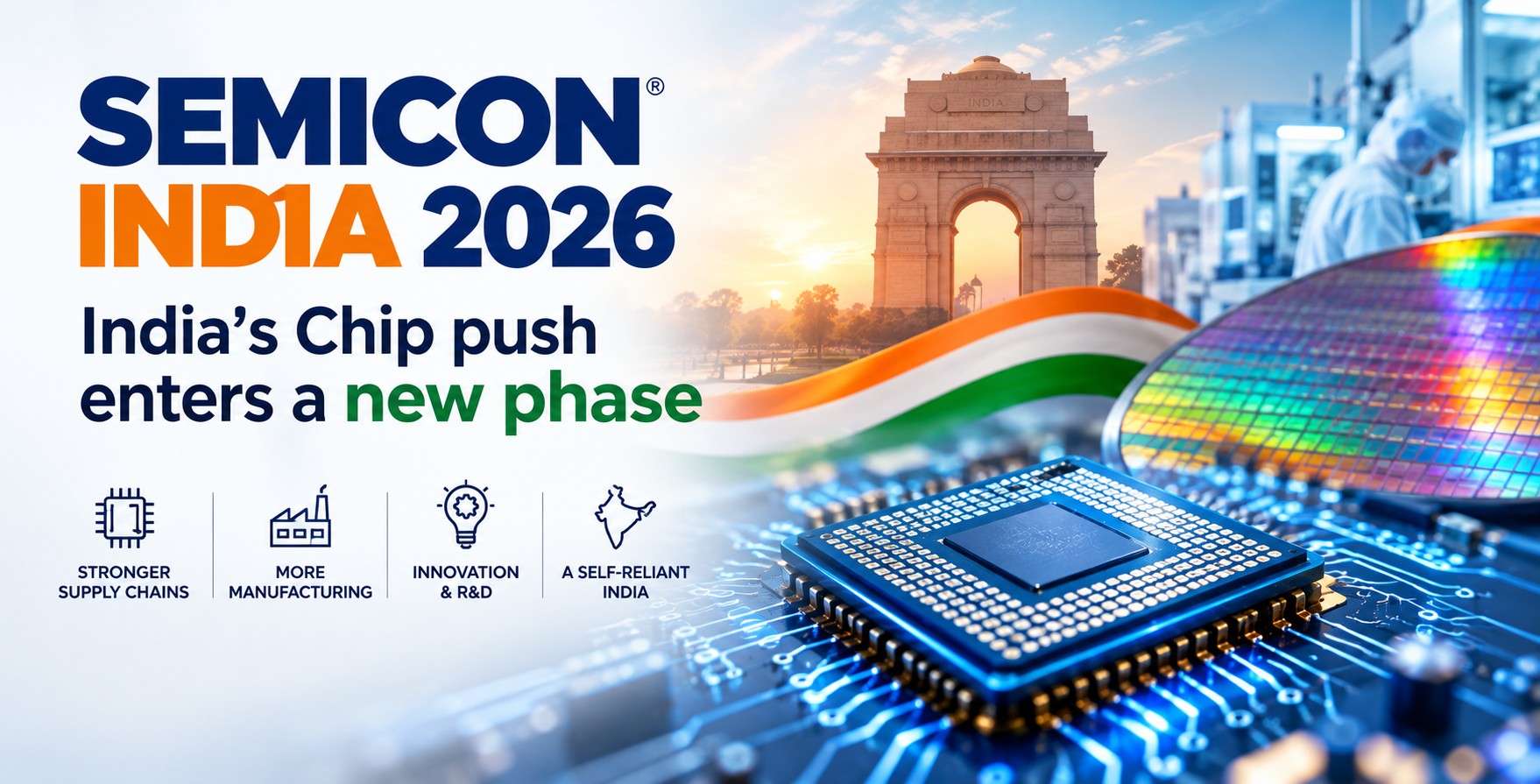
India is preparing to showcase the next stage of its semiconductor ambitions as SEMICON India
2026 opens in New Delhi on September 17.
Prime Minister Narendra Modi will inaugurate the three-day event at Yashobhoomi, bringing together global semiconductor companies, electronics firms, startups, researchers and policymakers.
The event will run from September 17 to 19.
Semiconductors are the tiny chips that power much of today’s technology, from smartphones and laptops to electric vehicles, data centres and artificial intelligence systems. As AI and advanced computing continue to expand, demand for more powerful and reliable chips is also increasing.
For India, the event comes at a crucial stage in its efforts to build a semiconductor industry at home. The focus is no longer limited to attracting chip factories. India is also looking to develop capabilities in chip design, manufacturing, advanced packaging, testing, equipment and electronics production. The scale of SEMICON India 2026 reflects the growing interest in the sector. More than 600 exhibitors, including around 300 international companies, are expected to participate, with companies and delegations from several countries attending the event.
The exhibition will also feature a dedicated startup pavilion, innovation showcases, a student hackathon and programmes focused on developing semiconductor skills. Around 40 startups are expected to showcase their technologies.
India's semiconductor push is also beginning to move from policy announcements towards production. The government has approved 12 semiconductor projects under its semiconductor programme, with three projects from the first phase having begun commercial production. The next phase, Semicon 2.0, is aimed at accelerating the development of the wider ecosystem.
The event comes as the global chip industry faces major changes. The rapid growth of AI, cloud computing, electric vehicles and connected devices is creating demand for specialized chips, while technology companies and governments are trying to build more diversified and resilient supply chains.
India sees this shift as an opportunity to strengthen its position in the global semiconductor market. But building a successful chip industry will require more than manufacturing plants.
The country will also need suppliers, equipment makers, chip designers, electronics manufacturers and a skilled workforce to support the industry. SEMICON India 2026 will bring many of these areas together under one platform, giving India an opportunity to showcase its progress and attract further technology partnerships and investment.
The focus is increasingly shifting from building plans to building an ecosystem that can support long-term chip production and technology development.
Prime Minister Narendra Modi will inaugurate the three-day event at Yashobhoomi, bringing together global semiconductor companies, electronics firms, startups, researchers and policymakers.
The event will run from September 17 to 19.
Semiconductors are the tiny chips that power much of today’s technology, from smartphones and laptops to electric vehicles, data centres and artificial intelligence systems. As AI and advanced computing continue to expand, demand for more powerful and reliable chips is also increasing.
For India, the event comes at a crucial stage in its efforts to build a semiconductor industry at home. The focus is no longer limited to attracting chip factories. India is also looking to develop capabilities in chip design, manufacturing, advanced packaging, testing, equipment and electronics production. The scale of SEMICON India 2026 reflects the growing interest in the sector. More than 600 exhibitors, including around 300 international companies, are expected to participate, with companies and delegations from several countries attending the event.
The exhibition will also feature a dedicated startup pavilion, innovation showcases, a student hackathon and programmes focused on developing semiconductor skills. Around 40 startups are expected to showcase their technologies.
India's semiconductor push is also beginning to move from policy announcements towards production. The government has approved 12 semiconductor projects under its semiconductor programme, with three projects from the first phase having begun commercial production. The next phase, Semicon 2.0, is aimed at accelerating the development of the wider ecosystem.
The event comes as the global chip industry faces major changes. The rapid growth of AI, cloud computing, electric vehicles and connected devices is creating demand for specialized chips, while technology companies and governments are trying to build more diversified and resilient supply chains.
India sees this shift as an opportunity to strengthen its position in the global semiconductor market. But building a successful chip industry will require more than manufacturing plants.
The country will also need suppliers, equipment makers, chip designers, electronics manufacturers and a skilled workforce to support the industry. SEMICON India 2026 will bring many of these areas together under one platform, giving India an opportunity to showcase its progress and attract further technology partnerships and investment.
The focus is increasingly shifting from building plans to building an ecosystem that can support long-term chip production and technology development.
