


15
A large network of fake Gmail accounts has come under investigation in Gujarat after authorities
linked hundreds of thousands of accounts to a series of hoax bomb-threat emails, raising fresh
concerns about the misuse of online platforms for coordinated cybercrime.
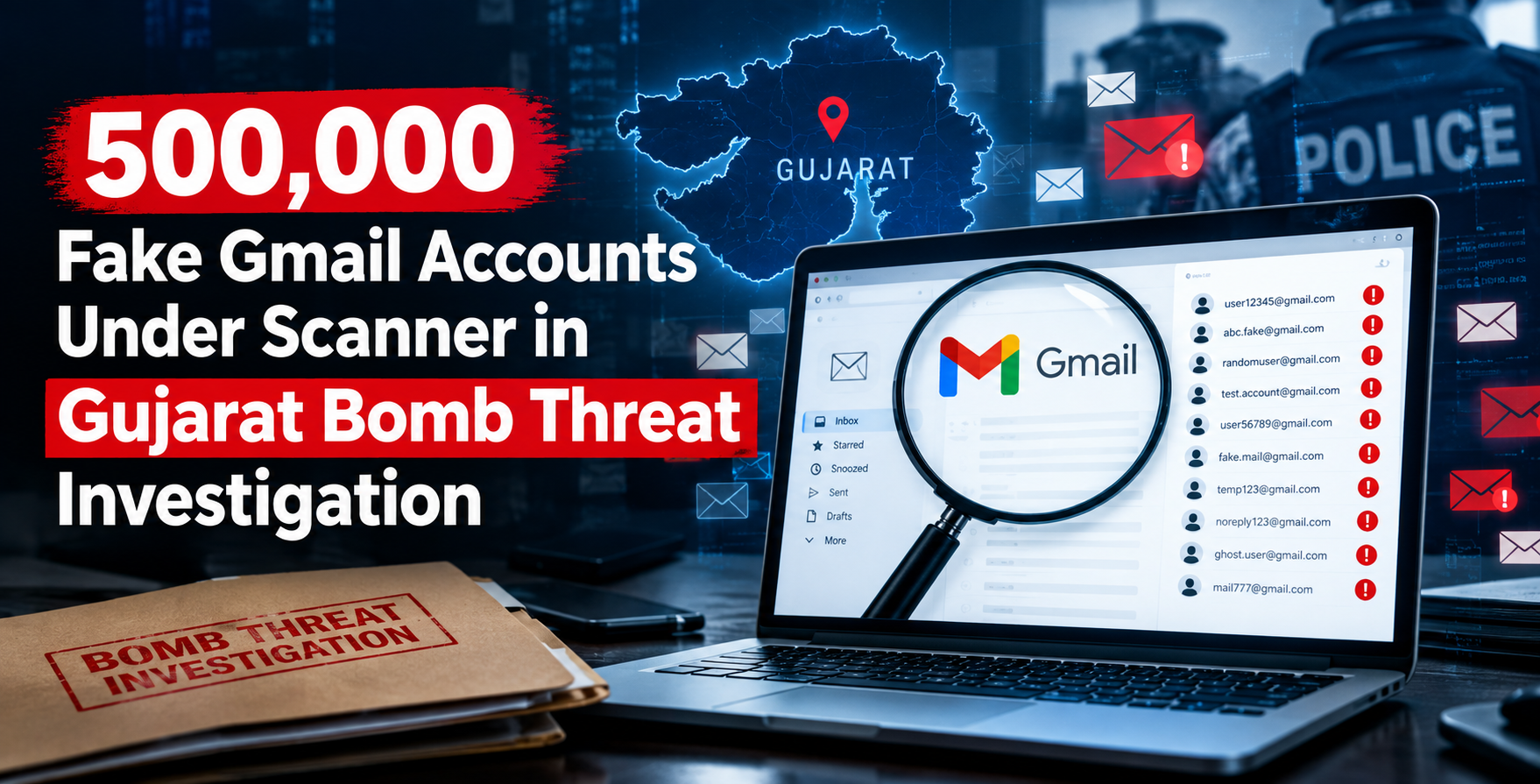
According to people familiar with the investigation, Gujarat Police have identified more than 500,000 Gmail accounts that were allegedly created or used in connection with the threat campaign. Authorities are seeking information from Google as part of efforts to establish how the accounts were created and operated.
The investigation highlights a growing challenge for law-enforcement agencies: identifying the individuals behind mass-created digital accounts while distinguishing legitimate users from accounts created specifically for malicious activity.
Police are expected to seek information that could help establish links between the accounts, including relevant technical records and other information available to the platform. Such data could potentially help investigators trace the origin of the messages and identify those responsible.
The case also puts renewed attention on the scale at which email accounts can be created and potentially misused. Large numbers of disposable or fraudulent accounts can make investigations more difficult, particularly when threat messages are sent anonymously. Bomb-threat hoaxes have increasingly become a concern for Indian authorities because even messages that ultimately prove false can trigger emergency responses, disrupt public institutions and put pressure on security agencies.
The Gujarat investigation comes as authorities and technology companies face increasing pressure to respond to the misuse of digital platforms for intimidation, fraud and other forms of cybercrime.
For investigators, the immediate challenge will be to determine which accounts were genuinely involved in the campaign and who was operating them. The probe could also provide insights into how criminals are exploiting online services at scale and what additional safeguards may be needed to prevent such abuse.
The investigation remains ongoing, and the identification of fake accounts does not by itself establish who created or controlled them. Further action will depend on evidence gathered by law-enforcement agencies and information obtained during the inquiry.
According to people familiar with the investigation, Gujarat Police have identified more than 500,000 Gmail accounts that were allegedly created or used in connection with the threat campaign. Authorities are seeking information from Google as part of efforts to establish how the accounts were created and operated.
The investigation highlights a growing challenge for law-enforcement agencies: identifying the individuals behind mass-created digital accounts while distinguishing legitimate users from accounts created specifically for malicious activity.
Police are expected to seek information that could help establish links between the accounts, including relevant technical records and other information available to the platform. Such data could potentially help investigators trace the origin of the messages and identify those responsible.
The case also puts renewed attention on the scale at which email accounts can be created and potentially misused. Large numbers of disposable or fraudulent accounts can make investigations more difficult, particularly when threat messages are sent anonymously. Bomb-threat hoaxes have increasingly become a concern for Indian authorities because even messages that ultimately prove false can trigger emergency responses, disrupt public institutions and put pressure on security agencies.
The Gujarat investigation comes as authorities and technology companies face increasing pressure to respond to the misuse of digital platforms for intimidation, fraud and other forms of cybercrime.
For investigators, the immediate challenge will be to determine which accounts were genuinely involved in the campaign and who was operating them. The probe could also provide insights into how criminals are exploiting online services at scale and what additional safeguards may be needed to prevent such abuse.
The investigation remains ongoing, and the identification of fake accounts does not by itself establish who created or controlled them. Further action will depend on evidence gathered by law-enforcement agencies and information obtained during the inquiry.
